Indonesia Decaffeinated Coffee Market: Import Trend Analysis
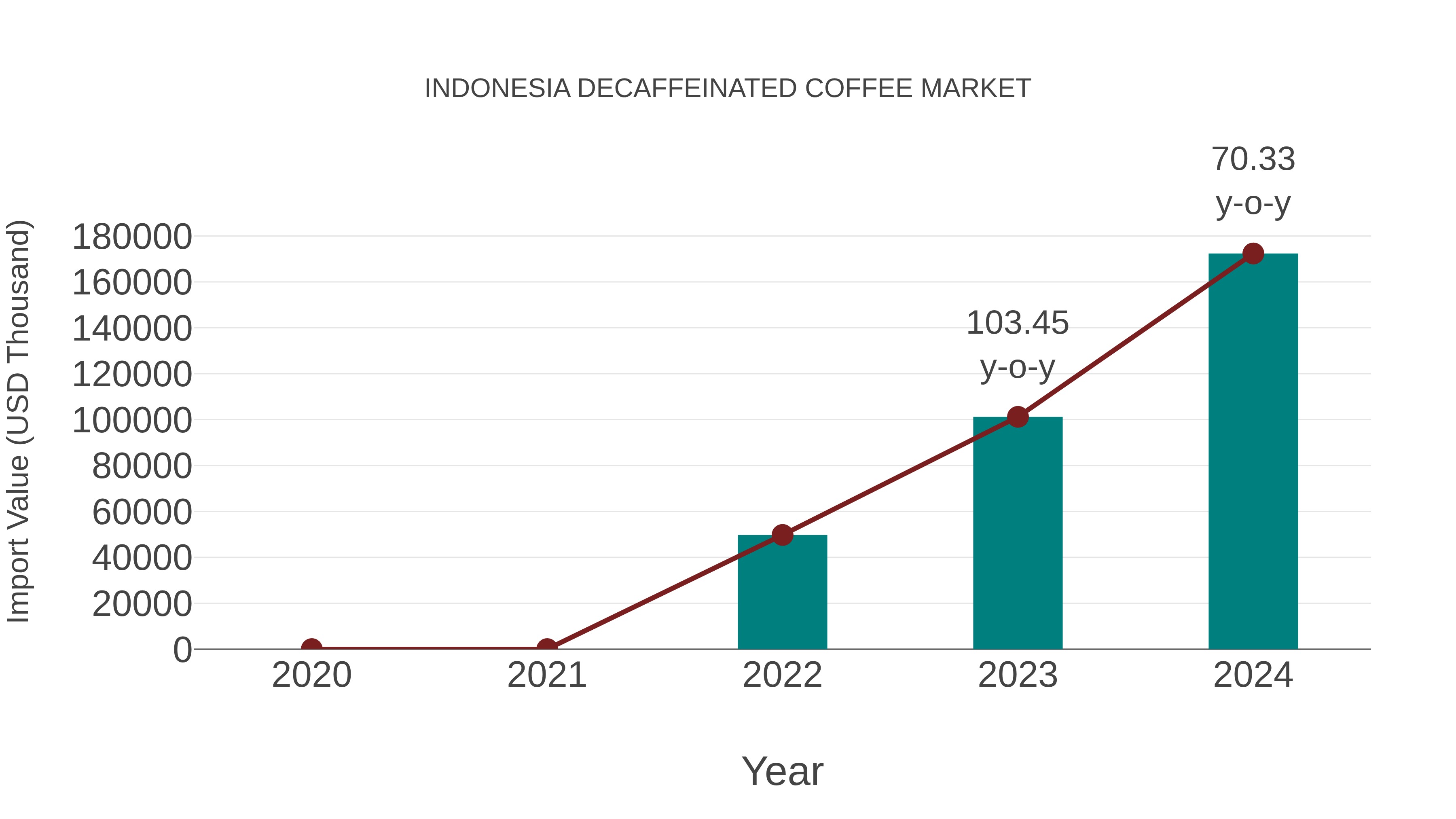
In the Indonesia decaffeinated coffee market, the import trend witnessed a significant growth rate of 70.33% from 2023 to 2024, with a compound annual growth rate (CAGR) of 86.15% for the period 2020-2024. This surge in imports can be attributed to a notable shift in consumer preferences towards decaffeinated coffee products, indicating a growing demand for such offerings in the market.
Decaffeinated Coffee Market: Indonesia vs Top 5 Major Economies in 2027 (Asia)
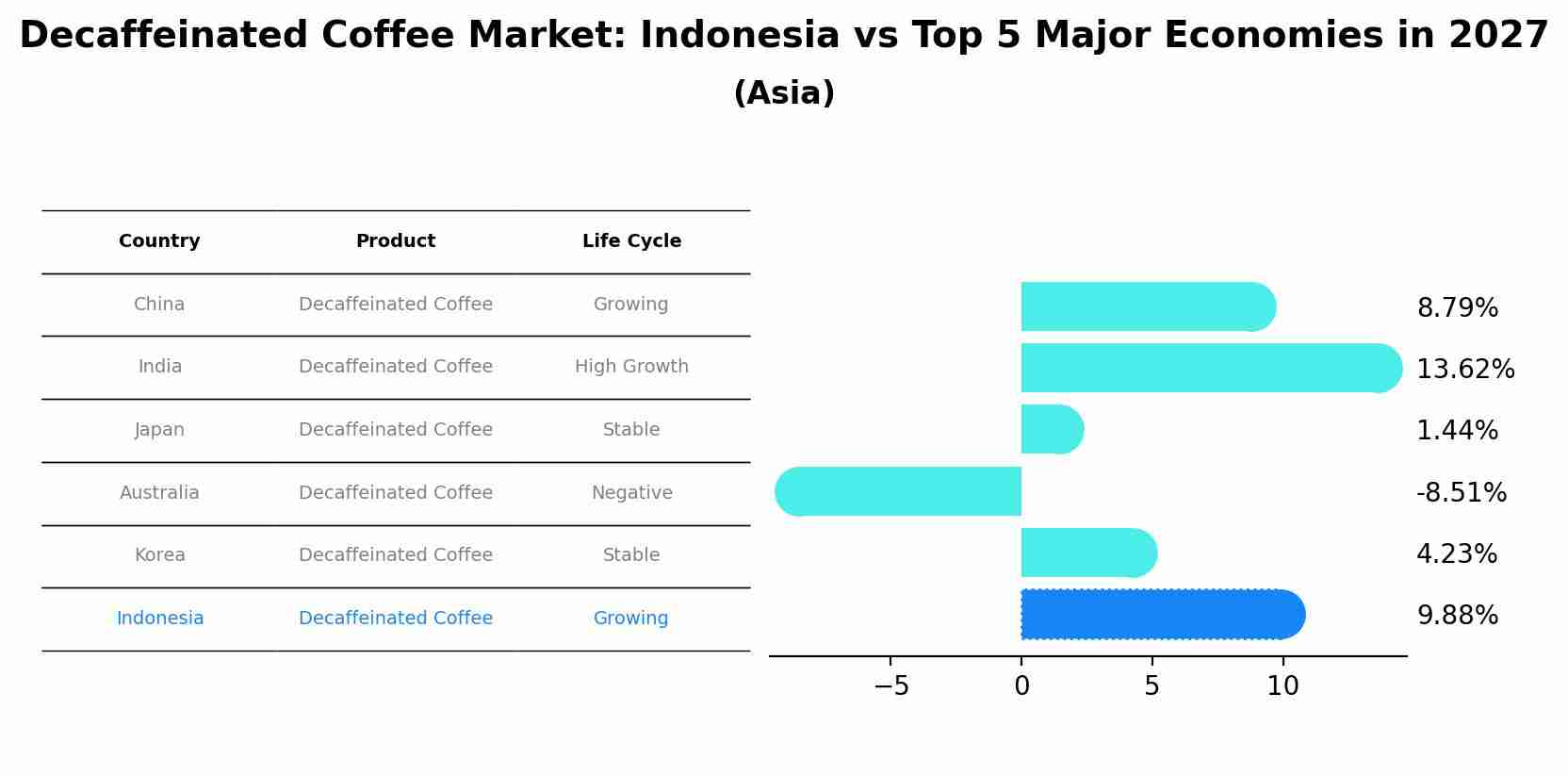
The Decaffeinated Coffee market in Indonesia is projected to grow at a growing growth rate of 9.88% by 2027, highlighting the country's increasing focus on advanced technologies within the Asia region, where China holds the dominant position, followed closely by India, Japan, Australia and South Korea, shaping overall regional demand.
Indonesia Decaffeinated Coffee Market Synopsis
Indonesia is the fourth-largest producer of coffee, producing around 350,000 tons annually. Decaffeinated coffee production from Indonesia has seen a steady growth in recent years due to its increasing popularity among consumers. The Indonesia decaffeinated coffee market was valued at USD XX million in 2020 and is expected to reach USD xx million by 2026, registering a CAGR of xx % during 2021?2026 (forecast period).
Market Trends
The demand for organic and natural decaf coffees has been on the rise due to their health benefits over other caffeinated beverages. This trend has encouraged many manufacturers to launch new product lines with organic certification. Additionally, rising concerns about harmful effects caused by caffeine consumption have also propelled the demand for decaffeinated coffees in Indonesia. Moreover, continuous innovations such as flavored decaf coffee are driving consumer interest further as they enhance taste without compromising on their health benefits.
Market Drivers
Increasing global awareness of healthy lifestyle trends is one of the major drivers propelling growth in the Indonesia decaffeniated coffee market. Furthermore, rising disposable income levels coupled with growing urbanization have enabled customers to opt for premium products that provide higher value than regular ones; this factor bodes well for industry players operating within this space. Moreover, changing food habits among young consumers towards healthier options such as plant-based alternatives offer lucrative opportunities for industry players aiming to capitalize on them in order to increase their revenues significantly over time.
COVID-19 Impact on the Market
The outbreak of the COVID-19 pandemic has had a major impact on the Indonesia decaffeinated coffee market, with widespread disruption to production and supply chains. The closure of borders and restrictions on international travel have made it difficult for exporters to access raw materials, resulting in a decrease in exports. Additionally, demand from consumers has decreased as people are spending less due to economic uncertainty caused by the pandemic.
Challenges of the Market
One major challenge facing producers is sourcing decaffeinated coffee beans that meet quality standards while also being affordable enough for mass production. Another challenge is competing with neighboring countries such as Vietnam which have lower labor costs and offer competitively priced products. Lastly, there are environmental considerations related to water conservation during washing processes used for decaffeination that need to be taken into account when producing this product sustainably.
Industry Key Players
Some key players in Indonesia decaffeinated coffee market include JDE (JAVA Decaf Espresso), Kopi Kalimantan (Kalimantan Coffee), Santoscoffee Co., Indocafe (Indonesia Caf?) and Toraja Coffee Group (TCG). Other local companies that produce decaffed coffees include Blossom Coffees and PT Toarco Jaya Agung, among others.
Key Highlights of the Report:
- Indonesia Decaffeinated Coffee Market Outlook
- Market Size of Indonesia Decaffeinated Coffee Market, 2023
- Forecast of Indonesia Decaffeinated Coffee Market, 2030
- Historical Data and Forecast of Indonesia Decaffeinated Coffee Revenues & Volume for the Period 2020-2030
- Indonesia Decaffeinated Coffee Market Trend Evolution
- Indonesia Decaffeinated Coffee Market Drivers and Challenges
- Indonesia Decaffeinated Coffee Price Trends
- Indonesia Decaffeinated Coffee Porter's Five Forces
- Indonesia Decaffeinated Coffee Industry Life Cycle
- Historical Data and Forecast of Indonesia Decaffeinated Coffee Market Revenues & Volume By Product for the Period 2020-2030
- Historical Data and Forecast of Indonesia Decaffeinated Coffee Market Revenues & Volume By Roasted for the Period 2020-2030
- Historical Data and Forecast of Indonesia Decaffeinated Coffee Market Revenues & Volume By Raw for the Period 2020-2030
- Historical Data and Forecast of Indonesia Decaffeinated Coffee Market Revenues & Volume By Species for the Period 2020-2030
- Historical Data and Forecast of Indonesia Decaffeinated Coffee Market Revenues & Volume By Arabica for the Period 2020-2030
- Historical Data and Forecast of Indonesia Decaffeinated Coffee Market Revenues & Volume By Robusta for the Period 2020-2030
- Historical Data and Forecast of Indonesia Decaffeinated Coffee Market Revenues & Volume By Distribution Channel for the Period 2020-2030
- Historical Data and Forecast of Indonesia Decaffeinated Coffee Market Revenues & Volume By Online for the Period 2020-2030
- Historical Data and Forecast of Indonesia Decaffeinated Coffee Market Revenues & Volume By Offline for the Period 2020-2030
- Indonesia Decaffeinated Coffee Import Export Trade Statistics
- Market Opportunity Assessment By Product
- Market Opportunity Assessment By Species
- Market Opportunity Assessment By Distribution Channel
- Indonesia Decaffeinated Coffee Top Companies Market Share
- Indonesia Decaffeinated Coffee Competitive Benchmarking By Technical and Operational Parameters
- Indonesia Decaffeinated Coffee Company Profiles
- Indonesia Decaffeinated Coffee Key Strategic Recommendations






































