Algeria Digital Market Size & Growth Rate (2026-2032)
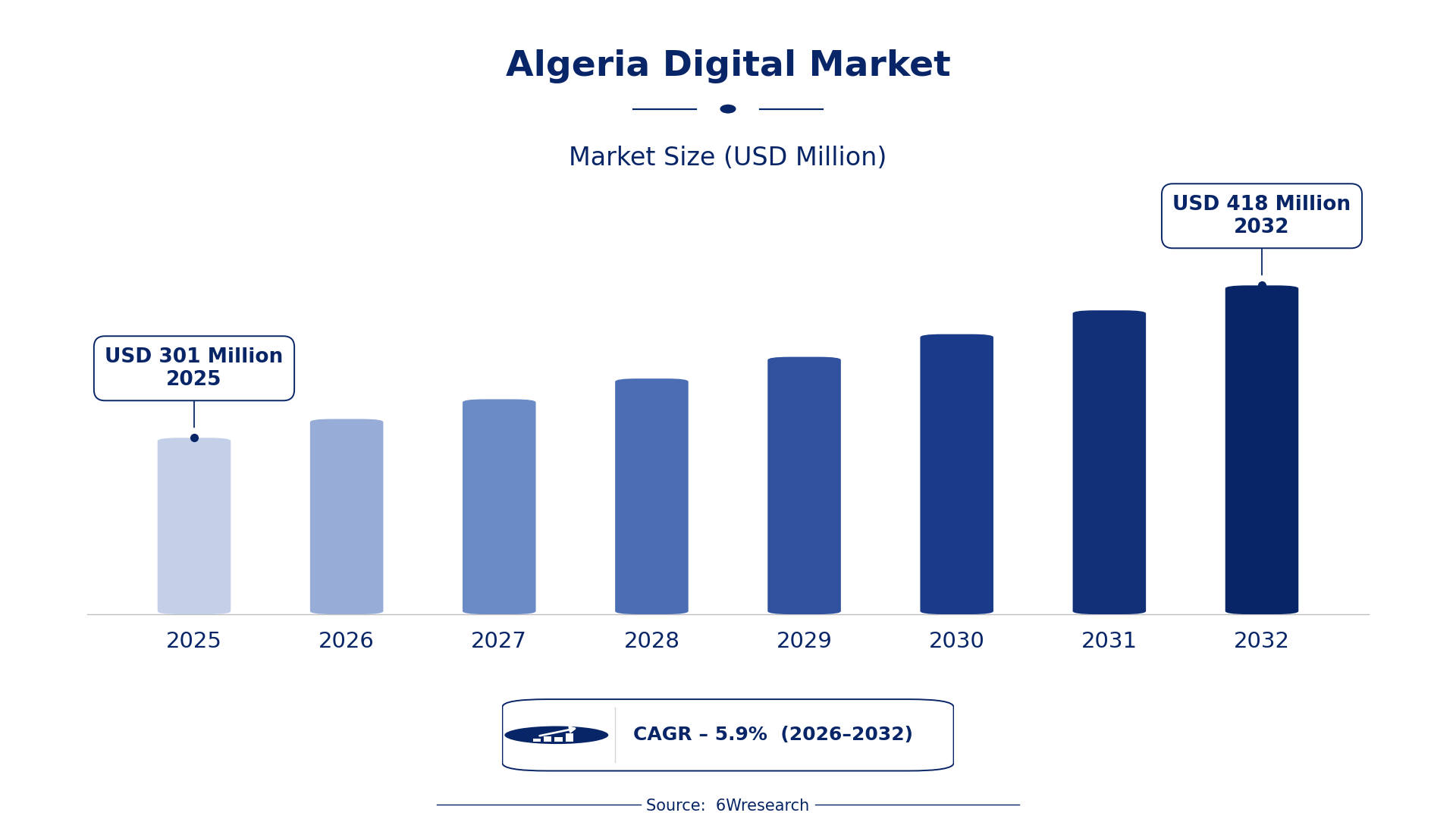
The Algeria Digital Market was estimated at USD 301 Million in 2025 and is projected to reach USD 418 Million by 2032, growing at a CAGR of 5.9% from 2026 to 2032.
Algeria Digital Market Synopsis
The surge in smartphone adoption and the increasing use of social media platforms are defining characteristics of the Algeria Digital Market. With platforms like Facebook and YouTube gaining substantial traction, businesses have a unique opportunity to engage with a digitally savvy audience.
E-commerce is rapidly evolving as more Algerians opt for online shopping, signaling a shift in consumer behavior. This trend is complemented by the growing adoption of mobile payment solutions, which are crucial in fostering a more dynamic digital economy.
Algeria Digital Market Year-wise Growth Rate and Key Drivers
This graph illustrates the annual growth rates of the Algeria Digital Market from 2021 to 2032, highlighting a steady upward trajectory and projected expansion over the forecast period.
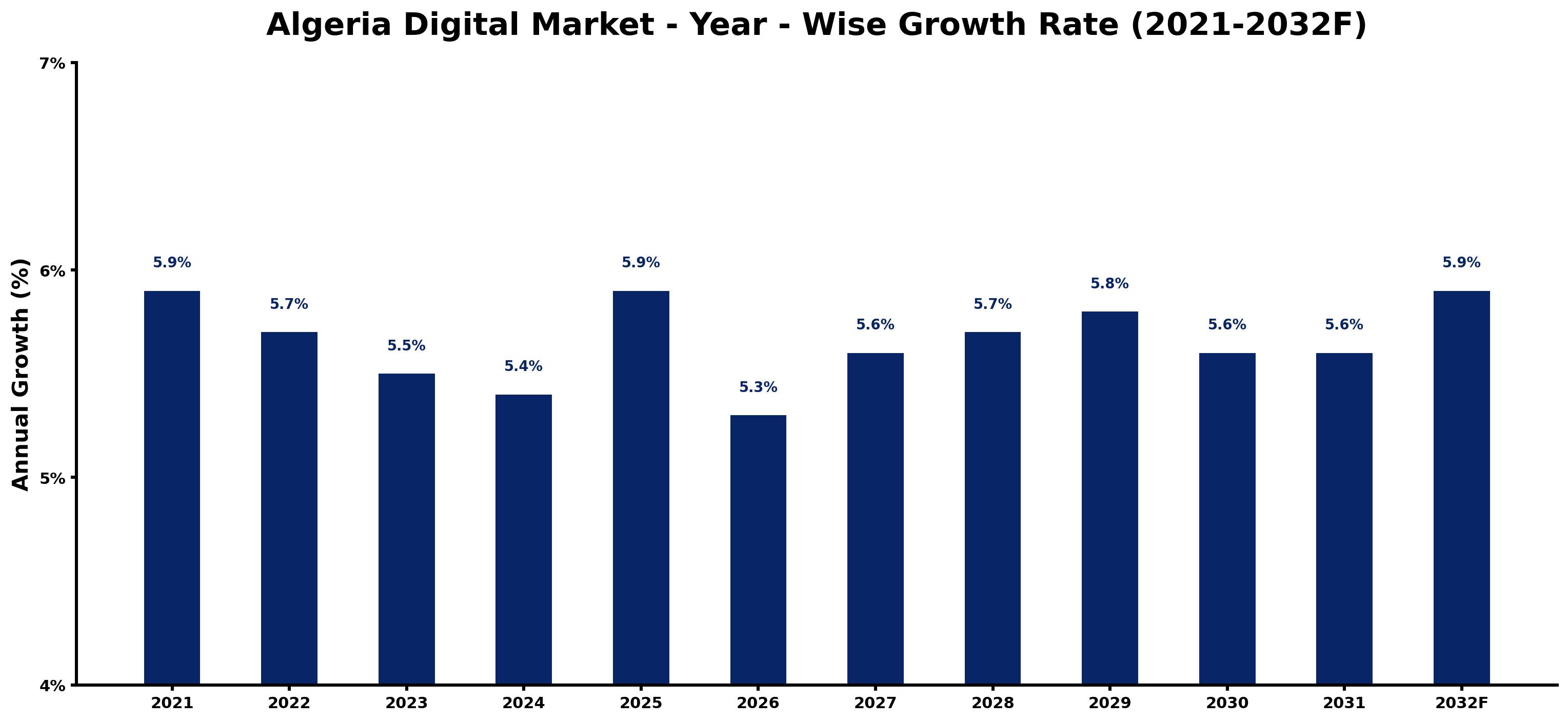
The table below presents the year‑wise growth rates along with the key drivers influencing the market
| Year | Growth Rate | Major Drivers |
| 2021 | 5.9% | Launch of national cybersecurity strategy by ANSSI. |
| 2022 | 5.7% | Growth in smartphone adoption enhancing digital access. |
| 2023 | 5.5% | Increased funding for tech startups by Algerian government. |
| 2024 | 5.4% | Tax reductions for digital businesses boosting entrepreneurship. |
| 2025 | 5.9% | Partnerships with global tech firms supporting local innovation. |
| 2026 | 5.3% | Adoption of 4G networks facilitating faster internet services. |
| 2027 | 5.6% | Rising youth population driving demand for online content. |
| 2028 | 5.7% | Support for fintech solutions by Banque d'Algérie. |
| 2029 | 5.8% | Government campaigns promoting digital literacy nationwide. |
| 2030 | 5.6% | Emergence of local content creators expanding digital offerings. |
| 2031 | 5.6% | Ministry of Digital Transformation focusing on e-services growth. |
| 2032 | 5.9% | Boost in remote work culture increasing digital platform usage. |
Note: Market size estimations and growth projections presented in this report are based on 6Wresearch's proprietary forecasting methodology, utilizing the latest available industry data, government publications, and primary research inputs.
Algeria Digital Market Key Takeaways
Below are some of the specific key takeaways from the market, including:
- Increasing internet penetration is a major driver of digital market growth.
- Smartphone usage among the young population is on the rise, influencing online engagement.
- Regulatory frameworks for e-commerce are still developing, presenting both challenges and opportunities.
- Mobile app development is gaining momentum as businesses seek to capitalize on digital trends.
- Government initiatives are being introduced to foster digital literacy and entrepreneurship.
Evaluation of Restraints in Algeria Digital Market
Algeria's digital market faces notable restraints that hinder its growth. Limited internet access in rural areas exacerbates the digital divide, preventing widespread engagement. Additionally, the population's low digital literacy levels pose a barrier to the adoption of online services. The regulatory environment, still in a formative stage, adds layers of uncertainty for e-commerce businesses. Issues surrounding payment preferences, particularly a strong inclination towards cash transactions, further complicate the transition to digital platforms.
Algeria Digital Market Trends
Several trends are shaping the Algeria Digital Market. The increasing comfort of consumers with online shopping has led to a boom in e-commerce platforms. Social media is increasingly used for marketing and customer engagement, driving businesses to enhance their online presence. on top of that, the demand for mobile applications continues to grow, as companies recognize the need for innovative solutions tailored to local needs. This digital transformation is gradually reshaping the business ecosystem in Algeria.
Algeria Digital Market Opportunities
The digital market in Algeria is ripe with opportunities for growth and investment. Businesses can tap into the burgeoning e-commerce sector, which is gaining traction among consumers. The rise in mobile payment solutions provides a gateway for financial technology innovations. Additionally, companies can explore partnerships with local tech startups to develop tailored solutions that address unique market challenges. As digital literacy improves, the potential for reaching untapped consumer segments will only expand.
Government Initiatives in the Algeria Digital Market
The Algerian government is actively working to create a favorable environment for the digital market through various initiatives. By focusing on improving digital infrastructure and enhancing regulatory frameworks, the government aims to support the growth of e-commerce and digital services. These efforts are crucial in building a robust digital economy that can contribute to the nation’s economic development.
- A national digital infrastructure upgrade programme now in its rollout phase aims to improve internet connectivity across the country.
- A regulatory framework introduced in 2025 mandates billing transparency for online transactions to foster consumer trust.
- Current initiatives focus on enhancing cybersecurity measures to protect consumer data in the digital space.
- Efforts are underway to promote digital literacy through training programs targeting both entrepreneurs and the general public.
- A planned public-private initiative is expected to expand telecom infrastructure access by 2028, enhancing service availability.
Future Insights of the Algeria Digital Market
Looking ahead to 2026-2032, the Algeria Digital Market is expected to witness significant transformation. With a growing young population and increasing smartphone penetration, e-commerce will likely thrive. Government efforts to enhance digital infrastructure will be pivotal in encouraging new businesses and innovations in fintech and digital services. However, addressing challenges such as cybersecurity and regulatory issues will be essential for sustaining this growth trajectory.
Algeria Digital Market Latest Developments
In the past year, the Algeria Digital Market has seen a variety of developments signaling progress in the digital arena. From government initiatives to private sector advancements, the momentum is clearly building towards a more integrated digital economy.
- A major telecommunications operator launched a nationwide marketing campaign in Q2 2025 to boost awareness of mobile payment options.
- An ongoing partnership between local businesses and tech startups aims to develop e-commerce platforms tailored for Algerian consumers, initiated in late 2025.
- A digital skills training program targeting youth was rolled out in early 2025, focusing on enhancing employability in tech sectors.
- Upcoming legislation is expected to be introduced in late 2026 to streamline the regulatory framework for online businesses.
Algeria Digital Market - Key Attractiveness of the Report
- 10 Years of Market Numbers
- Historical Data Starting from 2022 to 2025
- Base Year: 2025
- Forecast Data until 2032
- Key Performance Indicators Impacting the Market
- Major Upcoming Developments and Projects
Key Highlights of the Report:
- Algeria Digital Market Outlook
- Market Size of Algeria Digital Market, 2025
- Forecast of Algeria Digital Market, 2032
- Historical Data and Forecast of Algeria Digital Revenues & Volume for the Period 2022-2032F
- Algeria Digital Market Trend Evolution
- Algeria Digital Market Drivers and Challenges
- Algeria Digital Price Trends
- Algeria Digital Porter's Five Forces
- Algeria Digital Industry Life Cycle
- Historical Data and Forecast of Algeria Digital Market Revenues & Volume By Software for the Period 2022-2032F
- Historical Data and Forecast of Algeria Digital Market Revenues & Volume By CRM Software for the Period 2022-2032F
- Historical Data and Forecast of Algeria Digital Market Revenues & Volume By Email Marketing Software for the Period 2022-2032F
- Historical Data and Forecast of Algeria Digital Market Revenues & Volume By Social Media Advertising for the Period 2022-2032F
- Algeria Digital Import Export Trade Statistics
- Market Opportunity Assessment By Software
- Algeria Digital Top Companies Market Share
- Algeria Digital Competitive Benchmarking By Technical and Operational Parameters
- Algeria Digital Company Profiles
- Algeria Digital Key Strategic Recommendations






































