Angola Plastic Tableware and Kitchenware Market Growth Rate Analysis (2025 - 2031)
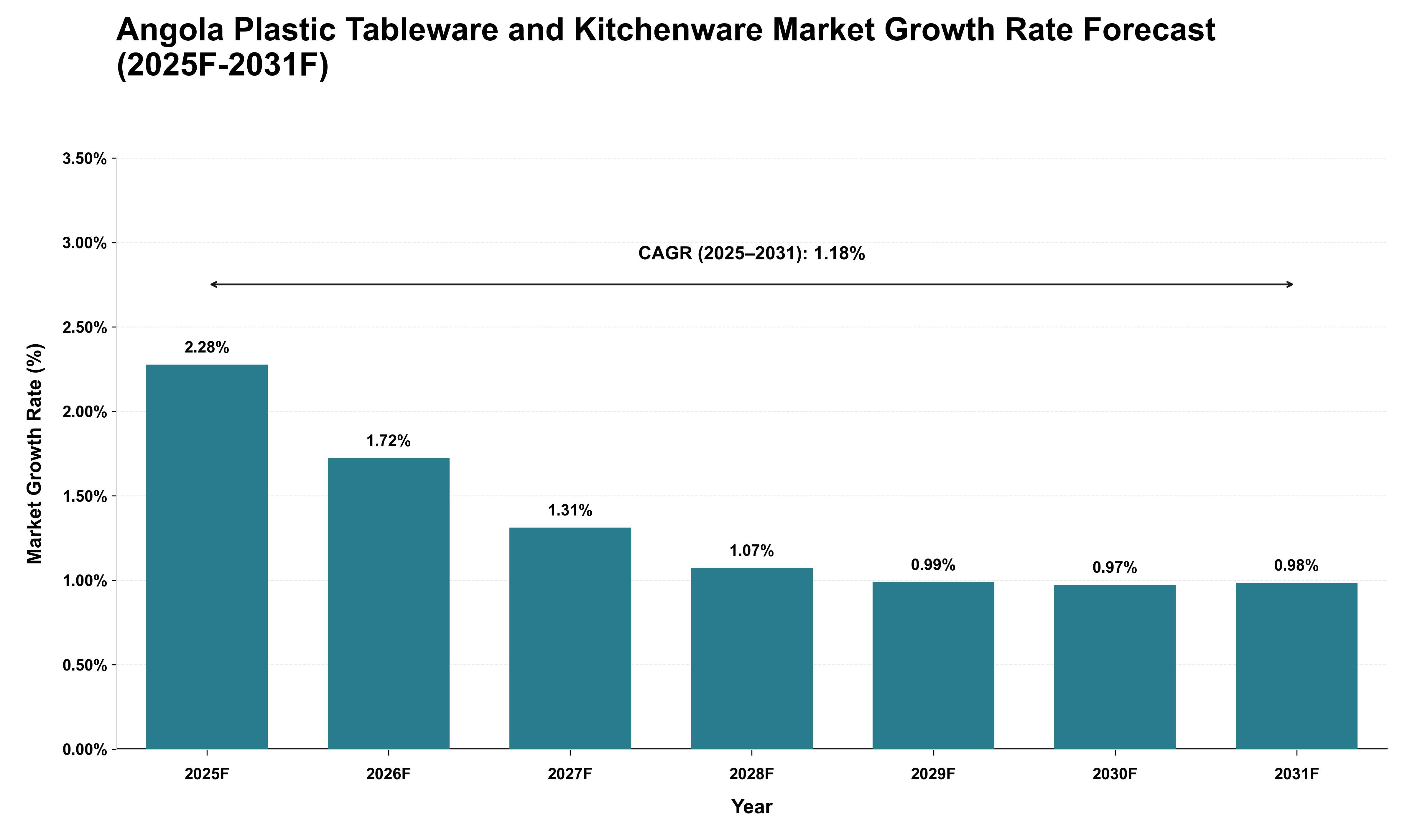
The outlook for the Angola plastic tableware and kitchenware market will be shaped by several macroeconomic factors, including consumer spending patterns, import dependencies, and broader economic cycles. With a projected CAGR of 1.18% from 2025 to 2031, growth rates will likely reflect a gradual deceleration, starting at 2.28% in 2025 and tapering to approximately 0.98% by 2031. This trend may be influenced by fluctuating disposable incomes and changing consumer preferences towards sustainable alternatives, which could impact demand for traditional plastic products. Additionally, Angola's reliance on imports for raw materials may introduce volatility in pricing and availability, further constraining growth potential. As global economic conditions evolve, the cyclical nature of consumer goods markets will also play a critical role in shaping demand dynamics within this sector during the forecast period.
Key Highlights of the Report:
- Angola Plastic Tableware And Kitchenware Market Outlook
- Market Size of Angola Plastic Tableware And Kitchenware Market, 2024
- Forecast of Angola Plastic Tableware And Kitchenware Market, 2031
- Historical Data and Forecast of Angola Plastic Tableware And Kitchenware Revenues & Volume for the Period 2021-2031
- Angola Plastic Tableware And Kitchenware Market Trend Evolution
- Angola Plastic Tableware And Kitchenware Market Drivers and Challenges
- Angola Plastic Tableware And Kitchenware Price Trends
- Angola Plastic Tableware And Kitchenware Porter`s Five Forces
- Angola Plastic Tableware And Kitchenware Industry Life Cycle
- Historical Data and Forecast of Angola Plastic Tableware And Kitchenware Market Revenues & Volume By Types for the Period 2021-2031
- Historical Data and Forecast of Angola Plastic Tableware And Kitchenware Market Revenues & Volume By Disposable Tableware And Kitchenware for the Period 2021-2031
- Historical Data and Forecast of Angola Plastic Tableware And Kitchenware Market Revenues & Volume By Reusable Tableware And Kitchenware for the Period 2021-2031
- Historical Data and Forecast of Angola Plastic Tableware And Kitchenware Market Revenues & Volume By Applications for the Period 2021-2031
- Historical Data and Forecast of Angola Plastic Tableware And Kitchenware Market Revenues & Volume By Domestic Use for the Period 2021-2031
- Historical Data and Forecast of Angola Plastic Tableware And Kitchenware Market Revenues & Volume By Commercial Use for the Period 2021-2031
- Angola Plastic Tableware And Kitchenware Import Export Trade Statistics
- Market Opportunity Assessment By Types
- Market Opportunity Assessment By Applications
- Angola Plastic Tableware And Kitchenware Top Companies Market Share
- Angola Plastic Tableware And Kitchenware Competitive Benchmarking By Technical and Operational Parameters
- Angola Plastic Tableware And Kitchenware Company Profiles
- Angola Plastic Tableware And Kitchenware Key Strategic Recommendations






































