Angola Silk Yarn Market Growth Rate Analysis (2025 - 2031)
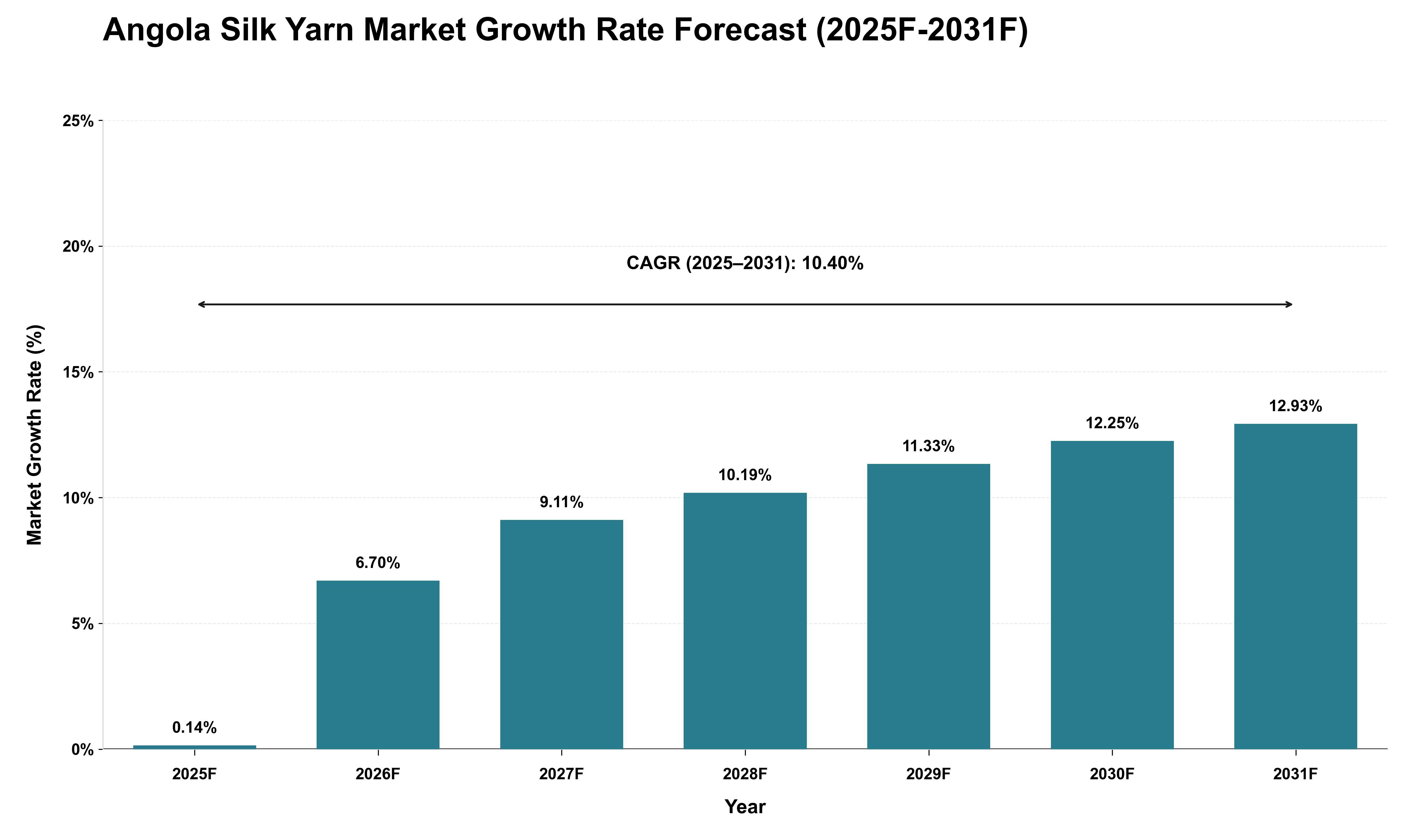
The Angola silk yarn market is poised for significant growth, driven by evolving raw material availability and pricing dynamics. As the forecast period progresses, the anticipated CAGR of 10.40% will reflect a gradual increase in demand, particularly as global textile trends favor sustainable and high-quality fibers. The initial growth rate of 0.14% in 2025 will likely be influenced by import dependencies on silk production, which may face fluctuations due to climate impacts on sericulture and geopolitical factors affecting trade routes. By 2026, a notable acceleration to 6.70% suggests that manufacturers will adapt to these challenges by optimizing supply chains and sourcing strategies. The subsequent years will witness robust growth rates exceeding 10%, indicating a potential shift towards domestic production capabilities or enhanced import agreements that stabilize pricing structures. This trajectory underscores the importance of monitoring raw material costs and international trade policies as they directly impact market viability through 2031.
Key Highlights of the Report:
- Angola Silk Yarn Market Outlook
- Market Size of Angola Silk Yarn Market, 2024
- Forecast of Angola Silk Yarn Market, 2031
- Historical Data and Forecast of Angola Silk Yarn Revenues & Volume for the Period 2021-2031
- Angola Silk Yarn Market Trend Evolution
- Angola Silk Yarn Market Drivers and Challenges
- Angola Silk Yarn Price Trends
- Angola Silk Yarn Porter`s Five Forces
- Angola Silk Yarn Industry Life Cycle
- Historical Data and Forecast of Angola Silk Yarn Market Revenues & Volume By Production Analysis for the Period 2021-2031
- Historical Data and Forecast of Angola Silk Yarn Market Revenues & Volume By Volume for the Period 2021-2031
- Historical Data and Forecast of Angola Silk Yarn Market Revenues & Volume By Consumption Analysis for the Period 2021-2031
- Historical Data and Forecast of Angola Silk Yarn Market Revenues & Volume By Value for the Period 2021-2031
- Historical Data and Forecast of Angola Silk Yarn Market Revenues & Volume By Volume for the Period 2021-2031
- Historical Data and Forecast of Angola Silk Yarn Market Revenues & Volume By Export Analysis for the Period 2021-2031
- Historical Data and Forecast of Angola Silk Yarn Market Revenues & Volume By Value for the Period 2021-2031
- Historical Data and Forecast of Angola Silk Yarn Market Revenues & Volume By Volume for the Period 2021-2031
- Historical Data and Forecast of Angola Silk Yarn Market Revenues & Volume By Import Analysis for the Period 2021-2031
- Historical Data and Forecast of Angola Silk Yarn Market Revenues & Volume By Value for the Period 2021-2031
- Historical Data and Forecast of Angola Silk Yarn Market Revenues & Volume By Volume for the Period 2021-2031
- Angola Silk Yarn Import Export Trade Statistics
- Market Opportunity Assessment By Production Analysis
- Market Opportunity Assessment By Consumption Analysis
- Market Opportunity Assessment By Export Analysis
- Market Opportunity Assessment By Import Analysis
- Angola Silk Yarn Top Companies Market Share
- Angola Silk Yarn Competitive Benchmarking By Technical and Operational Parameters
- Angola Silk Yarn Company Profiles
- Angola Silk Yarn Key Strategic Recommendations






































