Argentina Bread Market Size Growth Rate
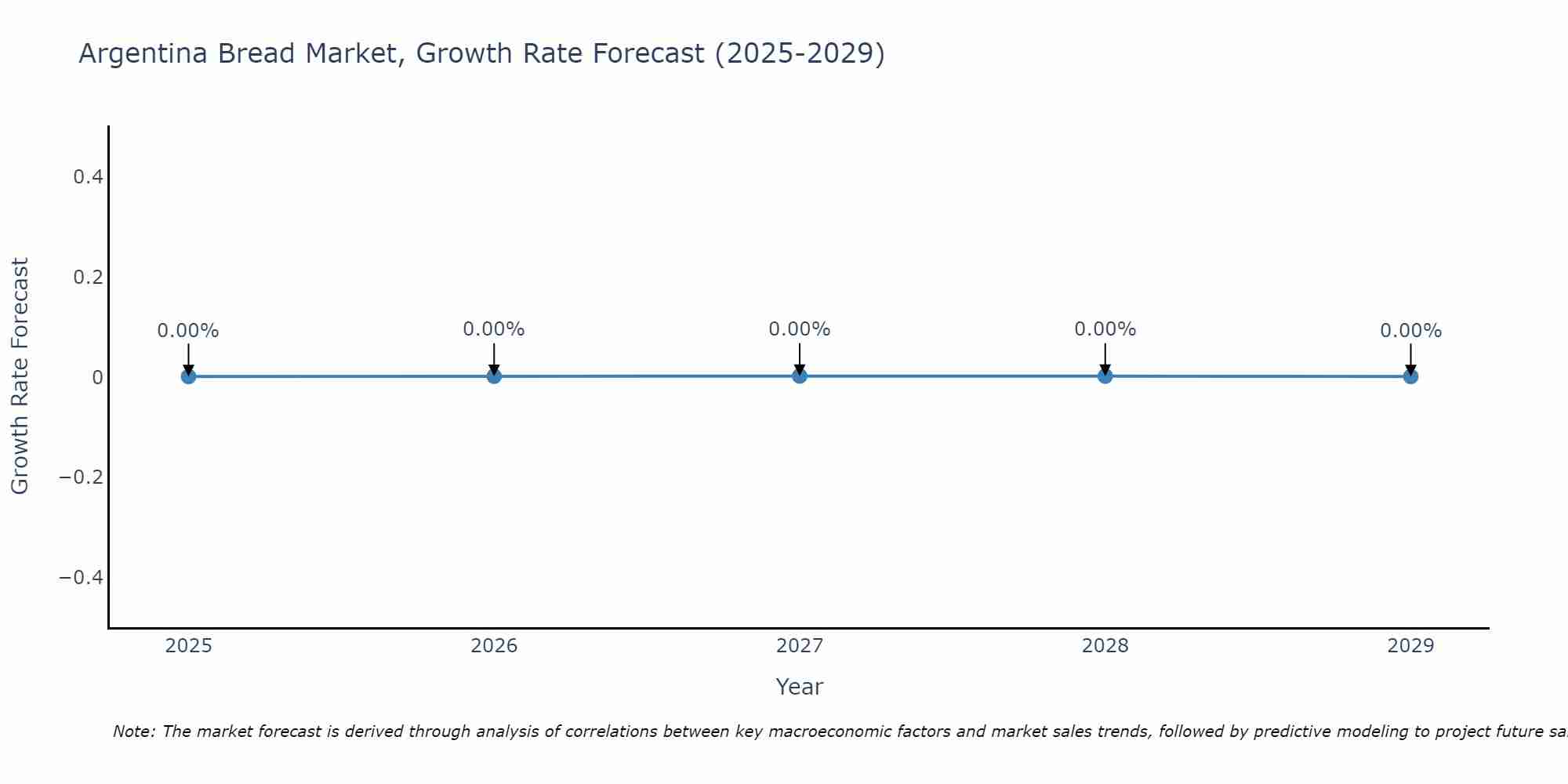
The Argentina Bread Market is projected to witness mixed growth rate patterns during 2025 to 2029. Growth accelerates to 0.00% in 2027, following an initial rate of 0.00%, before easing to 0.00% at the end of the period.
Argentina Bread Market Synopsis
The bread market in Argentina is large and highly competitive, with many local bakeries and large companies competing for a share of the pie. There are two main types of breads consumed in Argentina: pan franc?s (white bread) and pan negro (whole wheat or whole grain). Pan negro is becoming increasingly popular among health-conscious consumers, who are looking for nutritious alternatives to white bread. In terms of distribution channels, supermarkets account for the biggest portion of sales, followed by independent retailers such as bakeries and convenience stores. The Argentine government heavily subsidizes flour prices which has led to lower costs across all types of breads sold in the country. Additionally, recent economic downturns have caused an increase in demand from price-sensitive consumers which has further strengthened competition within the market.
Key Highlights of the Report:
- Argentina Bread Market Outlook
- Market Size of Argentina Bread Market, 2019
- Forecast of Argentina Bread Market, 2026
- Historical Data and Forecast of Argentina Bread Revenues & Volume for the Period 2016 - 2026
- Argentina Bread Market Trend Evolution
- Argentina Bread Market Drivers and Challenges
- Argentina Bread Price Trends
- Argentina Bread Porter's Five Forces
- Argentina Bread Industry Life Cycle
- Historical Data and Forecast of Argentina Bread Market Revenues & Volume By Loaves for the Period 2016 - 2026
- Historical Data and Forecast of Argentina Bread Market Revenues & Volume By Baguettes for the Period 2016 - 2026
- Historical Data and Forecast of Argentina Bread Market Revenues & Volume By Rolls for the Period 2016 - 2026
- Historical Data and Forecast of Argentina Bread Market Revenues & Volume By Burger Buns for the Period 2016 - 2026
- Historical Data and Forecast of Argentina Bread Market Revenues & Volume By Ciabatta for the Period 2016 - 2026
- Historical Data and Forecast of Argentina Bread Market Revenues & Volume By Others for the Period 2016 - 2026
- Historical Data and Forecast of Argentina Bread Market Revenues & Volume By Convenience Stores for the Period 2016 - 2026
- Historical Data and Forecast of Argentina Bread Market Revenues & Volume By Specialist Retailers for the Period 2016 - 2026
- Historical Data and Forecast of Argentina Bread Market Revenues & Volume By Supermarkets and Hypermarkets for the Period 2016 - 2026
- Historical Data and Forecast of Argentina Bread Market Revenues & Volume By Online Retail for the Period 2016 - 2026
- Historical Data and Forecast of Argentina Bread Market Revenues & Volume By Variety Stores for the Period 2016 - 2026
- Historical Data and Forecast of Argentina Bread Market Revenues & Volume By Others for the Period 2016 - 2026
- Argentina Bread Import Export Trade Statistics
- Market Opportunity Assessment By Loaves
- Market Opportunity Assessment By Convenience Stores
- Argentina Bread Top Companies Market Share
- Argentina Bread Competitive Benchmarking By Technical and Operational Parameters
- Argentina Bread Company Profiles
- Argentina Bread Key Strategic Recommendations






































