Australia Dermocosmetics Market: Import Trend Analysis
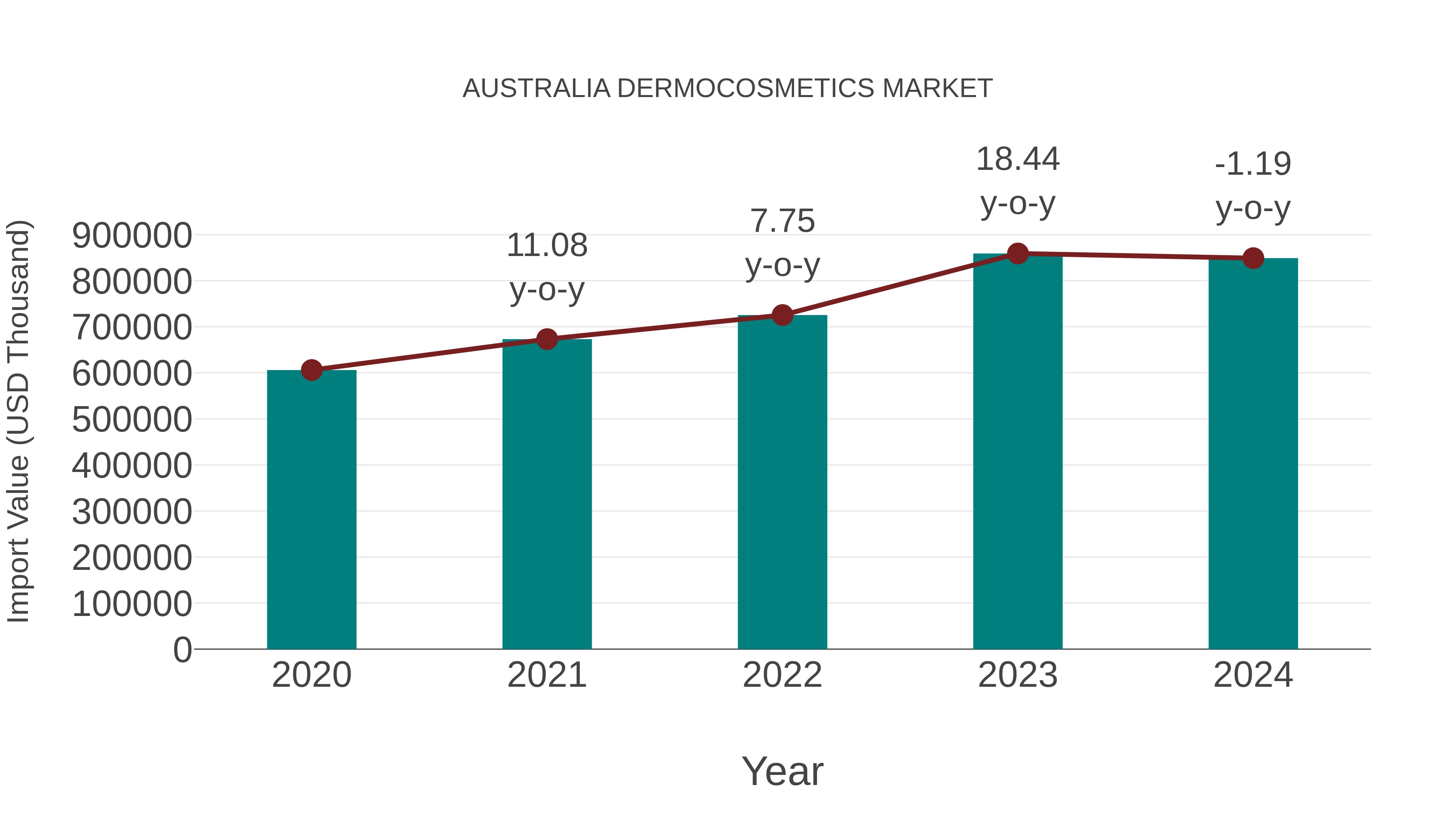
In the Australia dermocosmetics market, the import trend experienced a -1.19% growth rate from 2023 to 2024, with a compound annual growth rate (CAGR) of 8.79% from 2020 to 2024. This decline in growth could be attributed to shifting consumer preferences or changes in trade regulations impacting import momentum.
Australia Dermocosmetics Market Overview
The dermocosmetics market in Australia is experiencing steady growth driven by increasing consumer awareness of skincare and beauty products. With a focus on dermatologically-tested and scientifically-proven formulations, dermocosmetics offer a bridge between cosmetics and pharmaceuticals, appealing to consumers seeking effective and safe skincare solutions. Key factors contributing to market growth include a rising aging population, growing concerns about skin health and appearance, and a trend towards natural and organic products. Major players in the Australian dermocosmetics market include La Roche-Posay, Avene, Bioderma, and Dermaceutic. The market is characterized by a wide range of products such as anti-aging creams, sunscreens, acne treatments, and skin repair formulations, catering to diverse consumer needs and preferences. E-commerce channels and social media influence are also shaping consumer purchasing behavior in this segment, with a growing demand for personalized skincare solutions.
Australia Dermocosmetics Market Trends
In the Australia dermocosmetics market, there is a growing demand for products that offer both skincare benefits and medical-grade efficacy. Consumers are increasingly seeking out dermocosmetic products that are backed by scientific research and formulated with high-quality, clinically proven ingredients. Natural and organic formulations are also gaining popularity, as consumers become more conscious of the ingredients they are putting on their skin. Anti-aging products, sun protection, and products targeting specific skin concerns such as acne, hyperpigmentation, and sensitive skin are driving growth in the market. With a focus on preventive skincare and overall skin health, dermocosmetics brands are emphasizing the importance of a holistic approach to skincare that combines advanced technology with skin-friendly formulations. E-commerce platforms and social media influencers are playing a significant role in driving awareness and sales in the market.
Australia Dermocosmetics Market Challenges
In the Australian dermocosmetics market, some key challenges include intense competition from both international and domestic brands, stringent regulatory requirements for product registration and labeling, and consumer skepticism towards the efficacy of dermocosmetic products. Additionally, the high cost of dermocosmetics compared to regular skincare products poses a barrier for price-sensitive consumers. Brand loyalty is also a significant challenge, as consumers are often influenced by trends and marketing tactics, making it challenging for new or lesser-known brands to gain traction in the market. Furthermore, the lack of education and awareness among consumers about the benefits of dermocosmetics compared to traditional skincare products presents a hurdle for market growth. Addressing these challenges will require strategic marketing efforts, innovative product development, and effective communication to build trust and credibility among consumers.
Australia Dermocosmetics Market Investment Opportunities
The Australia dermocosmetics market presents attractive investment opportunities due to increasing consumer awareness about skincare and growing demand for products with advanced formulations. Key trends driving market growth include rising disposable incomes, a focus on anti-aging solutions, and a preference for natural and organic ingredients. Investors can capitalize on this trend by investing in companies that offer innovative dermocosmetics products, expanding distribution channels to reach a wider consumer base, and leveraging digital marketing strategies to promote brand awareness. Additionally, strategic partnerships with dermatologists and skincare professionals can help build credibility and trust among consumers. Overall, the Australia dermocosmetics market offers promising prospects for investors looking to tap into the growing demand for high-quality skincare products.
Australia Dermocosmetics Market Government Policy
In Australia, the dermocosmetics market is regulated by the Therapeutic Goods Administration (TGA), which oversees the registration and marketing of therapeutic goods, including skincare products. Dermocosmetics that make therapeutic claims or contain active ingredients are classified as therapeutic goods and must be registered with the TGA before they can be sold in the Australian market. The TGA requires dermocosmetics to meet specific standards for safety, quality, and efficacy, and manufacturers must provide evidence to support their claims. Additionally, advertising of dermocosmetics is regulated by the Australian Competition and Consumer Commission (ACCC) to ensure that products are not misleading or deceptive in their claims. Overall, the government policies aim to protect consumers by ensuring that dermocosmetics are safe and effective for use in Australia.
Australia Dermocosmetics Market Future Outlook
The future outlook for the Australia dermocosmetics market appears positive, driven by factors such as increasing consumer awareness about skincare, growing demand for advanced and effective skincare products, and the rise in disposable income levels. The market is expected to witness steady growth due to the aging population seeking anti-aging solutions, the trend towards natural and organic products, and the influence of social media in promoting beauty and skincare trends. Additionally, the focus on dermatologist-recommended products and the expanding distribution channels, including online retailing, are likely to contribute to the market`s growth. Overall, the Australia dermocosmetics market is anticipated to experience sustained expansion, with innovative product launches and strategic marketing initiatives playing a key role in driving the market forward.
Key Highlights of the Report:
- Australia Dermocosmetics Market Outlook
- Market Size of Australia Dermocosmetics Market,2025
- Forecast of Australia Dermocosmetics Market, 2032
- Historical Data and Forecast of Australia Dermocosmetics Revenues & Volume for the Period 2022-2032F
- Australia Dermocosmetics Market Trend Evolution
- Australia Dermocosmetics Market Drivers and Challenges
- Australia Dermocosmetics Price Trends
- Australia Dermocosmetics Porter's Five Forces
- Australia Dermocosmetics Industry Life Cycle
- Historical Data and Forecast of Australia Dermocosmetics Market Revenues & Volume By Type for the Period 2022-2032F
- Historical Data and Forecast of Australia Dermocosmetics Market Revenues & Volume By Anti-Aging Products for the Period 2022-2032F
- Historical Data and Forecast of Australia Dermocosmetics Market Revenues & Volume By Acne Treatment Products for the Period 2022-2032F
- Historical Data and Forecast of Australia Dermocosmetics Market Revenues & Volume By Skin Brightening Products for the Period 2022-2032F
- Historical Data and Forecast of Australia Dermocosmetics Market Revenues & Volume By Application for the Period 2022-2032F
- Historical Data and Forecast of Australia Dermocosmetics Market Revenues & Volume By Skincare for the Period 2022-2032F
- Historical Data and Forecast of Australia Dermocosmetics Market Revenues & Volume By Haircare for the Period 2022-2032F
- Historical Data and Forecast of Australia Dermocosmetics Market Revenues & Volume By Distribution Channel for the Period 2022-2032F
- Historical Data and Forecast of Australia Dermocosmetics Market Revenues & Volume By Retail Pharmacies for the Period 2022-2032F
- Historical Data and Forecast of Australia Dermocosmetics Market Revenues & Volume By Online Stores for the Period 2022-2032F
- Historical Data and Forecast of Australia Dermocosmetics Market Revenues & Volume By Dermatology Clinics for the Period 2022-2032F
- Australia Dermocosmetics Import Export Trade Statistics
- Market Opportunity Assessment By Type
- Market Opportunity Assessment By Application
- Market Opportunity Assessment By Distribution Channel
- Australia Dermocosmetics Top Companies Market Share
- Australia Dermocosmetics Competitive Benchmarking By Technical and Operational Parameters
- Australia Dermocosmetics Company Profiles
- Australia Dermocosmetics Key Strategic Recommendations






































