Australia Ferrochrome Market: Import Trend Analysis
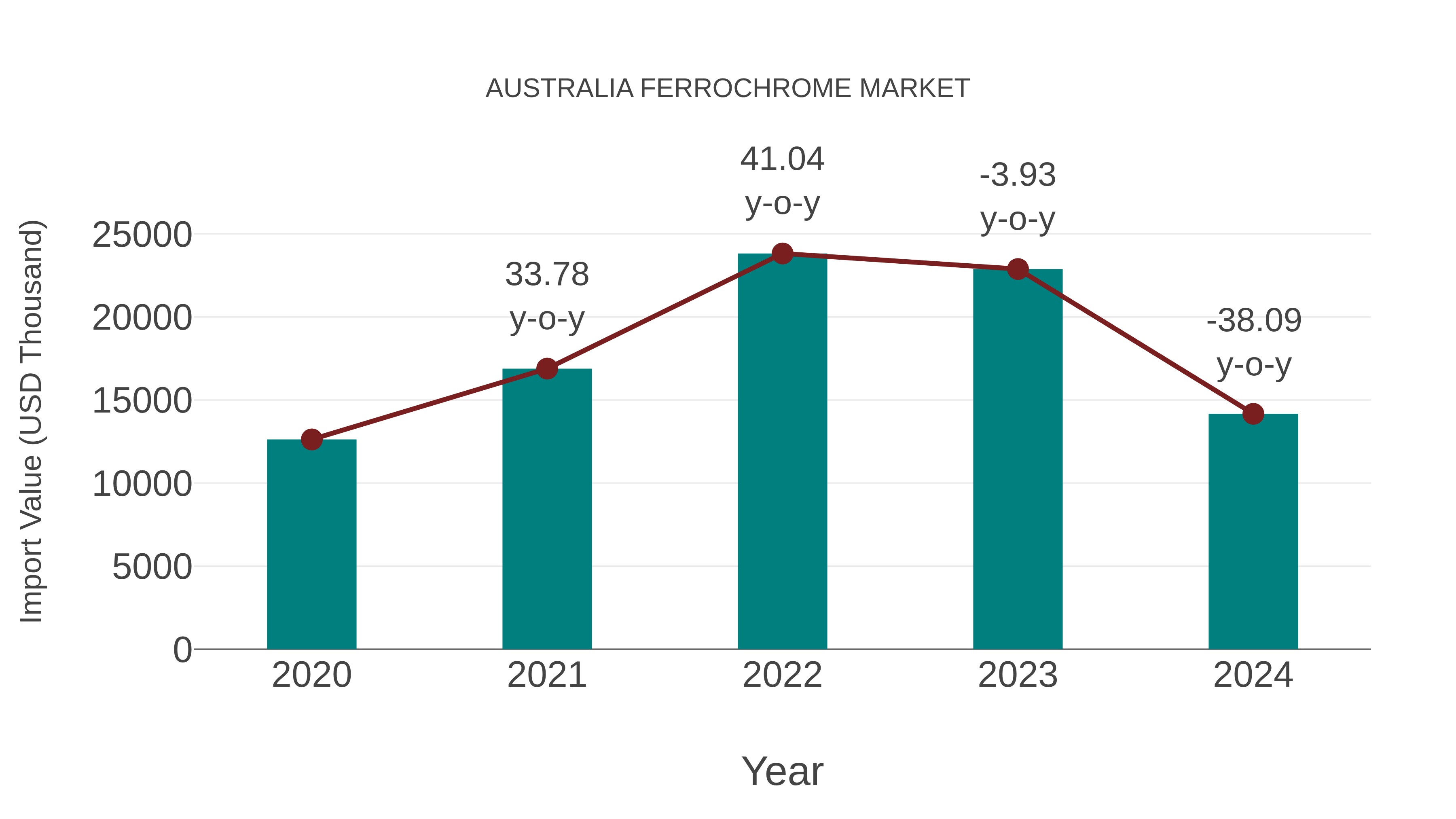
Australia`s import trend for the ferrochrome market experienced a notable decline from 2023 to 2024, with a growth rate of -38.09%. However, the compound annual growth rate (CAGR) for the period 2020-2024 stood at 2.92%. This negative import momentum in 2024 could be attributed to shifting global demand patterns or changes in trade policies impacting market stability.
Australia Ferrochrome Market Overview
Australia ferrochrome market is buoyed by the country`s significant chromite reserves and its position as a major global producer of chromium. Ferrochrome is a key ingredient in stainless steel production, imparting resistance to corrosion and oxidation. The market is influenced by stainless steel demand trends and international trade dynamics.
Drivers of the market
The Australia ferrochrome market is driven by its crucial role in the production of stainless steel. Ferrochrome is added to stainless steel to impart corrosion resistance, heat resistance, and aesthetic appeal. Market drivers include the growth of stainless steel demand in construction, automotive, and consumer goods sectors, as well as advancements in stainless steel manufacturing technologies and increasing urbanization and infrastructure development activities.
Challenges of the market
One of the significant challenges facing the Australia ferrochrome market is the volatility of chrome ore prices, which directly impacts production costs. Fluctuations in chrome ore prices can affect the profitability of ferrochrome producers and create uncertainties in the market. Additionally, environmental regulations related to emissions and waste management may pose compliance challenges for ferrochrome producers.
Government Policy of the market
In the ferrochrome market, government policies may aim to support local production and value-added processing activities. This could include measures to attract investment in smelting and refining facilities, provide incentives for the development of downstream industries, and promote the use of chrome in domestic manufacturing. Additionally, regulations may be implemented to address environmental and social concerns associated with mining and processing activities.
Key Highlights of the Report:
- Australia Ferrochrome Market Outlook
- Market Size of Australia Ferrochrome Market, 2024
- Forecast of Australia Ferrochrome Market, 2031
- Historical Data and Forecast of Australia Ferrochrome Revenues & Volume for the Period 2018 - 2031
- Australia Ferrochrome Market Trend Evolution
- Australia Ferrochrome Market Drivers and Challenges
- Australia Ferrochrome Price Trends
- Australia Ferrochrome Porter's Five Forces
- Australia Ferrochrome Industry Life Cycle
- Historical Data and Forecast of Australia Ferrochrome Market Revenues & Volume By Type for the Period 2018 - 2031
- Historical Data and Forecast of Australia Ferrochrome Market Revenues & Volume By High carbon for the Period 2018 - 2031
- Historical Data and Forecast of Australia Ferrochrome Market Revenues & Volume By Medium carbon for the Period 2018 - 2031
- Historical Data and Forecast of Australia Ferrochrome Market Revenues & Volume By Low carbon for the Period 2018 - 2031
- Historical Data and Forecast of Australia Ferrochrome Market Revenues & Volume By Applications for the Period 2018 - 2031
- Historical Data and Forecast of Australia Ferrochrome Market Revenues & Volume By Stainless steel for the Period 2018 - 2031
- Historical Data and Forecast of Australia Ferrochrome Market Revenues & Volume By Other steels for the Period 2018 - 2031
- Australia Ferrochrome Import Export Trade Statistics
- Market Opportunity Assessment By Type
- Market Opportunity Assessment By Applications
- Australia Ferrochrome Top Companies Market Share
- Australia Ferrochrome Competitive Benchmarking By Technical and Operational Parameters
- Australia Ferrochrome Company Profiles
- Australia Ferrochrome Key Strategic Recommendations






































