Australia Flavoured Tea Market: Import Trend Analysis
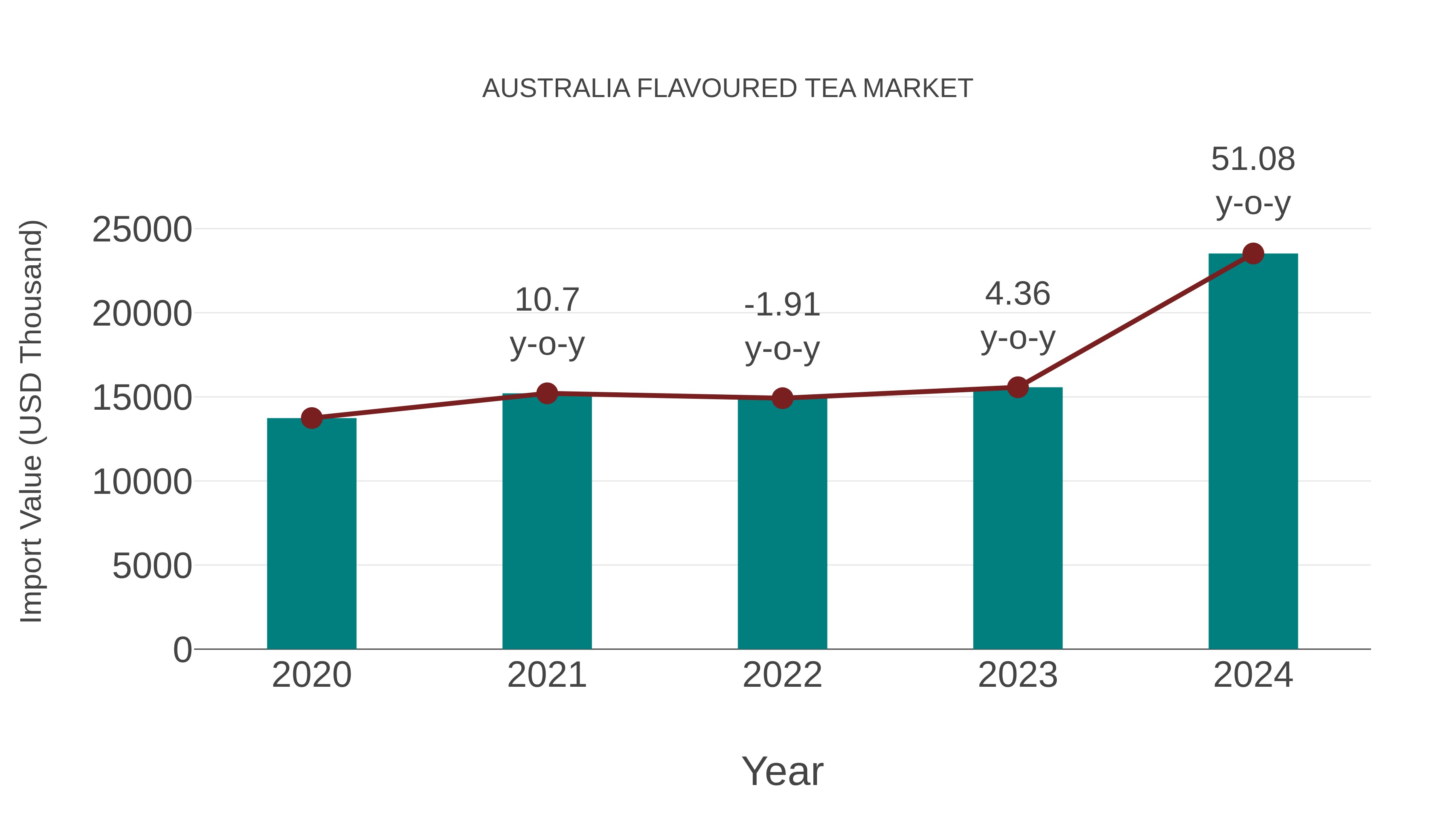
Australia`s import trend for the flavored tea market showed robust growth, with a notable 51.08% increase from 2023 to 2024. The compound annual growth rate (CAGR) for 2020-2024 stood at 14.39%. This surge in imports can be attributed to shifting consumer preferences towards diverse tea flavors and increased demand for premium tea products.
Australia Flavoured Tea Market Overview
The flavoured tea market in Australia is expanding as consumers increasingly seek diverse taste experiences and wellness benefits from tea consumption. Varieties include fruit-infused, herbal, and spiced teas, with both traditional and innovative blends gaining popularity. Health trends promoting antioxidants and natural ingredients drive product development. The rise of specialty tea shops and online sales channels supports market penetration.
Trends of the market
The flavoured tea market in Australia continues to expand, particularly in the herbal and wellness segments. Consumers are seeking out blends with added benefits such as stress relief, detoxification, or energy boosts. Floral and fruit flavors, like hibiscus, chamomile, and peach, are particularly favored in both loose-leaf and ready-to-drink forms.
Challenges of the market
This market is challenged by fluctuating global tea prices and competition from ready-to-drink options and herbal infusions. Balancing flavor profiles while keeping them free from artificial additives is difficult. Consumers` preference for premium and organic varieties also raises cost and sourcing issues.
Investment opportunities in the Market
The flavored tea market is expanding with consumer preferences shifting towards exotic and health-enhancing blends. Investment opportunities include developing unique flavor combinations incorporating native Australian botanicals and superfoods. There is also demand for organic and sustainably sourced teas with innovative packaging. Creating ready-to-drink flavored tea products for convenience can tap into busy urban lifestyles, widening the market further.
Government Policy of the market
Australias flavored tea market is governed by food safety regulations requiring accurate ingredient disclosure and permissible additive use. FSANZ standards apply to flavorings used in teas, ensuring they meet safety thresholds. Import controls affect tea leaves and flavor compounds, emphasizing quality and biosecurity. Marketing and labeling laws prevent misleading health claims. Additionally, government initiatives encouraging the consumption of healthier beverages influence product innovation in flavored tea offerings.
Key Highlights of the Report:
- Australia Flavoured Tea Market Outlook
- Market Size of Australia Flavoured Tea Market, 2025
- Forecast of Australia Flavoured Tea Market, 2032
- Historical Data and Forecast of Australia Flavoured Tea Revenues & Volume for the Period 2022 - 2032F
- Australia Flavoured Tea Market Trend Evolution
- Australia Flavoured Tea Market Drivers and Challenges
- Australia Flavoured Tea Price Trends
- Australia Flavoured Tea Porter's Five Forces
- Australia Flavoured Tea Industry Life Cycle
- Historical Data and Forecast of Australia Flavoured Tea Market Revenues & Volume By Type for the Period 2022 - 2032F
- Historical Data and Forecast of Australia Flavoured Tea Market Revenues & Volume By Loose Leaf Tea for the Period 2022 - 2032F
- Historical Data and Forecast of Australia Flavoured Tea Market Revenues & Volume By CTC Tea for the Period 2022 - 2032F
- Historical Data and Forecast of Australia Flavoured Tea Market Revenues & Volume By Flavour for the Period 2022 - 2032F
- Historical Data and Forecast of Australia Flavoured Tea Market Revenues & Volume By Fruits for the Period 2022 - 2032F
- Historical Data and Forecast of Australia Flavoured Tea Market Revenues & Volume By Flower for the Period 2022 - 2032F
- Historical Data and Forecast of Australia Flavoured Tea Market Revenues & Volume By Herbs and Spices for the Period 2022 - 2032F
- Historical Data and Forecast of Australia Flavoured Tea Market Revenues & Volume By Packaging format for the Period 2022 - 2032F
- Historical Data and Forecast of Australia Flavoured Tea Market Revenues & Volume By Packed for the Period 2022 - 2032F
- Historical Data and Forecast of Australia Flavoured Tea Market Revenues & Volume By Loose for the Period 2022 - 2032F
- Historical Data and Forecast of Australia Flavoured Tea Market Revenues & Volume By Product Type for the Period 2022 - 2032F
- Historical Data and Forecast of Australia Flavoured Tea Market Revenues & Volume By Black Tea for the Period 2022 - 2032F
- Historical Data and Forecast of Australia Flavoured Tea Market Revenues & Volume By Green Tea for the Period 2022 - 2032F
- Historical Data and Forecast of Australia Flavoured Tea Market Revenues & Volume By Herbal Tea for the Period 2022 - 2032F
- Historical Data and Forecast of Australia Flavoured Tea Market Revenues & Volume By Oolong Tea for the Period 2022 - 2032F
- Historical Data and Forecast of Australia Flavoured Tea Market Revenues & Volume By Distribution Channel for the Period 2022 - 2032F
- Historical Data and Forecast of Australia Flavoured Tea Market Revenues & Volume By Online and Offline for the Period 2022 - 2032F
- Historical Data and Forecast of Australia Flavoured Tea Market Revenues & Volume By Supermarkets/Hypermarkets for the Period 2022 - 2032F
- Australia Flavoured Tea Import Export Trade Statistics
- Market Opportunity Assessment By Type
- Market Opportunity Assessment By Flavour
- Market Opportunity Assessment By Packaging format
- Market Opportunity Assessment By Product Type
- Market Opportunity Assessment By Distribution Channel
- Australia Flavoured Tea Top Companies Market Share
- Australia Flavoured Tea Competitive Benchmarking By Technical and Operational Parameters
- Australia Flavoured Tea Company Profiles
- Australia Flavoured Tea Key Strategic Recommendations






































