Australia Hominy Feed Market: Import Trend Analysis
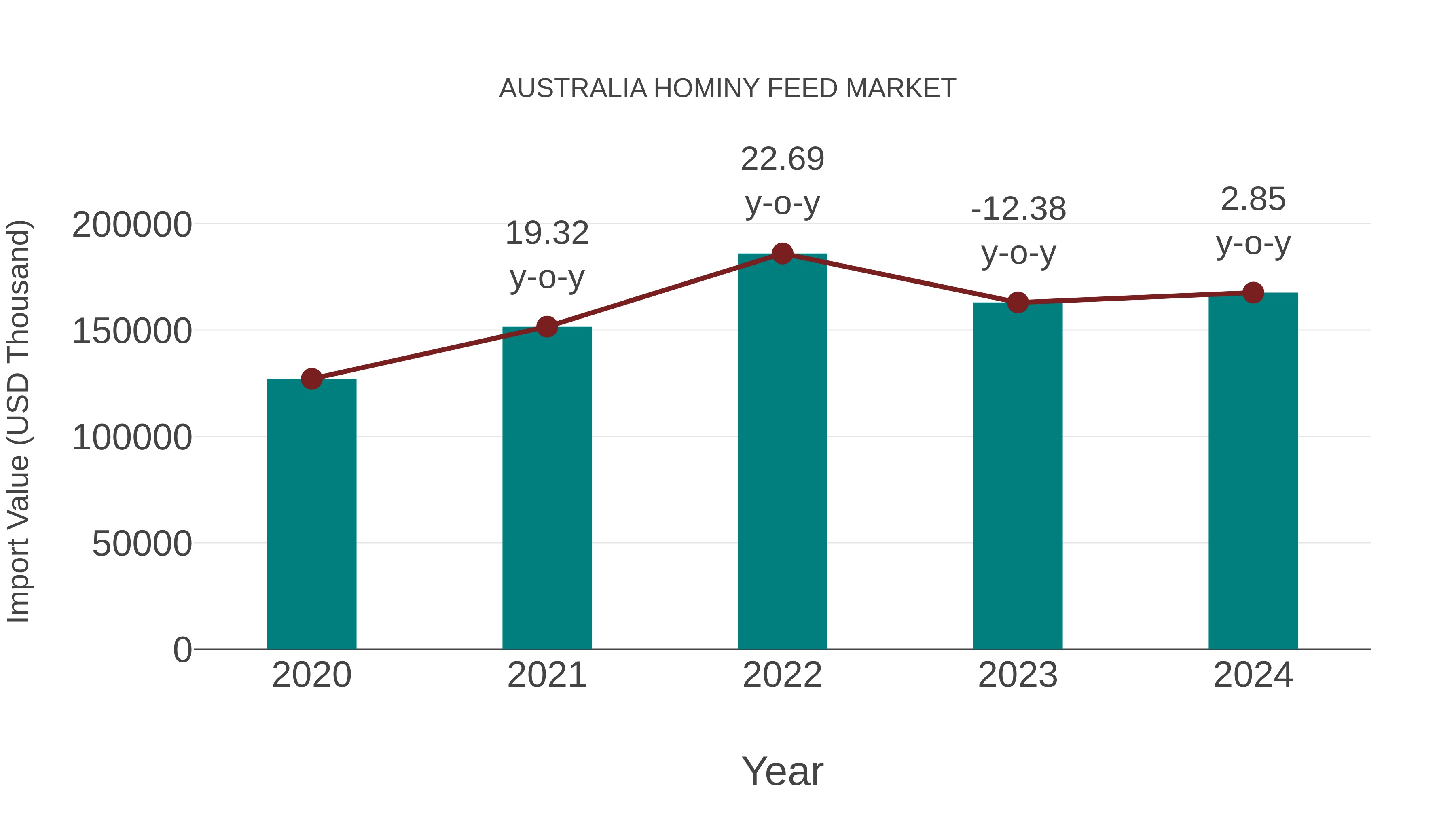
In the Australia hominy feed market, the import trend exhibited a growth rate of 2.85% from 2023 to 2024, with a compound annual growth rate (CAGR) of 7.17% from 2020 to 2024. This import momentum can be attributed to shifting demand patterns towards high-quality feed ingredients, signaling market stability amid evolving consumer preferences and agricultural practices.
Australia Hominy Feed Market Overview
Australia hominy feed market is experiencing moderate growth, driven by the demand for nutritious animal feed ingredients in the livestock industry. Hominy feed, derived from processed corn kernels, is a rich source of energy, protein, and essential nutrients for livestock such as poultry, swine, and cattle. With the increasing emphasis on animal nutrition and feed efficiency, the demand for hominy feed as a cost-effective and sustainable feed ingredient is expected to continue rising, contributing to market expansion in Australia.
Drivers of the market
The hominy feed market in Australia is witnessing growth driven by the demand for nutritious animal feed ingredients and the expansion of the livestock industry. Hominy feed, a byproduct of maize milling, is valued for its high protein and fiber content, making it suitable for feeding poultry, swine, and cattle. Factors such as increasing meat consumption, rising demand for animal protein, and the need for cost-effective feed solutions are driving market growth. Moreover, advancements in feed processing technologies and the adoption of sustainable farming practices are contributing to market expansion.
Challenges of the market
The hominy feed market in Australia faces challenges related to market demand variability, feed formulation, and regulatory compliance. Hominy feed, a byproduct of corn milling, is used as a livestock feed ingredient for its nutritional value and cost-effectiveness. However, fluctuations in corn prices and livestock production levels impact demand for hominy feed, leading to supply chain disruptions and pricing volatility. Moreover, ensuring compliance with feed safety standards and animal welfare regulations adds complexity to production and distribution processes. Investing in supply chain resilience, quality assurance measures, and market diversification strategies are essential for success in the Australia hominy feed market.
Government Policy of the market
Government policies in Australia may address agricultural production, food safety, and animal nutrition in the hominy feed market. Regulatory agencies such as the Australia Pesticides and Veterinary Medicines Authority (APVMA) oversee the approval and regulation of feed additives and supplements used in livestock nutrition. Standards organizations like Standards Australia may develop technical specifications and testing protocols for feed ingredients to ensure quality and safety. Government initiatives may support research and development in animal nutrition science and promote best practices for feed manufacturing and management to optimize animal health and productivity. Public education campaigns may also raise awareness about the nutritional value and safe handling of hominy feed for livestock feeding purposes.
Key Highlights of the Report:
- Australia Hominy Feed Market Outlook
- Market Size of Australia Hominy Feed Market, 2025
- Forecast of Australia Hominy Feed Market, 2032
- Historical Data and Forecast of Australia Hominy Feed Revenues & Volume for the Period 2022-2032F
- Australia Hominy Feed Market Trend Evolution
- Australia Hominy Feed Market Drivers and Challenges
- Australia Hominy Feed Price Trends
- Australia Hominy Feed Porter's Five Forces
- Australia Hominy Feed Industry Life Cycle
- Historical Data and Forecast of Australia Hominy Feed Market Revenues & Volume By Nature for the Period 2022-2032F
- Historical Data and Forecast of Australia Hominy Feed Market Revenues & Volume By Organic for the Period 2022-2032F
- Historical Data and Forecast of Australia Hominy Feed Market Revenues & Volume By Conventional for the Period 2022-2032F
- Historical Data and Forecast of Australia Hominy Feed Market Revenues & Volume By End-use for the Period 2022-2032F
- Historical Data and Forecast of Australia Hominy Feed Market Revenues & Volume By Livestock/Animal Feed for the Period 2022-2032F
- Historical Data and Forecast of Australia Hominy Feed Market Revenues & Volume By Pet Food manufacturers for the Period 2022-2032F
- Historical Data and Forecast of Australia Hominy Feed Market Revenues & Volume By Ethanol production for the Period 2022-2032F
- Historical Data and Forecast of Australia Hominy Feed Market Revenues & Volume By Distribution Channel for the Period 2022-2032F
- Historical Data and Forecast of Australia Hominy Feed Market Revenues & Volume By Direct for the Period 2022-2032F
- Historical Data and Forecast of Australia Hominy Feed Market Revenues & Volume By Indirect for the Period 2022-2032F
- Historical Data and Forecast of Australia Hominy Feed Market Revenues & Volume By Dairy farms for the Period 2022-2032F
- Historical Data and Forecast of Australia Hominy Feed Market Revenues & Volume By Specialty stores for the Period 2022-2032F
- Historical Data and Forecast of Australia Hominy Feed Market Revenues & Volume By Online retailers for the Period 2022-2032F
- Australia Hominy Feed Import Export Trade Statistics
- Market Opportunity Assessment By Nature
- Market Opportunity Assessment By End-use
- Market Opportunity Assessment By Distribution Channel
- Australia Hominy Feed Top Companies Market Share
- Australia Hominy Feed Competitive Benchmarking By Technical and Operational Parameters
- Australia Hominy Feed Company Profiles
- Australia Hominy Feed Key Strategic Recommendations






































