Australia Insect Repellent Market: Import Trend Analysis
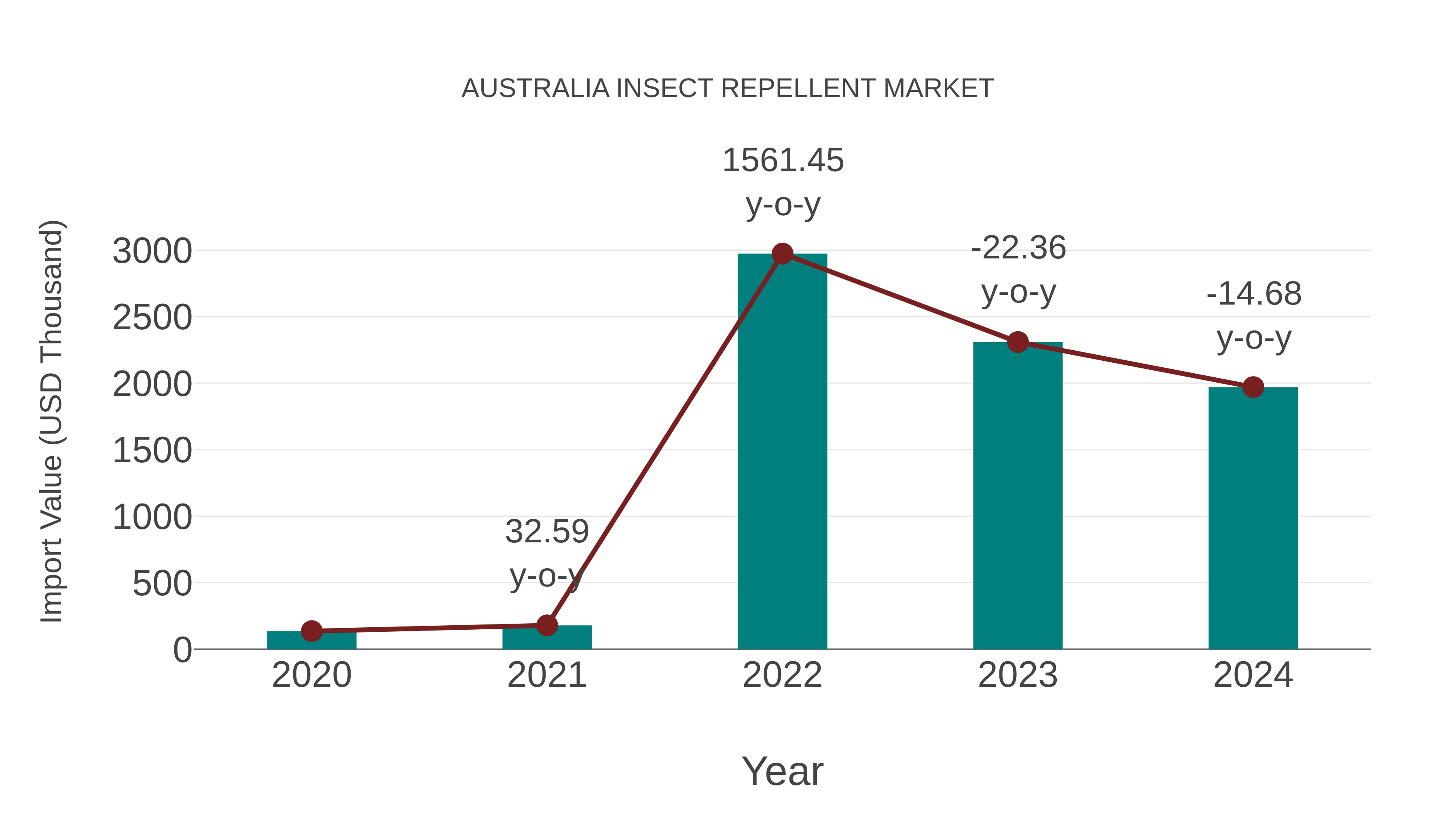
Australia`s import trend for the insect repellent market experienced a notable decline from 2023 to 2024, with a growth rate of -14.68%. However, the compound annual growth rate (CAGR) for the period of 2020-2024 stood at a substantial 95.45%. This decline in import momentum could be attributed to shifting consumer preferences, changes in trade policies, or market saturation impacting demand.
Australia Insect Repellent Market Overview
The Australia insect repellent market is experiencing steady growth driven by increasing awareness about insect-borne diseases such as dengue fever and Zika virus. Consumers are increasingly seeking natural and DEET-free repellent options, leading to a rise in demand for products containing essential oils like citronella and eucalyptus. Key players in the market are focusing on product innovation, such as long-lasting formulations and convenient application methods like sprays and wipes. The market is also witnessing a trend towards environmentally friendly and sustainable insect repellents. With a growing outdoor recreation culture in Australia, including camping, hiking, and sports activities, the demand for effective insect repellents is expected to continue to rise, offering opportunities for both local and international brands to expand their presence in the market.
Australia Insect Repellent Market Trends and Opportunities
The Australia insect repellent market is experiencing a surge in demand driven by increasing awareness about insect-borne diseases such as dengue fever and Zika virus. Consumers are seeking natural and chemical-free repellents, leading to a growing trend towards plant-based and DEET-free products. Additionally, the rise in outdoor activities due to the COVID-19 pandemic has further boosted sales of insect repellents. Key opportunities in the market include the development of innovative formulations using essential oils and botanical extracts, as well as the introduction of eco-friendly packaging to appeal to environmentally conscious consumers. Market players can also capitalize on the growing popularity of camping and outdoor recreational activities by offering convenient and long-lasting insect protection solutions.
Australia Insect Repellent Market Challenges
In the Australian Insect Repellent Market, one of the main challenges is the increasing consumer demand for natural and chemical-free products. This trend has led to a shift towards plant-based ingredients and eco-friendly formulations, posing a challenge for traditional insect repellent brands that rely on synthetic chemicals. Additionally, the prevalence of mosquito-borne diseases such as dengue fever and Ross River virus in certain regions of Australia has heightened the importance of effective insect protection, further driving the need for innovative solutions in the market. Competition among brands to differentiate themselves with unique formulations and packaging, as well as the need for ongoing research and development to stay ahead of insect resistance to repellent ingredients, are also key challenges faced by companies operating in this sector.
Australia Insect Repellent Market Drivers
The Australia Insect Repellent Market is driven by several key factors including the increasing prevalence of insect-borne diseases such as dengue fever and Ross River virus, leading to a growing awareness among consumers about the importance of protection against insects. Additionally, the rising demand for natural and DEET-free insect repellent products due to health and environmental concerns is fueling market growth. The country`s outdoor lifestyle and participation in outdoor activities such as camping, hiking, and sports also contribute to the demand for insect repellents. Furthermore, the availability of innovative products with advanced formulations, long-lasting protection, and pleasant fragrances are attracting consumers looking for effective and convenient solutions to keep insects at bay. Overall, these factors are driving the growth of the Australia Insect Repellent Market.
Australia Insect Repellent Market Government Policies
The Australian government regulates insect repellents through the Australian Pesticides and Veterinary Medicines Authority (APVMA), ensuring that products are safe and effective. Insect repellents must be registered with the APVMA before they can be sold in the market, with rigorous evaluation of the product`s active ingredients, efficacy, and safety for both humans and the environment. Additionally, the government sets guidelines on labeling requirements, including proper usage instructions and safety precautions. The government also monitors and enforces regulations to prevent misleading claims and ensure compliance with standards. Overall, the government plays a crucial role in safeguarding consumer health and promoting transparency in the Australia Insect Repellent Market.
Australia Insect Repellent Market Future Outlook
The Australia Insect Repellent Market is expected to witness steady growth in the coming years due to increasing awareness about vector-borne diseases such as dengue fever and Zika virus. The rise in outdoor recreational activities, camping, and travel among Australians will further drive the demand for insect repellent products. Consumers are increasingly opting for natural and DEET-free repellents, leading to a surge in the availability of plant-based and eco-friendly options in the market. Innovative product formulations such as wearable repellent devices and long-lasting insect repellents will also contribute to market growth. With a growing focus on health and wellness, coupled with the threat of mosquito-borne illnesses, the Australia Insect Repellent Market is poised for expansion in the foreseeable future.
Key Highlights of the Report:
- Australia Insect Repellent Market Outlook
- Market Size of Australia Insect Repellent Market, 2025
- Forecast of Australia Insect Repellent Market, 2032
- Historical Data and Forecast of Australia Insect Repellent Revenues & Volume for the Period 2022 - 2032F
- Australia Insect Repellent Market Trend Evolution
- Australia Insect Repellent Market Drivers and Challenges
- Australia Insect Repellent Price Trends
- Australia Insect Repellent Porter's Five Forces
- Australia Insect Repellent Industry Life Cycle
- Historical Data and Forecast of Australia Insect Repellent Market Revenues & Volume By Type for the Period 2022 - 2032F
- Historical Data and Forecast of Australia Insect Repellent Market Revenues & Volume By Mosquito Repellent for the Period 2022 - 2032F
- Historical Data and Forecast of Australia Insect Repellent Market Revenues & Volume By Bugs Repellent for the Period 2022 - 2032F
- Historical Data and Forecast of Australia Insect Repellent Market Revenues & Volume By Fly Repellent for the Period 2022 - 2032F
- Historical Data and Forecast of Australia Insect Repellent Market Revenues & Volume By Others for the Period 2022 - 2032F
- Historical Data and Forecast of Australia Insect Repellent Market Revenues & Volume By Product Type for the Period 2022 - 2032F
- Historical Data and Forecast of Australia Insect Repellent Market Revenues & Volume By Vaporizers for the Period 2022 - 2032F
- Historical Data and Forecast of Australia Insect Repellent Market Revenues & Volume By Spray for the Period 2022 - 2032F
- Historical Data and Forecast of Australia Insect Repellent Market Revenues & Volume By Cream for the Period 2022 - 2032F
- Historical Data and Forecast of Australia Insect Repellent Market Revenues & Volume By Others for the Period 2022 - 2032F
- Australia Insect Repellent Import Export Trade Statistics
- Market Opportunity Assessment By Type
- Market Opportunity Assessment By Product Type
- Australia Insect Repellent Top Companies Market Share
- Australia Insect Repellent Competitive Benchmarking By Technical and Operational Parameters
- Australia Insect Repellent Company Profiles
- Australia Insect Repellent Key Strategic Recommendations






































