Australia Loungewear Market: Import Trend Analysis
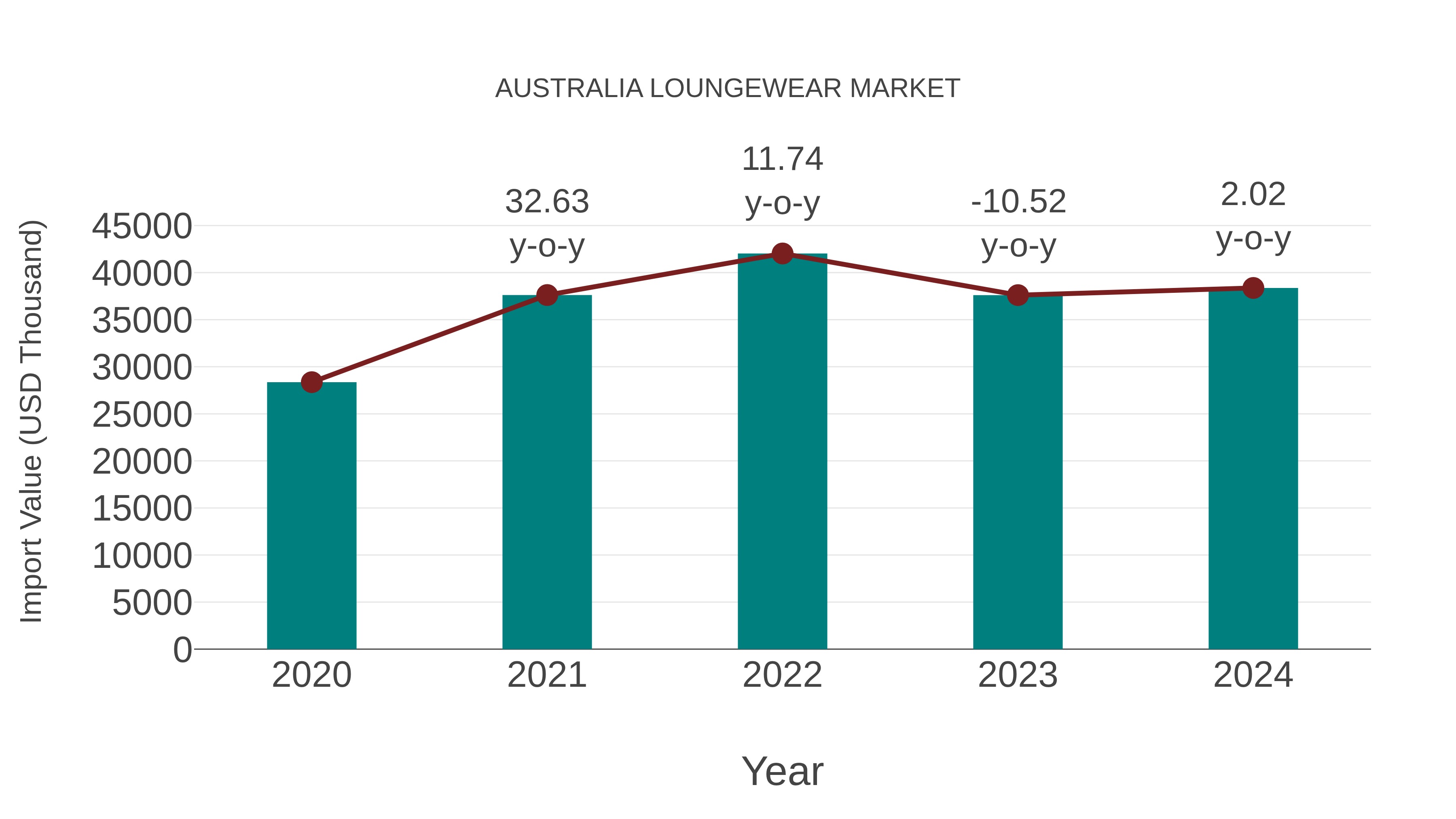
In the Australia loungewear market, imports experienced a 2.02% growth rate from 2023 to 2024, with a compound annual growth rate (CAGR) of 7.85% from 2020 to 2024. This import momentum reflects sustained demand for loungewear products, likely driven by evolving consumer preferences and increased market stability post-pandemic.
Australia Loungewear Market Synopsis
The Australia loungewear market has seen significant growth in recent years, driven by a shift towards casual and comfortable clothing styles. Consumers are increasingly seeking versatile and stylish loungewear pieces that can be worn both at home and outside. Key trends in the market include a preference for sustainable and ethically-made loungewear, as well as a rise in demand for inclusive sizing options. Australian consumers are also showing a willingness to invest in high-quality loungewear pieces that offer both comfort and style. Major players in the market include local and international brands offering a wide range of loungewear options, from cozy sweatsuits to chic loungewear sets. As the demand for loungewear continues to rise, the Australia market is expected to further expand with innovative designs and sustainable practices driving growth.
Australia Loungewear Market Trends
The Australia loungewear market is experiencing significant growth due to the increasing consumer demand for comfortable and versatile clothing, especially amid the rise of remote work and stay-at-home lifestyles. Key trends in the market include the popularity of sustainable and eco-friendly loungewear options, the incorporation of innovative fabrics for enhanced comfort and performance, and the influence of athleisure styles on loungewear designs. Opportunities exist for brands to capitalize on the demand for inclusive sizing, personalized loungewear options, and seamless online shopping experiences. With the ongoing shift towards casual and comfortable attire, the Australia loungewear market presents a promising landscape for companies to expand their offerings and reach a broader consumer base.
Australia Loungewear Market Challenges
In the Australia loungewear market, one of the main challenges faced by brands and retailers is the increasing competition from both domestic and international players. With the growing popularity of loungewear as a fashion trend and the shift towards more casual and comfortable clothing styles, the market has become saturated with options, making it harder for businesses to differentiate themselves and stand out. Additionally, maintaining a balance between quality and affordability is crucial in order to meet consumer expectations and stay competitive in the market. Brands also need to adapt to changing consumer preferences and trends quickly to stay relevant, which requires constant innovation and product development. Overall, navigating through these challenges while maintaining a strong brand image and keeping up with evolving consumer demands is key for success in the Australia loungewear market.
Australia Loungewear Market Investment Opportunities
The Australia loungewear market is primarily being driven by the growing consumer preference for comfortable and versatile clothing options, especially due to the increase in remote working and lifestyle changes brought about by the COVID-19 pandemic. The rise of athleisure as a fashion trend has also contributed to the popularity of loungewear, as consumers seek clothing that can seamlessly transition from lounging at home to running errands or casual outings. Additionally, the focus on sustainable and eco-friendly materials in loungewear production is resonating with environmentally conscious consumers, leading to an increase in demand for ethically sourced and sustainable loungewear options. E-commerce platforms and social media influencers have also played a significant role in driving awareness and sales in the Australia loungewear market.
Australia Loungewear Market Government Policie
The Australian government does not have specific policies related to the loungewear market. However, the general consumer protection laws and regulations in Australia would apply to businesses operating in the loungewear industry, ensuring fair trading practices, product safety standards, and compliance with labeling requirements. Additionally, businesses in the loungewear market are subject to taxation laws, including goods and services tax (GST) on sales. The government may also introduce initiatives or provide support for the textile and apparel industry as a whole, which could indirectly impact the loungewear market. Overall, while there are no direct policies targeting the loungewear market specifically, businesses in this sector must adhere to existing laws and regulations governing consumer goods and trade practices in Australia.
Australia Loungewear Market Future Outlook
The Australia loungewear market is expected to continue experiencing steady growth in the foreseeable future. The increasing trend of remote work and flexible working arrangements, along with a growing focus on comfort and relaxation in everyday wear, will drive the demand for loungewear. Consumers are likely to prioritize versatile and stylish loungewear pieces that can seamlessly transition from home to casual outings. Additionally, the rise of sustainable and ethical fashion practices will influence purchasing decisions, leading to a greater demand for eco-friendly loungewear options. As digital shopping channels and e-commerce platforms continue to dominate the retail landscape, brands that offer a mix of comfort, style, and sustainability are poised to succeed in capturing market share and meeting the evolving needs of Australian consumers.
Key Highlights of the Report:
- Australia Loungewear Market Outlook
- Market Size of Australia Loungewear Market, 2025
- Forecast of Australia Loungewear Market, 2032
- Historical Data and Forecast of Australia Loungewear Revenues & Volume for the Period 2022 - 2032F
- Australia Loungewear Market Trend Evolution
- Australia Loungewear Market Drivers and Challenges
- Australia Loungewear Price Trends
- Australia Loungewear Porter's Five Forces
- Australia Loungewear Industry Life Cycle
- Historical Data and Forecast of Australia Loungewear Market Revenues & Volume By Material for the Period 2022 - 2032F
- Historical Data and Forecast of Australia Loungewear Market Revenues & Volume By Cotton for the Period 2022 - 2032F
- Historical Data and Forecast of Australia Loungewear Market Revenues & Volume By Wool for the Period 2022 - 2032F
- Historical Data and Forecast of Australia Loungewear Market Revenues & Volume By Silk for the Period 2022 - 2032F
- Historical Data and Forecast of Australia Loungewear Market Revenues & Volume By End User for the Period 2022 - 2032F
- Historical Data and Forecast of Australia Loungewear Market Revenues & Volume By Female for the Period 2022 - 2032F
- Historical Data and Forecast of Australia Loungewear Market Revenues & Volume By Male for the Period 2022 - 2032F
- Historical Data and Forecast of Australia Loungewear Market Revenues & Volume By Kids for the Period 2022 - 2032F
- Historical Data and Forecast of Australia Loungewear Market Revenues & Volume By Distribution Channel for the Period 2022 - 2032F
- Historical Data and Forecast of Australia Loungewear Market Revenues & Volume By Store-Based for the Period 2022 - 2032F
- Historical Data and Forecast of Australia Loungewear Market Revenues & Volume By Non-Store-Based for the Period 2022 - 2032F
- Australia Loungewear Import Export Trade Statistics
- Market Opportunity Assessment By Material
- Market Opportunity Assessment By End User
- Market Opportunity Assessment By Distribution Channel
- Australia Loungewear Top Companies Market Share
- Australia Loungewear Competitive Benchmarking By Technical and Operational Parameters
- Australia Loungewear Company Profiles
- Australia Loungewear Key Strategic Recommendations






































