Australia Neurology Devices Market Size Growth Rate
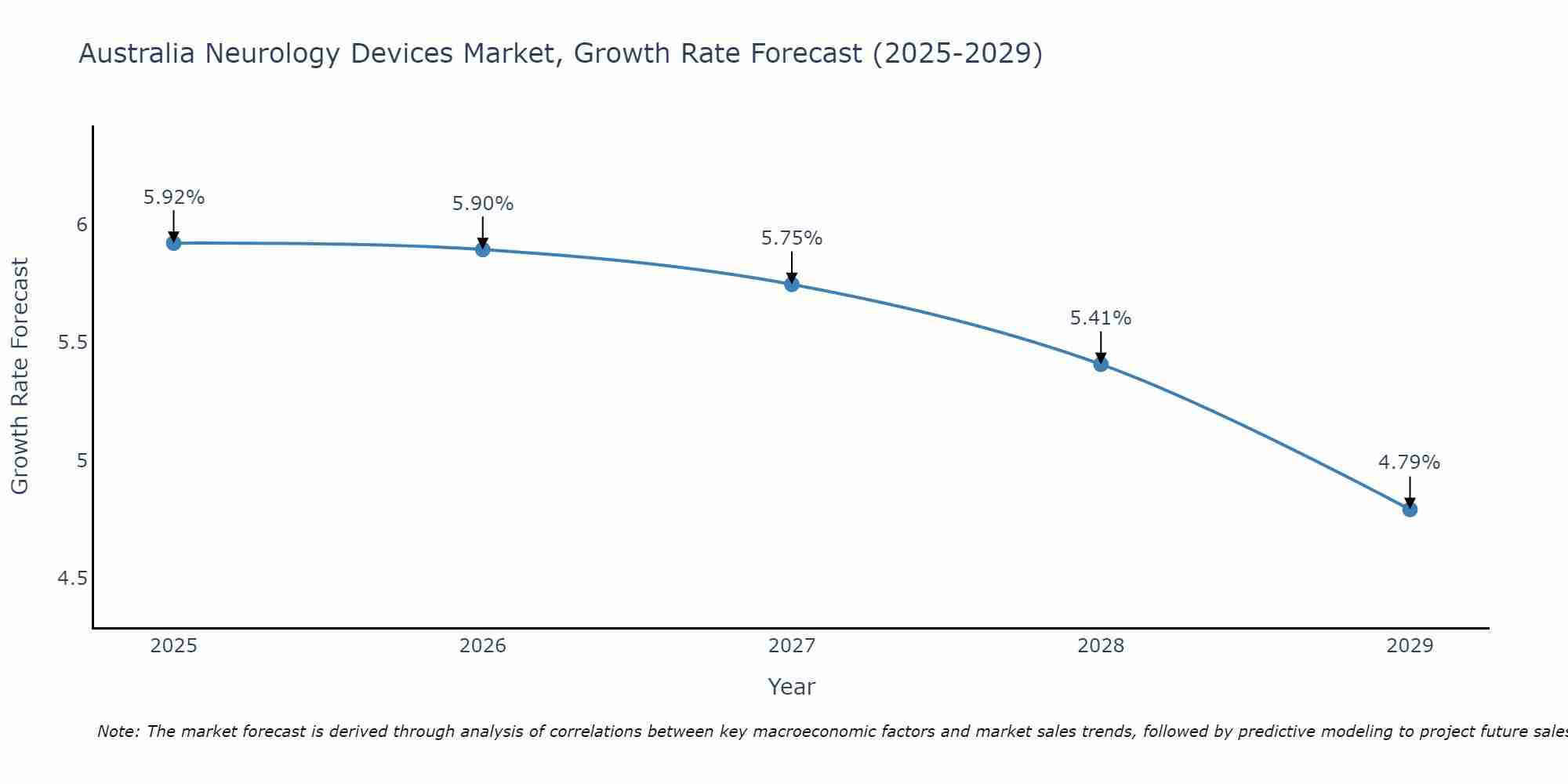
The Australia Neurology Devices Market could see a tapering of growth rates over 2025 to 2029. Starting high at 5.92% in 2025, the market steadily declines to 4.79% by 2029.
Australia Neurology Devices Market Synopsis
The neurology devices market in Australia is expanding due to advancements in brain imaging, neurostimulation, and diagnostic equipment. Increasing cases of neurological disorders such as epilepsy, Parkinsons disease, and stroke are driving demand for innovative medical devices. Government funding and research in neuroscience are further supporting market growth.
Drivers of the market
The neurology devices market in Australia is growing due to increasing cases of neurological disorders and advancements in brain monitoring and stimulation technologies. The demand for non-invasive and minimally invasive neurology devices is driving market adoption. Additionally, investments in AI-powered diagnostics and wearable neurotechnology are shaping market trends.
Challenges of the market
The neurology devices market in Australia faces regulatory challenges due to stringent medical device approval processes. High costs associated with advanced neurology equipment limit accessibility for smaller healthcare facilities. Additionally, the need for skilled professionals to operate and interpret neurological diagnostics adds to market constraints.
Investment opportunities in the Market
The increasing prevalence of neurological disorders and aging population in Australia fuel the demand for neurology devices. Investment opportunities lie in neurostimulation devices, AI-based diagnostics, and wearable monitoring solutions. With government support for medical research and healthcare advancements, this sector presents long-term growth potential.
Government Policy of the market
The neurology devices market in Australia is regulated under healthcare and medical device policies to ensure patient safety and effective treatment of neurological disorders. The government mandates compliance with Therapeutic Goods Administration (TGA) standards for neurology devices used in diagnostics and treatment. Import regulations require foreign-made neurology devices to meet Australian medical certification requirements before being approved for use. Additionally, government funding supports research and innovation in neurology device development to improve patient outcomes.
Key Highlights of the Report:
- Australia Neurology Devices Market Outlook
- Market Size of Australia Neurology Devices Market, 2024
- Forecast of Australia Neurology Devices Market, 2031
- Historical Data and Forecast of Australia Neurology Devices Revenues & Volume for the Period 2018 - 2031
- Australia Neurology Devices Market Trend Evolution
- Australia Neurology Devices Market Drivers and Challenges
- Australia Neurology Devices Price Trends
- Australia Neurology Devices Porter's Five Forces
- Australia Neurology Devices Industry Life Cycle
- Historical Data and Forecast of Australia Neurology Devices Market Revenues & Volume By Product for the Period 2018 - 2031
- Historical Data and Forecast of Australia Neurology Devices Market Revenues & Volume By Neurostimulation Devices for the Period 2018 - 2031
- Historical Data and Forecast of Australia Neurology Devices Market Revenues & Volume By Neurosurgery Devices for the Period 2018 - 2031
- Historical Data and Forecast of Australia Neurology Devices Market Revenues & Volume By Interventional Neurology Devices for the Period 2018 - 2031
- Historical Data and Forecast of Australia Neurology Devices Market Revenues & Volume By Cerebrospinal fluid management devices for the Period 2018 - 2031
- Historical Data and Forecast of Australia Neurology Devices Market Revenues & Volume By Others for the Period 2018 - 2031
- Historical Data and Forecast of Australia Neurology Devices Market Revenues & Volume By End User for the Period 2018 - 2031
- Historical Data and Forecast of Australia Neurology Devices Market Revenues & Volume By Hospitals for the Period 2018 - 2031
- Historical Data and Forecast of Australia Neurology Devices Market Revenues & Volume By Ambulatory surgery centers for the Period 2018 - 2031
- Historical Data and Forecast of Australia Neurology Devices Market Revenues & Volume By Neurology clinics for the Period 2018 - 2031
- Australia Neurology Devices Import Export Trade Statistics
- Market Opportunity Assessment By Product
- Market Opportunity Assessment By End User
- Australia Neurology Devices Top Companies Market Share
- Australia Neurology Devices Competitive Benchmarking By Technical and Operational Parameters
- Australia Neurology Devices Company Profiles
- Australia Neurology Devices Key Strategic Recommendations






































