Australia Road Safety Market: Import Trend Analysis
Australia`s import trend for the road safety market showed significant growth from 2023 to 2024, with a growth rate of 16.15%. The compound annual growth rate (CAGR) for the period 2020-2024 stood at 9.7%. This positive momentum in imports can be attributed to an increased demand for advanced road safety technologies and products, indicating a shift towards enhancing traffic safety measures in the country.
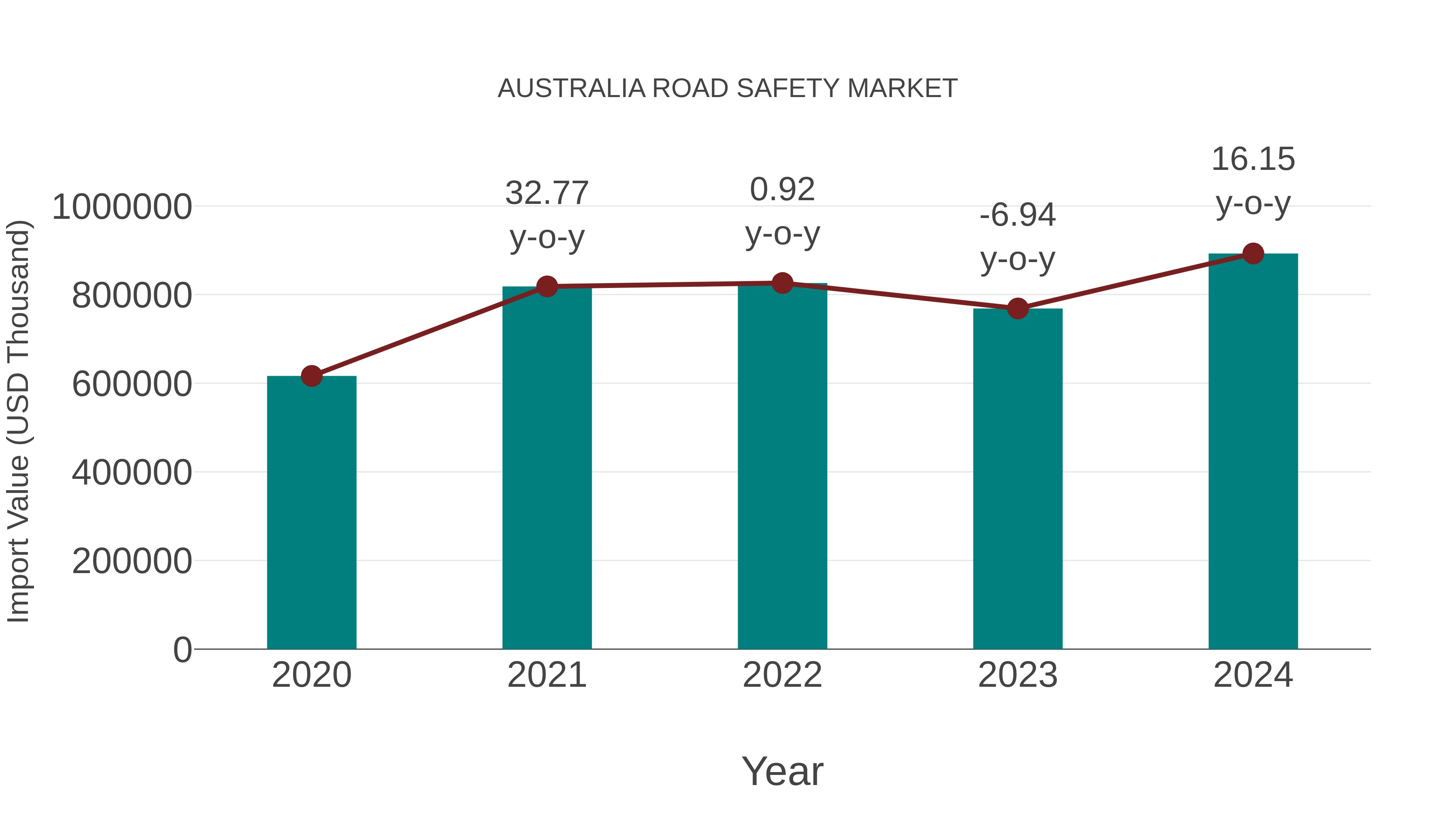
Australia Export Potential Assessment For Road Safety Market (Values in USD Thousand)
Australia Road Safety Market Synopsis
Australias road safety market is evolving with advancements in traffic management systems, smart signage, and improved road infrastructure. Government initiatives promoting pedestrian safety, intelligent traffic monitoring, and accident prevention contribute to market growth. Innovations such as AI-driven traffic analysis and automated vehicle assistance systems are also shaping the future of road safety.
Drivers of the market
Australias focus on improving road safety through stricter regulations, smart traffic management systems, and enhanced infrastructure is driving market growth. Investments in speed monitoring devices, road barriers, and pedestrian safety measures are increasing, aligning with national efforts to reduce road accidents.
Challenges of the market
Government regulations regarding road safety are continuously evolving, requiring market players to frequently adapt and invest in compliance measures. High implementation costs for smart traffic management systems pose financial barriers for municipalities. Additionally, public resistance to adopting new safety technologies, such as automated speed enforcement, can slow down market expansion.
Investment opportunities in the Market
The growing focus on traffic management and accident prevention has increased the demand for road safety equipment. Investment opportunities include advanced traffic monitoring systems, smart road signage, and AI-powered accident prevention solutions.
Government Policy of the market
The road safety market is governed by transportation policies, enforcing regulations on vehicle safety, traffic control systems, and pedestrian protection. The government invests in smart traffic solutions and road safety technologies, while trade regulations manage the import of safety equipment.
Key Highlights of the Report:
- Australia Road Safety Market Outlook
- Market Size of Australia Road Safety Market, 2025
- Forecast of Australia Road Safety Market, 2032
- Historical Data and Forecast of Australia Road Safety Revenues & Volume for the Period 2022-2032F
- Australia Road Safety Market Trend Evolution
- Australia Road Safety Market Drivers and Challenges
- Australia Road Safety Price Trends
- Australia Road Safety Porter's Five Forces
- Australia Road Safety Industry Life Cycle
- Historical Data and Forecast of Australia Road Safety Market Revenues & Volume By Solutions for the Period 2022-2032F
- Historical Data and Forecast of Australia Road Safety Market Revenues & Volume By Red Light for the Period 2022-2032F
- Historical Data and Forecast of Australia Road Safety Market Revenues & Volume By Speed for the Period 2022-2032F
- Historical Data and Forecast of Australia Road Safety Market Revenues & Volume By Bus Lane for the Period 2022-2032F
- Historical Data and Forecast of Australia Road Safety Market Revenues & Volume By Section Enforcement for the Period 2022-2032F
- Historical Data and Forecast of Australia Road Safety Market Revenues & Volume By ALPR/ANPR for the Period 2022-2032F
- Historical Data and Forecast of Australia Road Safety Market Revenues & Volume By Service for the Period 2022-2032F
- Historical Data and Forecast of Australia Road Safety Market Revenues & Volume By Consulting and Training for the Period 2022-2032F
- Historical Data and Forecast of Australia Road Safety Market Revenues & Volume By System Integration and Deployment for the Period 2022-2032F
- Historical Data and Forecast of Australia Road Safety Market Revenues & Volume By Support and Maintenance for the Period 2022-2032F
- Australia Road Safety Import Export Trade Statistics
- Market Opportunity Assessment By Solutions
- Market Opportunity Assessment By Service
- Australia Road Safety Top Companies Market Share
- Australia Road Safety Competitive Benchmarking By Technical and Operational Parameters
- Australia Road Safety Company Profiles
- Australia Road Safety Key Strategic Recommendations






































