Australia Turmeric Market: Import Trend Analysis
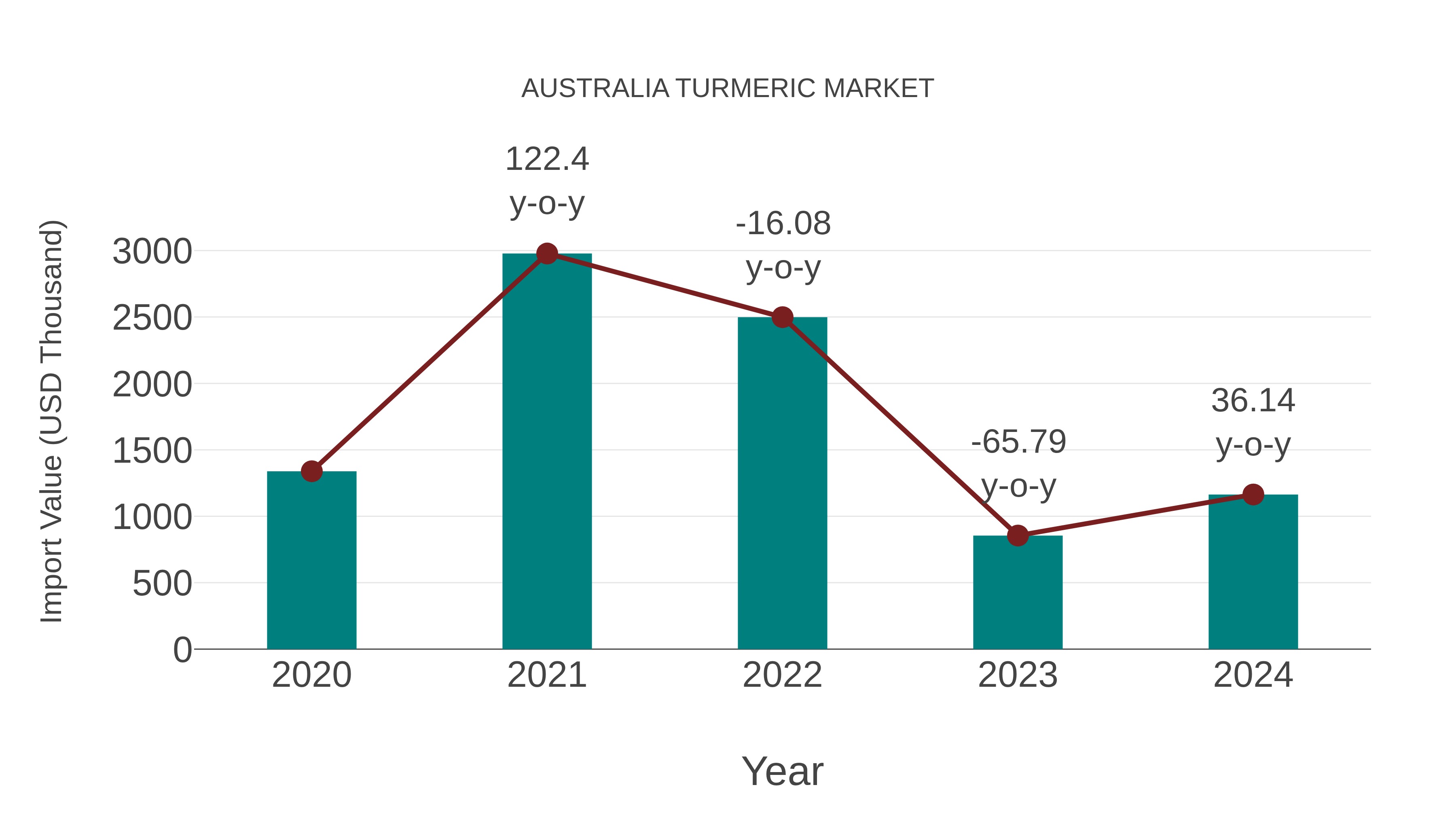
In the Australia turmeric market, the import trend witnessed significant fluctuations. From 2023 to 2024, there was a notable growth rate of 36.14%. However, the compound annual growth rate (CAGR) for the period 2020-2024 stood at -3.44%. This fluctuation could be attributed to shifts in consumer preferences or changes in trade policies impacting market stability.
Australia Turmeric Market Overview
The Australia Turmeric Market is witnessing steady growth due to increasing consumer awareness of the health benefits associated with turmeric consumption. The market is driven by the rising demand for natural and organic products, as turmeric is known for its anti-inflammatory and antioxidant properties. There is a growing trend towards incorporating turmeric into various food and beverage products, as well as in supplements and skincare products. The market is also benefiting from the popularity of traditional remedies and alternative medicine practices. Key players in the Australia Turmeric Market include both domestic producers and international suppliers, with a focus on offering high-quality turmeric products to meet the diverse needs of consumers. Overall, the Australia Turmeric Market shows promising growth potential in the coming years.
Australia Turmeric Market Trends
The Australia Turmeric Market is currently experiencing a significant growth trend driven by the increasing awareness of the health benefits associated with turmeric consumption. Consumers are seeking natural remedies and functional foods, leading to a rise in demand for turmeric-based products in various forms such as supplements, beverages, and skincare products. The market is also seeing a shift towards organic and sustainably sourced turmeric products as consumers prioritize ethical and environmentally friendly options. Additionally, the popularity of turmeric in traditional medicine practices like Ayurveda and growing interest in plant-based diets are further fueling the market growth. Manufacturers are innovating with new product formulations and marketing strategies to cater to the evolving preferences of health-conscious consumers in Australia.
Australia Turmeric Market Challenges
In the Australia Turmeric Market, some of the key challenges include fluctuations in supply due to factors such as weather conditions and pests impacting turmeric cultivation. Quality control and ensuring consistent product standards can also be a challenge, especially in a market with varying levels of competition. Additionally, there may be issues related to import regulations and certifications, as well as maintaining consumer trust and awareness regarding the health benefits and uses of turmeric products. Furthermore, market volatility and price fluctuations can pose challenges for both producers and retailers in terms of managing costs and pricing strategies effectively. Overall, navigating these challenges requires a combination of strategic planning, risk management, and a deep understanding of the market dynamics in order to sustain growth and profitability in the Australia Turmeric Market.
Australia Turmeric Market Investment Opportunities
The Australia Turmeric Market presents several promising investment opportunities due to the increasing consumer awareness about the health benefits of turmeric. Investors can consider opportunities in turmeric farming, processing, and product development. Investing in turmeric farming can provide long-term returns as the demand for turmeric as a health supplement and ingredient in various industries continues to grow. Additionally, setting up a turmeric processing facility or partnering with existing processors can offer a chance to capitalize on the value-added products market. Furthermore, investing in research and development for innovative turmeric-based products such as supplements, cosmetics, and functional foods can cater to the evolving consumer preferences for natural and functional ingredients. Overall, the Australia Turmeric Market offers diverse investment avenues for those looking to tap into the growing demand for this versatile spice.
Australia Turmeric Market Government Policy
The Australian government has established regulations governing the importation and production of turmeric to ensure consumer safety and quality standards. The Australian Pesticides and Veterinary Medicines Authority (APVMA) regulates the use of pesticides and other chemicals in turmeric cultivation to prevent harmful residues. The Australian Competition and Consumer Commission (ACCC) monitors labeling and advertising practices to prevent misleading claims about turmeric products. Additionally, the Department of Agriculture, Water and the Environment oversees biosecurity measures to prevent the introduction of pests and diseases that could harm turmeric crops. Overall, these government policies aim to promote a safe and sustainable turmeric market in Australia.
Australia Turmeric Market Future Outlook
The future outlook for the Australia Turmeric Market appears promising, driven by the increasing consumer awareness regarding the health benefits of turmeric, such as its anti-inflammatory and antioxidant properties. The growing trend towards natural and organic products is also expected to boost the demand for turmeric-based products in Australia. Additionally, the rising interest in alternative medicine and traditional remedies is likely to further fuel the market growth. With a focus on sustainability and ethical sourcing practices, Australian turmeric producers are well-positioned to cater to the evolving consumer preferences. Overall, the Australia Turmeric Market is projected to experience steady growth in the coming years, supported by the health-conscious consumer base and the expanding product offerings in various industries such as food, beverages, cosmetics, and pharmaceuticals.
Key Highlights of the Report:
- Australia Turmeric Market Outlook
- Market Size of Australia Turmeric Market,2025
- Forecast of Australia Turmeric Market, 2032
- Historical Data and Forecast of Australia Turmeric Revenues & Volume for the Period 2022-2032F
- Australia Turmeric Market Trend Evolution
- Australia Turmeric Market Drivers and Challenges
- Australia Turmeric Price Trends
- Australia Turmeric Porter's Five Forces
- Australia Turmeric Industry Life Cycle
- Historical Data and Forecast of Australia Turmeric Market Revenues & Volume By Type for the Period 2022-2032F
- Historical Data and Forecast of Australia Turmeric Market Revenues & Volume By Organic for the Period 2022-2032F
- Historical Data and Forecast of Australia Turmeric Market Revenues & Volume By Conventional for the Period 2022-2032F
- Historical Data and Forecast of Australia Turmeric Market Revenues & Volume By Processed for the Period 2022-2032F
- Historical Data and Forecast of Australia Turmeric Market Revenues & Volume By Infused for the Period 2022-2032F
- Historical Data and Forecast of Australia Turmeric Market Revenues & Volume By Others for the Period 2022-2032F
- Historical Data and Forecast of Australia Turmeric Market Revenues & Volume By Form for the Period 2022-2032F
- Historical Data and Forecast of Australia Turmeric Market Revenues & Volume By Powder for the Period 2022-2032F
- Historical Data and Forecast of Australia Turmeric Market Revenues & Volume By Whole for the Period 2022-2032F
- Historical Data and Forecast of Australia Turmeric Market Revenues & Volume By Extracts for the Period 2022-2032F
- Historical Data and Forecast of Australia Turmeric Market Revenues & Volume By Capsules for the Period 2022-2032F
- Historical Data and Forecast of Australia Turmeric Market Revenues & Volume By Application for the Period 2022-2032F
- Historical Data and Forecast of Australia Turmeric Market Revenues & Volume By Culinary Use for the Period 2022-2032F
- Historical Data and Forecast of Australia Turmeric Market Revenues & Volume By Medicinal Use for the Period 2022-2032F
- Historical Data and Forecast of Australia Turmeric Market Revenues & Volume By Skincare for the Period 2022-2032F
- Historical Data and Forecast of Australia Turmeric Market Revenues & Volume By Herbal Therapy for the Period 2022-2032F
- Historical Data and Forecast of Australia Turmeric Market Revenues & Volume By Nutritional Supplements for the Period 2022-2032F
- Historical Data and Forecast of Australia Turmeric Market Revenues & Volume By End Use for the Period 2022-2032F
- Historical Data and Forecast of Australia Turmeric Market Revenues & Volume By Households for the Period 2022-2032F
- Historical Data and Forecast of Australia Turmeric Market Revenues & Volume By Pharmaceuticals for the Period 2022-2032F
- Historical Data and Forecast of Australia Turmeric Market Revenues & Volume By Personal Care for the Period 2022-2032F
- Historical Data and Forecast of Australia Turmeric Market Revenues & Volume By Alternative Medicine for the Period 2022-2032F
- Historical Data and Forecast of Australia Turmeric Market Revenues & Volume By Nutraceuticals for the Period 2022-2032F
- Historical Data and Forecast of Australia Turmeric Market Revenues & Volume By End Use for the Period 2022-2032F
- Historical Data and Forecast of Australia Turmeric Market Revenues & Volume By Professional Tattooing for the Period 2022-2032F
- Historical Data and Forecast of Australia Turmeric Market Revenues & Volume By Tattoo Studios for the Period 2022-2032F
- Australia Turmeric Import Export Trade Statistics
- Market Opportunity Assessment By Type
- Market Opportunity Assessment By Form
- Market Opportunity Assessment By Application
- Market Opportunity Assessment By End Use
- Market Opportunity Assessment By End Use
- Australia Turmeric Top Companies Market Share
- Australia Turmeric Competitive Benchmarking By Technical and Operational Parameters
- Australia Turmeric Company Profiles
- Australia Turmeric Key Strategic Recommendations






































