Austria Carob Powder Market: Import Trend Analysis
In the Austria carob powder market, the import trend exhibited a notable growth rate of 22.69% from 2023 to 2024, with a compound annual growth rate (CAGR) of 14.7% for the period 2020-2024. This significant uptick in import momentum can be attributed to a shift in consumer preferences towards healthier alternatives in the food industry, driving increased demand for carob powder imports in Austria.
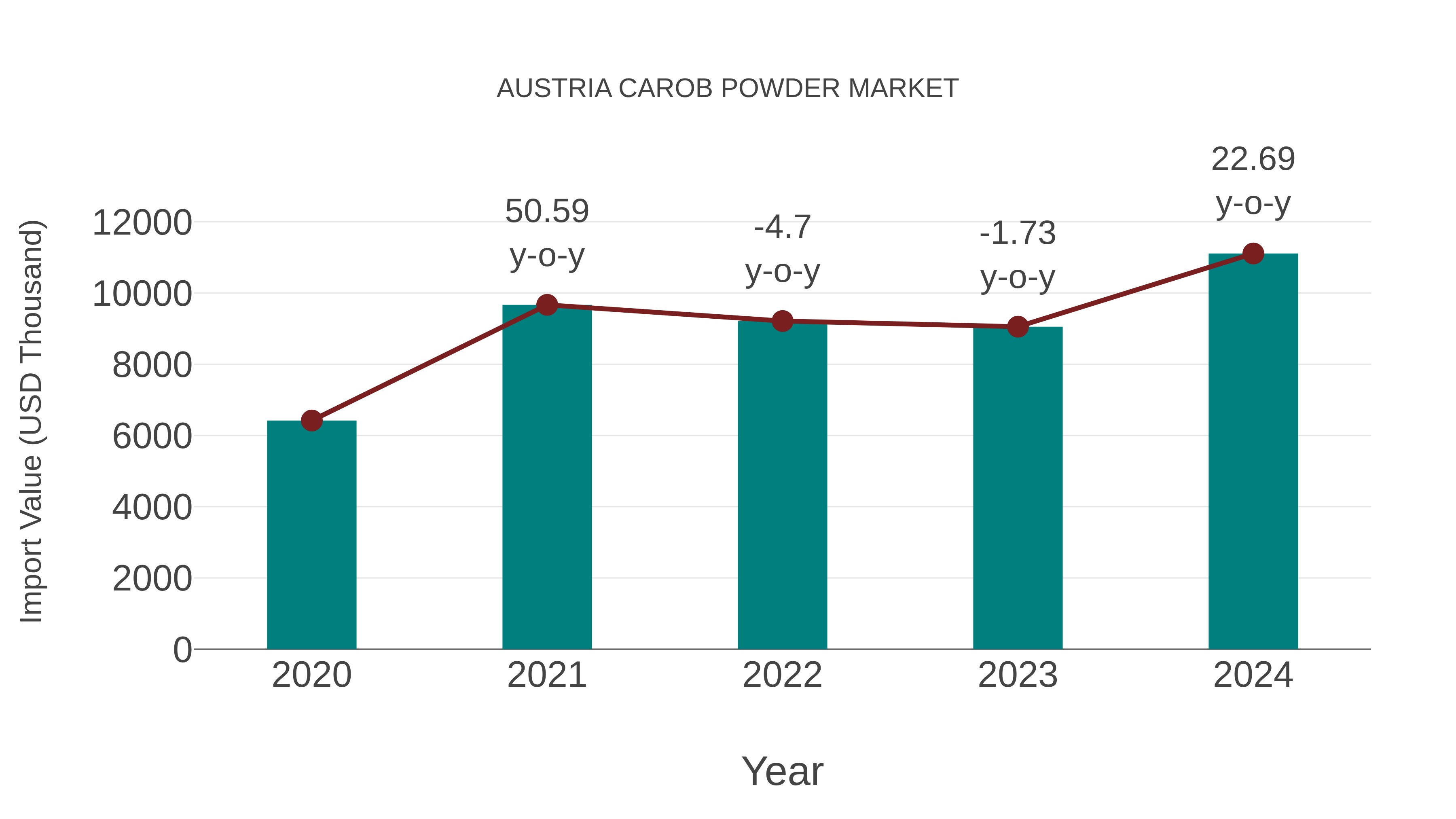
Austria Export Potential Assessment For Carob Powder Market (Values in USD Thousand)
Austria Carob Powder Market Overview
The carob powder market in Austria supplies a nutritious powder made from carob pods, used as a cocoa substitute in baking, beverages, and nutritional supplements. Carob powder is rich in fiber, antioxidants, and minerals, offering a caffeine-free and gluten-free alternative to chocolate ingredients. Key trends include the popularity of carob-based superfoods and health products, the development of organic and non-GMO carob powder varieties, and the use of carob powder in functional food formulations for dietary management and wellness.
Drivers of the market
The carob powder market in Austria is influenced by the demand for natural and healthy food ingredients. Carob powder is used as a cocoa substitute in baking, confectionery, and beverages. The market benefits from the growing awareness of the health benefits of carob, including its high fiber content and low glycemic index. Additionally, the increasing demand for gluten-free and allergen-free products supports market growth.
Challenges of the market
The carob powder market in Austria faces challenges related to fluctuating supply and quality of carob pods, which are influenced by climatic conditions and agricultural practices. Ensuring the consistent quality and purity of carob powder for various applications, such as food, beverages, and pharmaceuticals, adds complexity to the market. Additionally, competition from alternative natural sweeteners and cocoa powder impacts market demand. Regulatory compliance with safety and quality standards also poses challenges. Manufacturers must invest in sustainable sourcing practices, quality control systems, and research and development to maintain market competitiveness and meet consumer demands for natural and healthy food ingredients.
Government Policy of the market
Government policies in Austria for the carob powder market emphasize supporting the food and beverage industry. Financial incentives are provided for companies producing and developing high-quality carob powder used as a cocoa substitute and food ingredient. Research funding is available to improve the production processes and nutritional properties of carob powder, fostering innovation and competitiveness in the food sector.
Key Highlights of the Report:
- Austria Carob Powder Market Outlook
- Market Size of Austria Carob Powder Market, 2025
- Forecast of Austria Carob Powder Market, 2032
- Historical Data and Forecast of Austria Carob Powder Revenues & Volume for the Period 2022-2032F
- Austria Carob Powder Market Trend Evolution
- Austria Carob Powder Market Drivers and Challenges
- Austria Carob Powder Price Trends
- Austria Carob Powder Porter`s Five Forces
- Austria Carob Powder Industry Life Cycle
- Historical Data and Forecast of Austria Carob Powder Market Revenues & Volume By Product Type for the Period 2022-2032F
- Historical Data and Forecast of Austria Carob Powder Market Revenues & Volume By Natural Carob Powder for the Period 2022-2032F
- Historical Data and Forecast of Austria Carob Powder Market Revenues & Volume By Organic Carob Powder for the Period 2022-2032F
- Austria Carob Powder Import Export Trade Statistics
- Market Opportunity Assessment By Product Type
- Austria Carob Powder Top Companies Market Share
- Austria Carob Powder Competitive Benchmarking By Technical and Operational Parameters
- Austria Carob Powder Company Profiles
- Austria Carob Powder Key Strategic Recommendations






































