Austria Chewing Gum Market Size (2020-2030)
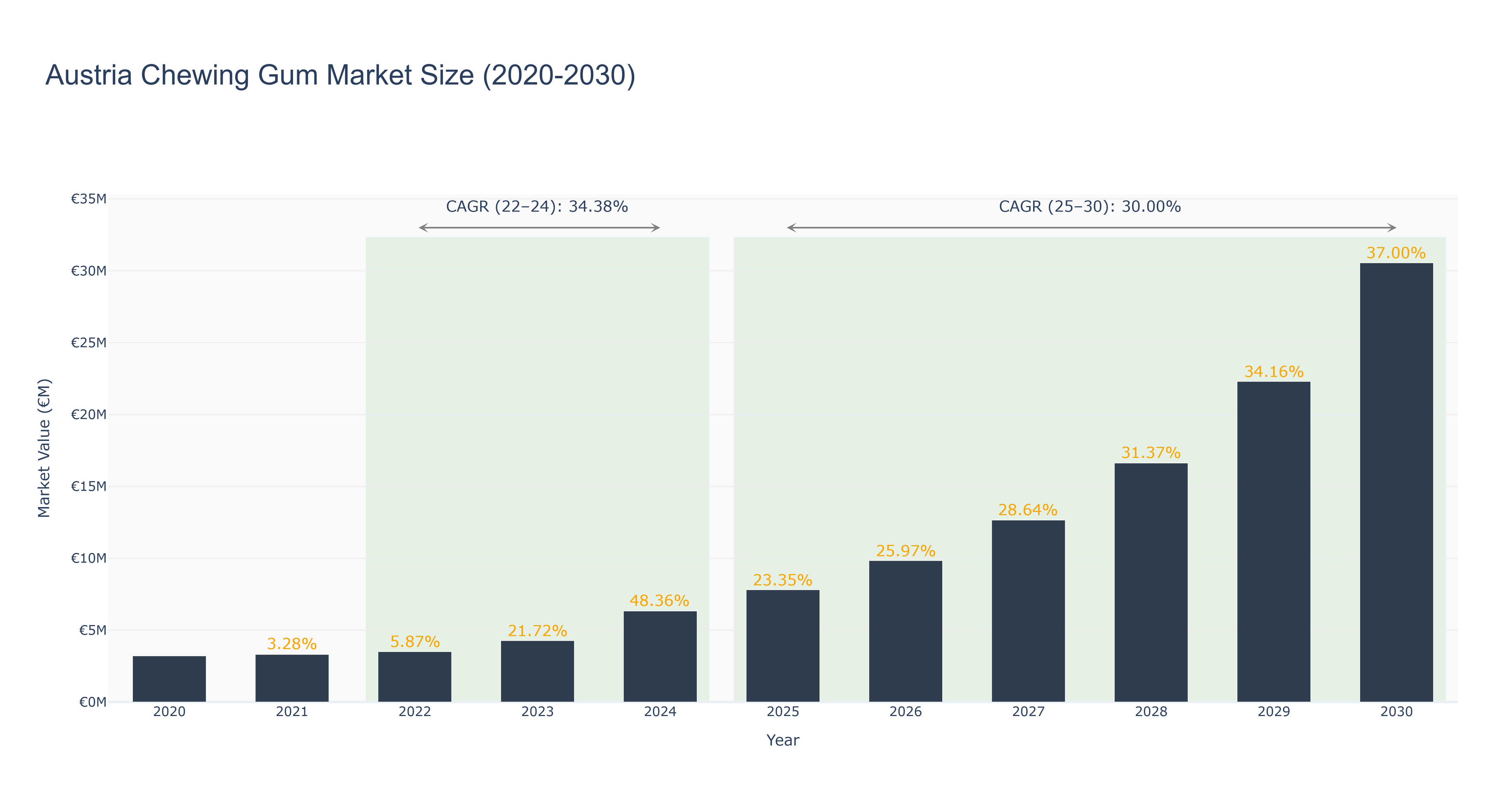
Austria's Chewing Gum Market has shown a remarkable growth trajectory over the years. The market peaked at €30.55 million in 2030, with a strong CAGR of 37.00% from 2025 to 2030. Notably, the market size surged from €3.51 million in 2022 to €6.33 million in 2024, driven by a CAGR of 34.38%. Subsequently, from 2025 to 2030, the market is forecasted to maintain solid growth, with a CAGR of 30.0%. This growth can be attributed to increasing consumer demand for convenient and on-the-go snacking options, coupled with innovative product offerings and aggressive marketing strategies by key players. Looking ahead, Austria's Chewing Gum Market is poised for further expansion, with upcoming plans for sustainable packaging initiatives and enhanced flavor varieties to cater to evolving consumer preferences.
Austria Chewing Gum Market: Production & Trade Performance (2019-2025)
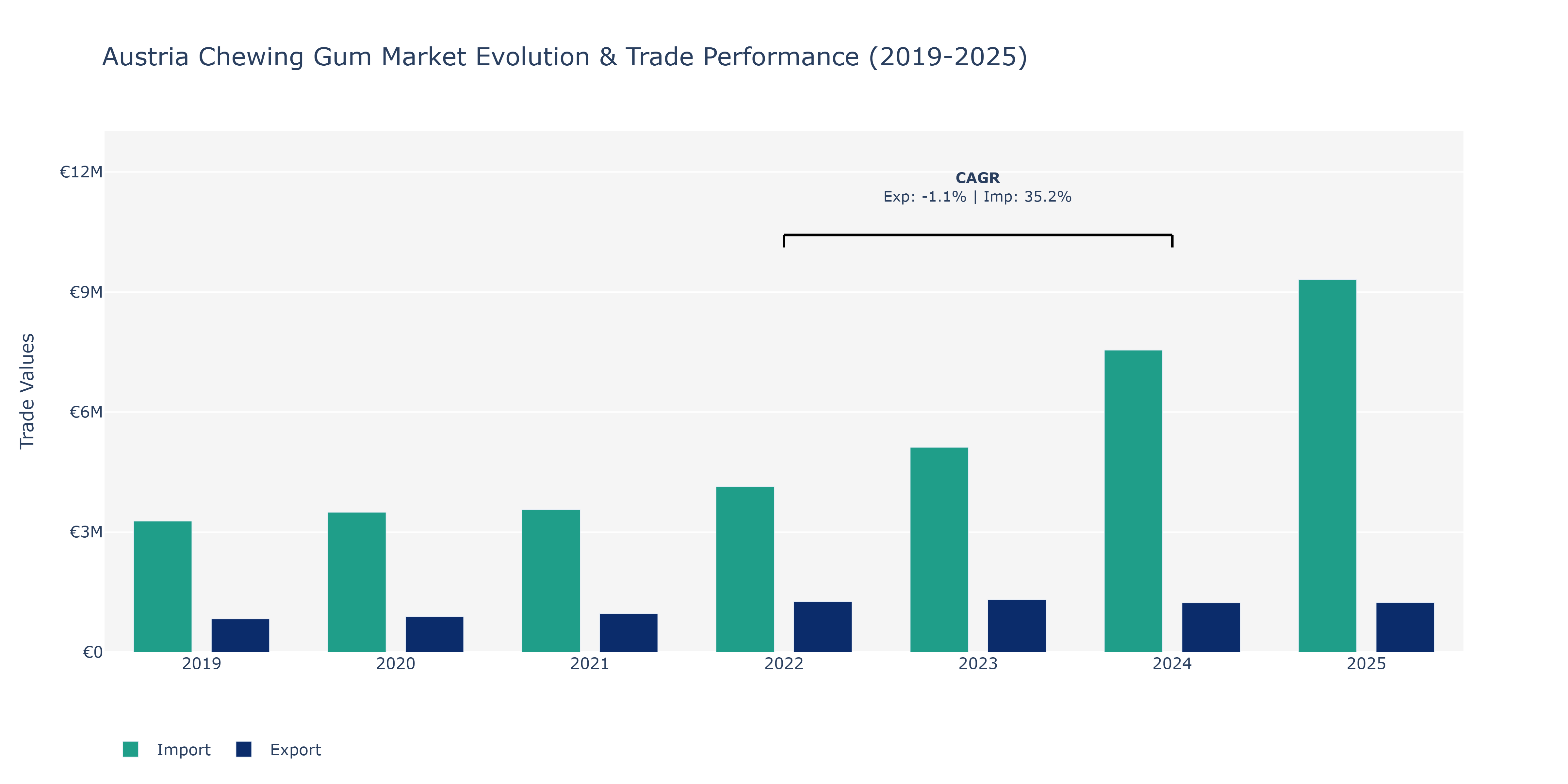
In the Austria Chewing Gum Market, from 2019 to 2025, both Exports and Imports displayed notable growth trends. Exports saw a steady rise from €826.44 thousand in 2019 to a peak of €1.31 million in 2023 before slightly decreasing to €1.24 million in 2024 and then stabilizing around €1.24 million in 2025. On the other hand, Imports demonstrated consistent growth, starting at €3.27 million in 2019 and more than doubling to reach €9.31 million in 2025. The remarkable increase in Imports, particularly evident in the 35.15% CAGR between 2022 and 2024, could be attributed to various factors such as increasing consumer demand for diverse chewing gum products, expanding distribution channels, and strategic partnerships with international suppliers. This surge aligns with the global trend of growing demand for confectionery products, supported by the rising disposable incomes and changing consumer preferences towards convenient and innovative snack options.
Austria Chewing Gum Market Overview
The chewing gum market in Austria provides flavored gum products made from natural and synthetic ingredients for oral hygiene, breath freshening, and stress relief. Chewing gum varieties include mint, fruit, and sugar-free options offering dental benefits and sensory stimulation. Key applications include retail distribution, vending machines, and impulse purchases. Key trends include the demand for functional chewing gums enriched with vitamins and botanical extracts, the development of biodegradable gum bases for environmental sustainability, and the customization of gum formulations for dietary preferences and oral health concerns.
Drivers of the market
The chewing gum market in Austria is influenced by the demand for confectionery products that offer flavor, freshness, and oral health benefits. Chewing gum is popular for its convenience, variety of flavors, and potential dental benefits. The market benefits from the growth of the confectionery industry, advancements in gum formulations, and the increasing focus on health and wellness.
Challenges of the market
The chewing gum market in Austria faces challenges related to the fluctuating prices and availability of raw materials, such as gum base and sweeteners, which are influenced by global supply and demand dynamics. Ensuring the consistent quality, performance, and safety of chewing gum for various applications, such as confectionery and oral care, adds complexity to the market. Additionally, competition from alternative chewing gum products and technologies impacts market demand. Regulatory compliance with safety and food standards also poses challenges. Manufacturers must invest in sustainable sourcing practices, quality control systems, and research and development to maintain market competitiveness and meet consumer demands for high-quality chewing gum.
Government Policy of the market
Austria`s policies for the chewing gum market focus on supporting the confectionery and food processing industries. Financial incentives are available for companies producing high-quality chewing gum. The government also funds research aimed at improving the flavor and nutritional value of chewing gum, fostering innovation and enhancing the appeal of Austrian-made confectionery products.
Key Highlights of the Report:
- Austria Chewing Gum Market Outlook
- Market Size of Austria Chewing Gum Market, 2025
- Forecast of Austria Chewing Gum Market, 2032
- Historical Data and Forecast of Austria Chewing Gum Revenues & Volume for the Period 2022-2032F
- Austria Chewing Gum Market Trend Evolution
- Austria Chewing Gum Market Drivers and Challenges
- Austria Chewing Gum Price Trends
- Austria Chewing Gum Porter`s Five Forces
- Austria Chewing Gum Industry Life Cycle
- Historical Data and Forecast of Austria Chewing Gum Market Revenues & Volume By Product Type for the Period 2022-2032F
- Historical Data and Forecast of Austria Chewing Gum Market Revenues & Volume By Sugared Chewing Gum for the Period 2022-2032F
- Historical Data and Forecast of Austria Chewing Gum Market Revenues & Volume By Sugar-free Chewing Gum for the Period 2022-2032F
- Historical Data and Forecast of Austria Chewing Gum Market Revenues & Volume By Distribution Channel for the Period 2022-2032F
- Historical Data and Forecast of Austria Chewing Gum Market Revenues & Volume By Supermarkets and Hypermarkets for the Period 2022-2032F
- Historical Data and Forecast of Austria Chewing Gum Market Revenues & Volume By Convenience Stores for the Period 2022-2032F
- Historical Data and Forecast of Austria Chewing Gum Market Revenues & Volume By Specialist Retailers for the Period 2022-2032F
- Historical Data and Forecast of Austria Chewing Gum Market Revenues & Volume By Online Retail for the Period 2022-2032F
- Historical Data and Forecast of Austria Chewing Gum Market Revenues & Volume By Others for the Period 2022-2032F
- Austria Chewing Gum Import Export Trade Statistics
- Market Opportunity Assessment By Product Type
- Market Opportunity Assessment By Distribution Channel
- Austria Chewing Gum Top Companies Market Share
- Austria Chewing Gum Competitive Benchmarking By Technical and Operational Parameters
- Austria Chewing Gum Company Profiles
- Austria Chewing Gum Key Strategic Recommendations






































