Austria Lumber Market: Import Trend Analysis
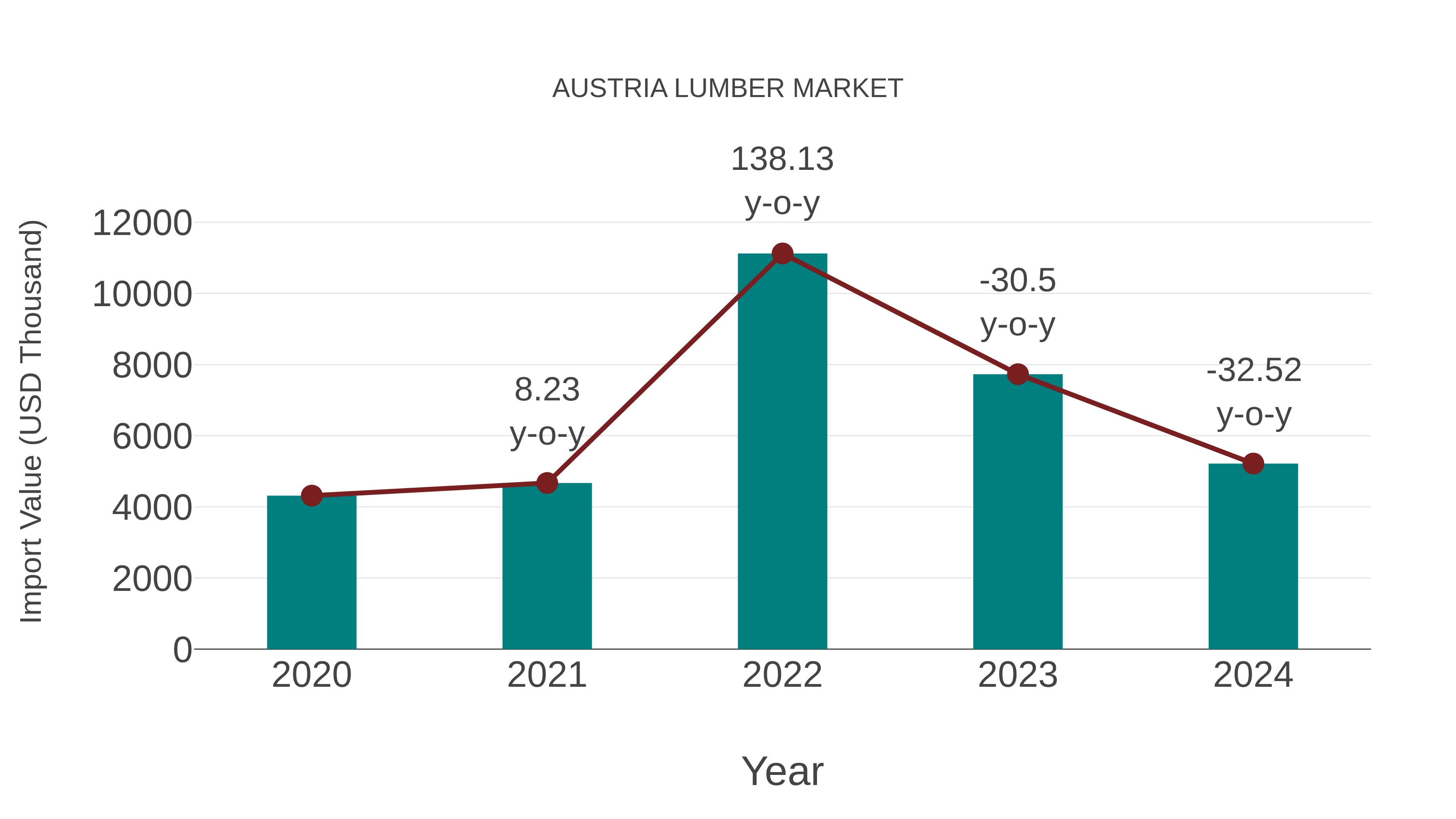
In 2024, Austria`s lumber market saw a notable increase in imports, driven by growing demand from construction and furniture industries. This trend reflected a shift towards importing higher volumes of lumber to meet domestic needs efficiently.
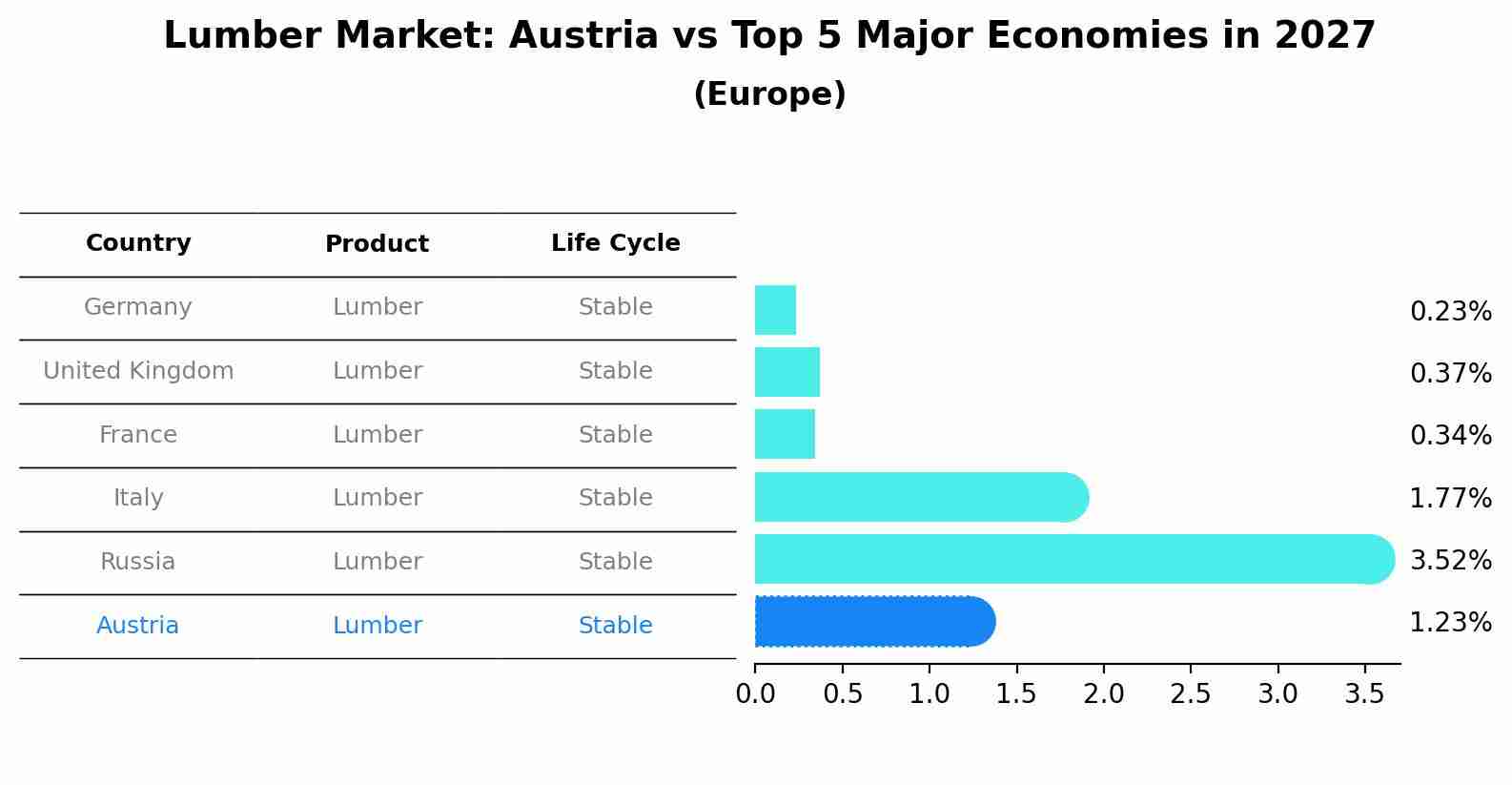
Lumber Market: Austria vs Top 5 Major Economies in 2027 (Europe)
By 2027, Austria's Lumber market is forecasted to achieve a stable growth rate of 1.23%, with Germany leading the Europe region, followed by United Kingdom, France, Italy and Russia.
Austria Lumber Market Overview
Austria`s lumber market encompasses the production and export of high-quality timber products sourced from sustainable forestry practices. Austrian sawmills offer hardwood and softwood lumber used in construction, furniture manufacturing, and woodworking industries worldwide. The market emphasizes eco-friendly forestry management and certified wood products that meet global market demand for sustainable building materials.
Drivers of the market
The Lumber market in Austria benefits from sustainable forestry practices, timber processing expertise, and global demand for high-quality wood products. Austrian lumber producers offer a wide range of hardwood and softwood lumber products that meet construction, furniture manufacturing, and renewable energy needs, emphasizing certified forestry practices and environmental stewardship.
Challenges of the market
The lumber market faces challenges such as sustainable forest management practices, addressing supply chain disruptions from natural disasters and geopolitical factors, and managing fluctuating demand from construction and furniture industries.
Government Policy of the market
Forestry regulations and environmental policies significantly impact the lumber market in Austria. Government initiatives promoting sustainable forestry practices and timber harvesting regulations drive market dynamics. Incentives for forest management certification and sustainable wood production influence supply chain practices. Additionally, regulations ensuring the legality and traceability of wood products enhance market transparency and consumer trust.
Key Highlights of the Report:
- Austria Lumber Market Outlook
- Market Size of Austria Lumber Market, 2025
- Forecast of Austria Lumber Market, 2032
- Historical Data and Forecast of Austria Lumber Revenues & Volume for the Period 2022-2032F
- Austria Lumber Market Trend Evolution
- Austria Lumber Market Drivers and Challenges
- Austria Lumber Price Trends
- Austria Lumber Porter`s Five Forces
- Austria Lumber Industry Life Cycle
- Historical Data and Forecast of Austria Lumber Market Revenues & Volume By Types for the Period 2022-2032F
- Historical Data and Forecast of Austria Lumber Market Revenues & Volume By Hardwood Lumber for the Period 2022-2032F
- Historical Data and Forecast of Austria Lumber Market Revenues & Volume By Softwood Lumber for the Period 2022-2032F
- Historical Data and Forecast of Austria Lumber Market Revenues & Volume By Application for the Period 2022-2032F
- Historical Data and Forecast of Austria Lumber Market Revenues & Volume By Construction for the Period 2022-2032F
- Historical Data and Forecast of Austria Lumber Market Revenues & Volume By Furniture for the Period 2022-2032F
- Historical Data and Forecast of Austria Lumber Market Revenues & Volume By Flooring for the Period 2022-2032F
- Historical Data and Forecast of Austria Lumber Market Revenues & Volume By Moldings for the Period 2022-2032F
- Historical Data and Forecast of Austria Lumber Market Revenues & Volume By Others for the Period 2022-2032F
- Austria Lumber Import Export Trade Statistics
- Market Opportunity Assessment By Types
- Market Opportunity Assessment By Application
- Austria Lumber Top Companies Market Share
- Austria Lumber Competitive Benchmarking By Technical and Operational Parameters
- Austria Lumber Company Profiles
- Austria Lumber Key Strategic Recommendations






































