Austria Naphtha Market: Import Trend Analysis
In 2024, Austria`s naphtha market witnessed a consistent increase in imports. The trend reflected a growing reliance on foreign sources to meet domestic demand, indicating a shift in the country`s supply chain dynamics.
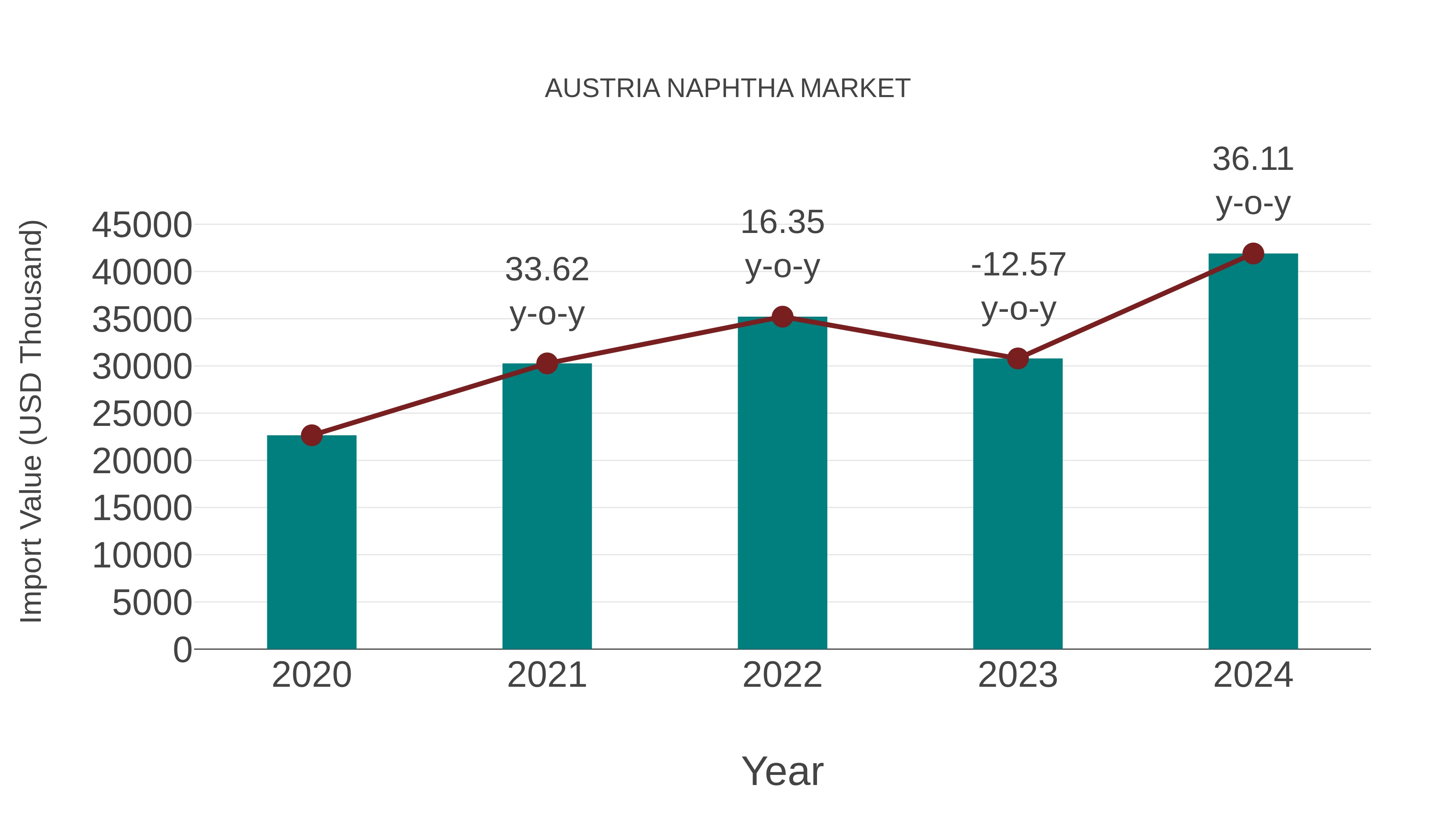
Austria Naphtha Market Synopsis
The Austria Naphtha market is a key segment of the country`s petrochemical industry, primarily used as a feedstock in the production of various chemicals, plastics, and gasoline blending. The market is influenced by factors such as global crude oil prices, demand from end-user industries, and regulatory policies. Austria`s strategic location in Europe and its well-established infrastructure make it a significant player in the European naphtha market. The country`s naphtha market is expected to witness moderate growth in the coming years driven by the increasing demand for petrochemical products. Key players in the Austria naphtha market include refineries, petrochemical companies, and distributors, who are focused on product quality, supply chain efficiency, and sustainability practices to maintain a competitive edge in the market.
Austria Naphtha Market Trends
The Austria Naphtha Market is experiencing a growing demand due to its versatile applications in petrochemical production, particularly in the production of plastics, resins, and solvents. The increasing focus on sustainability and environmental regulations is driving the market towards cleaner production processes and alternatives to traditional petrochemical feedstocks. There is an opportunity for market players to invest in research and development of bio-based naphtha and explore partnerships with renewable energy companies to meet the evolving consumer demands for eco-friendly products. Additionally, the growing automotive sector in Austria presents a potential market for naphtha-derived chemicals used in manufacturing fuel additives and lubricants. Overall, the Austria Naphtha Market is poised for growth with opportunities for innovation and sustainable practices driving future developments.
Austria Naphtha Market Challenges
The Austria Naphtha Market faces several challenges, including fluctuating global oil prices, which directly impact the cost of naphtha production and consumption. Additionally, increasing environmental regulations and the push towards sustainable energy sources are pressuring the naphtha industry to adapt and innovate. Competition from alternative energy sources, such as natural gas and renewable energy, also poses a challenge to the naphtha market in Austria. Furthermore, the volatility of the petrochemical industry and geopolitical factors can impact the supply and demand dynamics of naphtha in the region. Overall, navigating these challenges requires industry players in the Austria Naphtha Market to be agile, innovative, and responsive to changing market conditions.
Austria Naphtha Market Investment Opportunities
The Austria Naphtha Market is primarily driven by the country`s strong petrochemical industry, which uses naphtha as a key feedstock for producing various chemicals and plastics. The increasing demand for ethylene and propylene, which are derived from naphtha, further fuels the market growth. Additionally, the growing consumption of gasoline and diesel in the transportation sector also contributes to the demand for naphtha as a blending component in fuel production. Moreover, the rising usage of naphtha in the manufacturing of solvents, resins, and other industrial products across various sectors like construction, automotive, and packaging drives the market forward. Overall, the steady economic growth, industrial development, and expanding applications of naphtha in Austria are key factors propelling the market.
Austria Naphtha Market Government Polices
The Austria Naphtha Market is influenced by government policies aimed at promoting energy efficiency and reducing emissions. The Austrian government has implemented regulations to encourage the use of cleaner fuels and technologies, such as the Renewable Energy Sources Act and the Energy Efficiency Act. These policies aim to shift towards renewable energy sources and improve energy efficiency in various sectors, including the petrochemical industry. Additionally, Austria is a member of the European Union Emissions Trading System, which imposes carbon emission limits on industries, further driving the market towards cleaner energy alternatives. Overall, government policies in Austria are focused on sustainability and reducing environmental impact in the Naphtha Market.
Austria Naphtha Market Future Outlook
The future outlook for the Austria Naphtha Market appears to be positive, driven by factors such as increasing demand from the petrochemical industry, particularly for the production of plastics and chemicals. Austria`s strategic location in the heart of Europe and its strong industrial base also contribute to the growth potential of the naphtha market. Additionally, the country`s focus on environmental sustainability and the transition towards cleaner energy sources may lead to advancements in naphtha processing technologies. However, challenges such as fluctuating crude oil prices and regulatory changes related to emissions and sustainability goals could impact market dynamics. Overall, with the right strategic investments and innovations, the Austria Naphtha Market is expected to witness steady growth in the coming years.
Key Highlights of the Report:
- Austria Naphtha Market Outlook
- Market Size of Austria Naphtha Market, 2025
- Forecast of Austria Naphtha Market, 2032
- Historical Data and Forecast of Austria Naphtha Revenues & Volume for the Period 2022 - 2032F
- Austria Naphtha Market Trend Evolution
- Austria Naphtha Market Drivers and Challenges
- Austria Naphtha Price Trends
- Austria Naphtha Porter's Five Forces
- Austria Naphtha Industry Life Cycle
- Historical Data and Forecast of Austria Naphtha Market Revenues & Volume By Application for the Period 2022 - 2032F
- Historical Data and Forecast of Austria Naphtha Market Revenues & Volume By Chemicals for the Period 2022 - 2032F
- Historical Data and Forecast of Austria Naphtha Market Revenues & Volume By Energy/Fuel for the Period 2022 - 2032F
- Historical Data and Forecast of Austria Naphtha Market Revenues & Volume By Others for the Period 2022 - 2032F
- Austria Naphtha Import Export Trade Statistics
- Market Opportunity Assessment By Application
- Austria Naphtha Top Companies Market Share
- Austria Naphtha Competitive Benchmarking By Technical and Operational Parameters
- Austria Naphtha Company Profiles
- Austria Naphtha Key Strategic Recommendations






































