Austria Table Olives Market: Import Trend Analysis
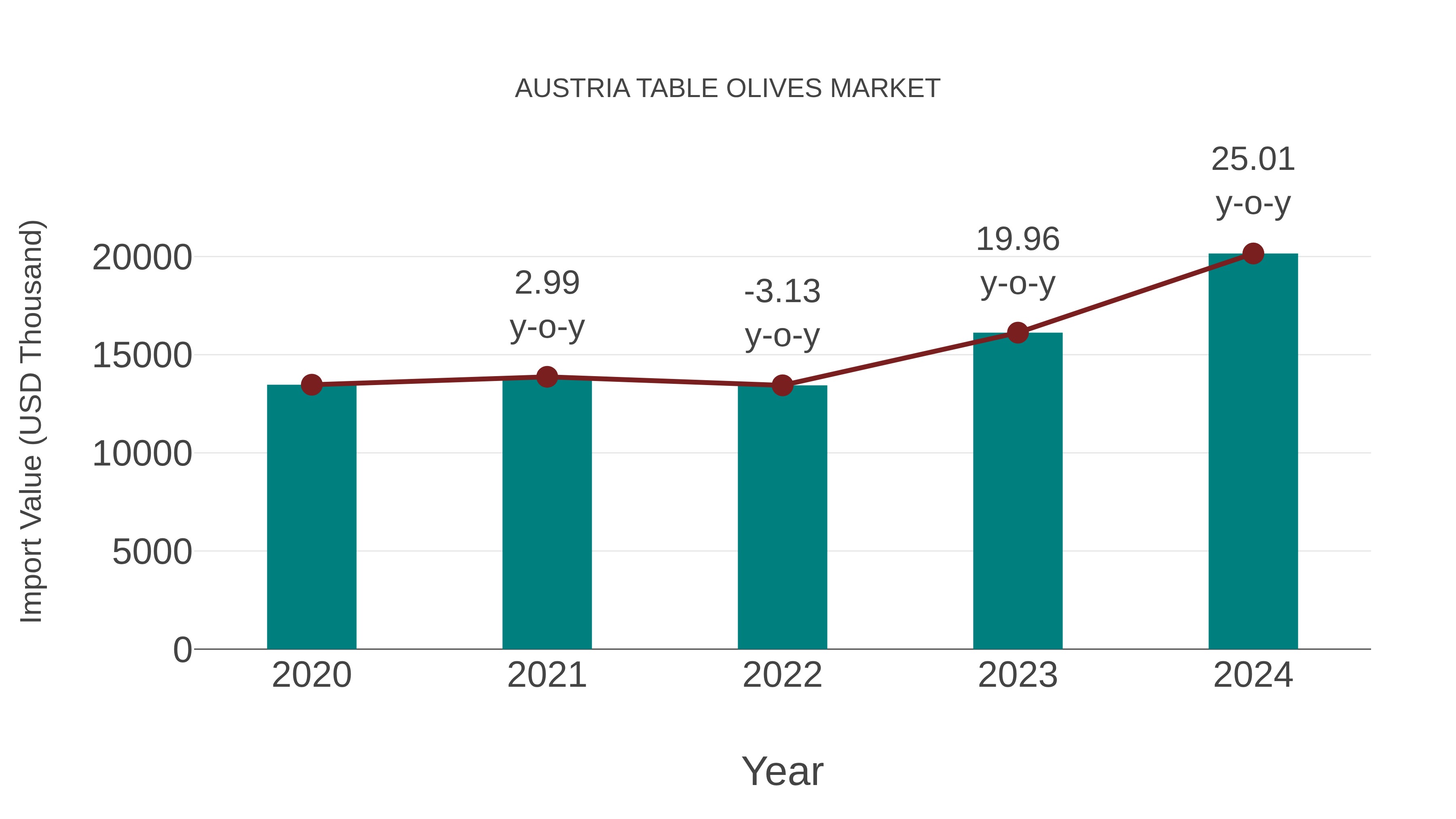
In 2024, Austria`s import trend for table olives showed a steady increase, driven by growing consumer demand for Mediterranean cuisine. Imports mainly originated from Spain, Greece, and Italy, reflecting the preference for high-quality olives in the Austrian market.
Austria Table Olives Market Synopsis
The Austria Table Olives Market is characterized by a growing demand for high-quality olives among consumers seeking healthy and flavorful food options. Traditional green and black olives varieties dominate the market, with a rising trend towards specialty and gourmet varieties like Kalamata and Castelvetrano olives. The market is driven by factors such as increasing health consciousness, a preference for Mediterranean cuisine, and a growing interest in plant-based diets. Key players in the Austria Table Olives Market include both domestic producers and international brands offering a wide range of products to cater to diverse consumer preferences. Retail channels such as supermarkets, specialty stores, and online platforms play a vital role in distributing table olives to consumers across the country. Overall, the market shows promising growth potential fueled by changing consumer preferences and an expanding culinary landscape.
Austria Table Olives Market Trends
The Austria Table Olives Market is currently experiencing a growing demand for healthier and convenient food options, driving an increased interest in Mediterranean cuisine and its staple ingredient, olives. Consumers are seeking out olives for their health benefits, such as being rich in antioxidants and healthy fats. There is also a rising trend towards organic and locally sourced products, presenting an opportunity for producers to cater to this niche market segment. Additionally, flavored olives and unique varieties are gaining popularity among consumers looking for new and exciting taste experiences. To capitalize on these trends, market players can focus on promoting the health benefits of olives, expanding their product offerings to include organic options, and innovating with new flavors and packaging to attract a wider audience.
Austria Table Olives Market Challenges
In the Austria Table Olives Market, some challenges include limited domestic production leading to high reliance on imports, fluctuating global olive prices affecting local pricing, and competition from other snack options. Additionally, consumer preferences for different varieties and flavors of table olives can vary, making it essential for producers to constantly innovate and adapt to changing tastes. Strict regulations and quality standards in the European Union also pose a challenge for producers in terms of compliance and certification. Furthermore, increasing awareness of sustainability and environmental concerns among consumers is pushing the industry to adopt more eco-friendly practices throughout the supply chain. Overall, navigating these challenges requires market players to stay agile, innovative, and responsive to changing market dynamics and consumer preferences.
Austria Table Olives Market Investment Opportunities
The Austria Table Olives Market is primarily driven by factors such as increasing consumer awareness about the health benefits of olives, growing demand for Mediterranean cuisine, and rising preference for healthy and natural food products. The trend of shifting towards a healthier lifestyle and dietary preferences among consumers is boosting the demand for table olives as they are a rich source of antioxidants and healthy fats. Additionally, the expanding foodservice industry and the growing popularity of olive-based products in the retail sector are fueling market growth. The availability of a wide variety of table olive products, innovative packaging techniques, and increasing disposable income levels in Austria are also key drivers propelling the growth of the table olives market in the country.
Austria Table Olives Market Government Polices
In Austria, the Table Olives market is regulated by various government policies aimed at ensuring food safety and quality standards. The Austrian Food Safety and Consumer Protection Act, along with the Regulation on the Labelling of Foodstuffs, mandates strict labeling requirements for Table Olives products, including information on ingredients, allergens, and origin. Additionally, the Austrian Food Code sets out guidelines for the production, processing, and distribution of Table Olives to ensure they meet health and safety standards. Import regulations are also in place to control the quality of Table Olives entering the Austrian market, with requirements for certification and compliance with EU food safety standards. Overall, these government policies play a crucial role in safeguarding consumer interests and promoting the growth of the Table Olives market in Austria.
Austria Table Olives Market Future Outlook
The future outlook for the Austria Table Olives Market looks promising, with a projected steady growth fueled by increasing consumer awareness of the health benefits and versatility of table olives. Factors such as a growing preference for Mediterranean cuisine, rising demand for organic and gourmet food products, and a shift towards healthier snacking options are expected to drive market expansion. Additionally, advancements in processing and packaging technologies are likely to enhance product quality and shelf life, further boosting market growth. With a focus on sustainability and innovation, key players in the Austria Table Olives Market are anticipated to introduce new flavors and product variants to cater to evolving consumer preferences, creating opportunities for market expansion and diversification in the coming years.
Key Highlights of the Report:
- Austria Table Olives Market Outlook
- Market Size of Austria Table Olives Market, 2025
- Forecast of Austria Table Olives Market, 2032
- Historical Data and Forecast of Austria Table Olives Revenues & Volume for the Period 2022 - 2032F
- Austria Table Olives Market Trend Evolution
- Austria Table Olives Market Drivers and Challenges
- Austria Table Olives Price Trends
- Austria Table Olives Porter's Five Forces
- Austria Table Olives Industry Life Cycle
- Historical Data and Forecast of Austria Table Olives Market Revenues & Volume By Type for the Period 2022 - 2032F
- Historical Data and Forecast of Austria Table Olives Market Revenues & Volume By Black Olive for the Period 2022 - 2032F
- Historical Data and Forecast of Austria Table Olives Market Revenues & Volume By Green Olive for the Period 2022 - 2032F
- Historical Data and Forecast of Austria Table Olives Market Revenues & Volume By Application for the Period 2022 - 2032F
- Historical Data and Forecast of Austria Table Olives Market Revenues & Volume By Online Store for the Period 2022 - 2032F
- Historical Data and Forecast of Austria Table Olives Market Revenues & Volume By Supermarket for the Period 2022 - 2032F
- Historical Data and Forecast of Austria Table Olives Market Revenues & Volume By Convenience Store for the Period 2022 - 2032F
- Historical Data and Forecast of Austria Table Olives Market Revenues & Volume By Other for the Period 2022 - 2032F
- Austria Table Olives Import Export Trade Statistics
- Market Opportunity Assessment By Type
- Market Opportunity Assessment By Application
- Austria Table Olives Top Companies Market Share
- Austria Table Olives Competitive Benchmarking By Technical and Operational Parameters
- Austria Table Olives Company Profiles
- Austria Table Olives Key Strategic Recommendations






































