Azerbaijan Secondhand Apparel Market Size, Share & Growth Rate
The Azerbaijan Secondhand Apparel Market was estimated at USD 1237 Million in 2025 and is projected to reach USD 2155 Million by 2032, growing at a CAGR of 8.3% from 2026 to 2032. This remarkable growth trajectory is primarily fueled by a surging demand for affordable and sustainable fashion options among consumers. The increasing awareness of environmental issues and the desire for unique vintage pieces are influencing shopping behaviors, further stimulating the expansion of the market.
Azerbaijan Secondhand Apparel Market Year-wise Growth Rate and Key Drivers
This graph highlights how the Azerbaijan Secondhand Apparel Market has steadily grown over the years, supported by major growth factors.
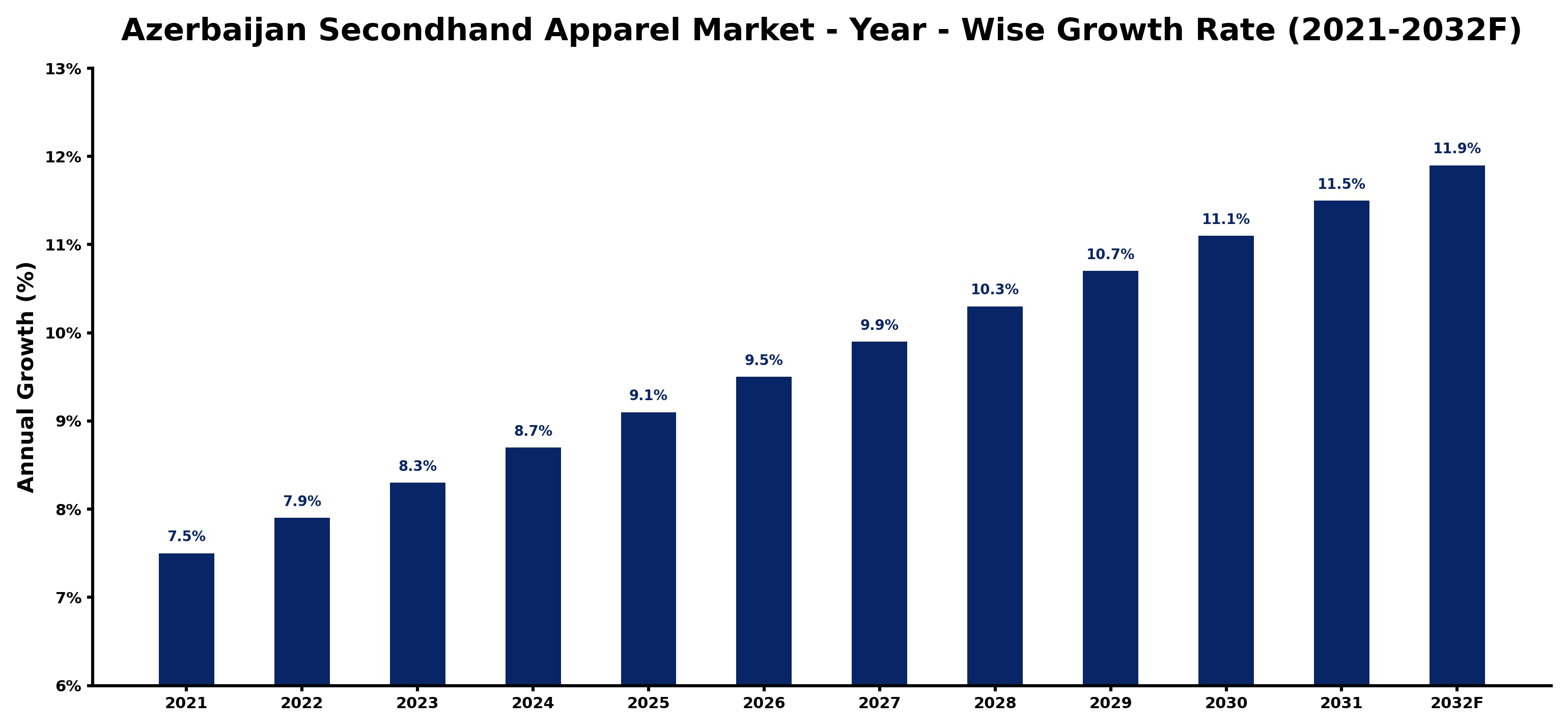
The table below presents the year‑wise growth rates along with the key drivers influencing the market
| Year | Growth Rate | Major Drivers |
| 2021 | 7.5% | Increasing industrial infrastructure investments |
| 2022 | 7.9% | Government infrastructure modernization initiatives |
| 2023 | 8.3% | Expansion of commercial construction activities |
| 2024 | 8.7% | Increasing industrial infrastructure investments |
| 2025 | 9.1% | Expansion of commercial construction activities |
| 2026 | 9.5% | Increasing smart city development projects |
| 2027 | 9.9% | Increasing adoption of advanced technologies |
| 2028 | 10.3% | Increasing smart city development projects |
| 2029 | 10.7% | Expansion of commercial construction activities |
| 2030 | 11.1% | Expansion of manufacturing activities |
| 2031 | 11.5% | Government infrastructure modernization initiatives |
| 2032 | 11.9% | Increasing industrial infrastructure investments |
Note - Market size estimations and growth projections presented in this report are based on 6Wresearch's advanced forecasting approach, validated with industry datasets as of June 2026.
Azerbaijan Secondhand Apparel Market Synopsis
The strongest force currently shaping the Azerbaijan Secondhand Apparel Market is the rising consumer preference for sustainability in fashion. As more shoppers seek to make environmentally conscious choices, secondhand clothing is becoming an attractive option that aligns with these values. The shift towards eco-friendly consumption has also prompted a burgeoning interest in circular fashion practices.
In addition to sustainability, economic considerations are significantly impacting the market. The lingering effects of the COVID-19 pandemic have heightened consumer sensitivity to pricing, with many turning to secondhand apparel for more budget-friendly alternatives. This combination of value and ethics is reshaping the landscape of fashion retail in Azerbaijan.
Azerbaijan Secondhand Apparel Market Key Takeaways
- The market's growth is driven by a combination of sustainability, affordability, and unique fashion appeal.
- Online platforms and social media are vital channels for reaching consumers interested in pre-owned clothing.
- Brick-and-mortar thrift stores and consignment shops are adapting to meet increasing consumer demands.
- Government regulations are focusing on balancing local industry protection with the promotion of sustainable practices.
- Trust and quality perceptions are key factors for consumers when considering secondhand apparel purchases.
Evaluation of Restraints in Azerbaijan Secondhand Apparel Market
Despite the promising growth, the Azerbaijan Secondhand Apparel Market faces several real restraints that may hinder its full potential. Consumer skepticism surrounding the quality and authenticity of secondhand products remains prevalent, with hygiene concerns further complicating the buying process. Additionally, competition from counterfeit goods and inexpensive fast fashion poses significant challenges for authentic secondhand retailers. Establishing and maintaining a consistent supply of high-quality items is essential for attracting a loyal customer base. Moreover, navigating the regulatory environment, particularly regarding import tariffs, can be an obstacle for businesses aiming to provide diverse inventory options.
Azerbaijan Secondhand Apparel Market Trends
Current trends in the Azerbaijan Secondhand Apparel Market indicate a growing affinity for vintage fashion and unique pieces that tell a story. Social media influencers are increasingly showcasing secondhand finds, which fuels interest among younger demographics. The integration of technology into the shopping experience—through user-friendly online platforms and mobile applications—has made secondhand apparel more accessible than ever. Additionally, the market is witnessing a shift towards sustainable practices, with many consumers actively seeking to support brands that prioritize eco-friendly initiatives.
Azerbaijan Secondhand Apparel Market Opportunities
The Azerbaijan Secondhand Apparel Market offers numerous growth and investment opportunities for stakeholders. Establishing online platforms that cater specifically to local tastes and preferences can effectively capture a wider audience. Collaborations with local thrift shops can also provide a streamlined approach to sourcing quality inventory. Investors can capitalize on the trend of conscious consumerism by promoting the environmental benefits of secondhand shopping, positioning their businesses as champions of sustainability within the fashion industry.
Government Initiatives in the Azerbaijan Secondhand Apparel Market
The Azerbaijani government has taken steps to regulate the secondhand apparel market to protect the domestic textile industry while promoting sustainability. This includes implementing import tariffs and regulations aimed at ensuring the quality and safety of secondhand clothing available to consumers. Moreover, the government encourages recycling and upcycling practices, which further support the objectives of minimizing waste and promoting a circular economy in fashion.
Future Insights of the Azerbaijan Secondhand Apparel Market
Looking ahead to 2026-2032, the Azerbaijan Secondhand Apparel Market is poised for consistent growth, driven by an expanding base of eco-conscious consumers and a stronger inclination towards unique, budget-friendly fashion. The role of online platforms is expected to grow, providing consumers with more choices and convenient shopping experiences. As awareness surrounding circular fashion increases, businesses that align with sustainable practices will likely find themselves well-positioned for success in the evolving marketplace.
Azerbaijan Secondhand Apparel Market Latest Developments (May 2025 - June 2026)
Recent developments in the Azerbaijan secondhand apparel market highlight a significant uptick in the establishment of online resale platforms, which cater to the increasing demand for pre-owned clothing. Traditional thrift stores are also adapting, incorporating more curated selections of vintage apparel. Furthermore, marketing campaigns emphasizing the sustainability benefits of secondhand shopping have gained traction, successfully engaging a wider audience. These movements signify an industry shift towards integrating modern retail strategies with traditional secondhand sales.
Azerbaijan Secondhand Apparel Market - Key Attractiveness of the Report
- 10 Years of Market Numbers
- Historical Data Starting from 2022 to 2025
- Base Year: 2025
- Forecast Data until 2032
- Key Performance Indicators Impacting the Market
- Major Upcoming Developments and Projects
Key Highlights of the Report:
- Azerbaijan Secondhand Apparel Market Outlook
- Market Size of Azerbaijan Secondhand Apparel Market, 2025
- Forecast of Azerbaijan Secondhand Apparel Market, 2032
- Historical Data and Forecast of Azerbaijan Secondhand Apparel Revenues & Volume for the Period 2022-2032F
- Azerbaijan Secondhand Apparel Market Trend Evolution
- Azerbaijan Secondhand Apparel Market Drivers and Challenges
- Azerbaijan Secondhand Apparel Price Trends
- Azerbaijan Secondhand Apparel Porter's Five Forces
- Azerbaijan Secondhand Apparel Industry Life Cycle
- Historical Data and Forecast of Azerbaijan Secondhand Apparel Market Revenues & Volume By Sector for the Period 2022-2032F
- Historical Data and Forecast of Azerbaijan Secondhand Apparel Market Revenues & Volume By Resale for the Period 2022-2032F
- Historical Data and Forecast of Azerbaijan Secondhand Apparel Market Revenues & Volume By Traditional Thrift Stores and Donations for the Period 2022-2032F
- Historical Data and Forecast of Azerbaijan Secondhand Apparel Market Revenues & Volume By Product Type for the Period 2022-2032F
- Historical Data and Forecast of Azerbaijan Secondhand Apparel Market Revenues & Volume By Dresses & Tops for the Period 2022-2032F
- Historical Data and Forecast of Azerbaijan Secondhand Apparel Market Revenues & Volume By Shirts & T-shirts for the Period 2022-2032F
- Historical Data and Forecast of Azerbaijan Secondhand Apparel Market Revenues & Volume By Sweaters, Coats & Jackets for the Period 2022-2032F
- Historical Data and Forecast of Azerbaijan Secondhand Apparel Market Revenues & Volume By Jeans & Pants for the Period 2022-2032F
- Historical Data and Forecast of Azerbaijan Secondhand Apparel Market Revenues & Volume By Others for the Period 2022-2032F
- Historical Data and Forecast of Azerbaijan Secondhand Apparel Market Revenues & Volume By Target Population for the Period 2022-2032F
- Historical Data and Forecast of Azerbaijan Secondhand Apparel Market Revenues & Volume By Men for the Period 2022-2032F
- Historical Data and Forecast of Azerbaijan Secondhand Apparel Market Revenues & Volume By Women for the Period 2022-2032F
- Historical Data and Forecast of Azerbaijan Secondhand Apparel Market Revenues & Volume By Kids for the Period 2022-2032F
- Historical Data and Forecast of Azerbaijan Secondhand Apparel Market Revenues & Volume By Sales Channel for the Period 2022-2032F
- Historical Data and Forecast of Azerbaijan Secondhand Apparel Market Revenues & Volume By Wholesalers/Distributors for the Period 2022-2032F
- Historical Data and Forecast of Azerbaijan Secondhand Apparel Market Revenues & Volume By Hypermarkets/Supermarkets for the Period 2022-2032F
- Historical Data and Forecast of Azerbaijan Secondhand Apparel Market Revenues & Volume By Multi-brand Stores for the Period 2022-2032F
- Historical Data and Forecast of Azerbaijan Secondhand Apparel Market Revenues & Volume By Independent Small Stores for the Period 2022-2032F
- Historical Data and Forecast of Azerbaijan Secondhand Apparel Market Revenues & Volume By Departmental Stores for the Period 2022-2032F
- Historical Data and Forecast of Azerbaijan Secondhand Apparel Market Revenues & Volume By Online Retailers for the Period 2022-2032F
- Historical Data and Forecast of Azerbaijan Secondhand Apparel Market Revenues & Volume By Others for the Period 2022-2032F
- Azerbaijan Secondhand Apparel Import Export Trade Statistics
- Market Opportunity Assessment By Sector
- Market Opportunity Assessment By Product Type
- Market Opportunity Assessment By Target Population
- Market Opportunity Assessment By Sales Channel
- Azerbaijan Secondhand Apparel Top Companies Market Share
- Azerbaijan Secondhand Apparel Competitive Benchmarking By Technical and Operational Parameters
- Azerbaijan Secondhand Apparel Company Profiles
- Azerbaijan Secondhand Apparel Key Strategic Recommendations






































