Bahrain Dyes & Pigments Market: Import Trend Analysis
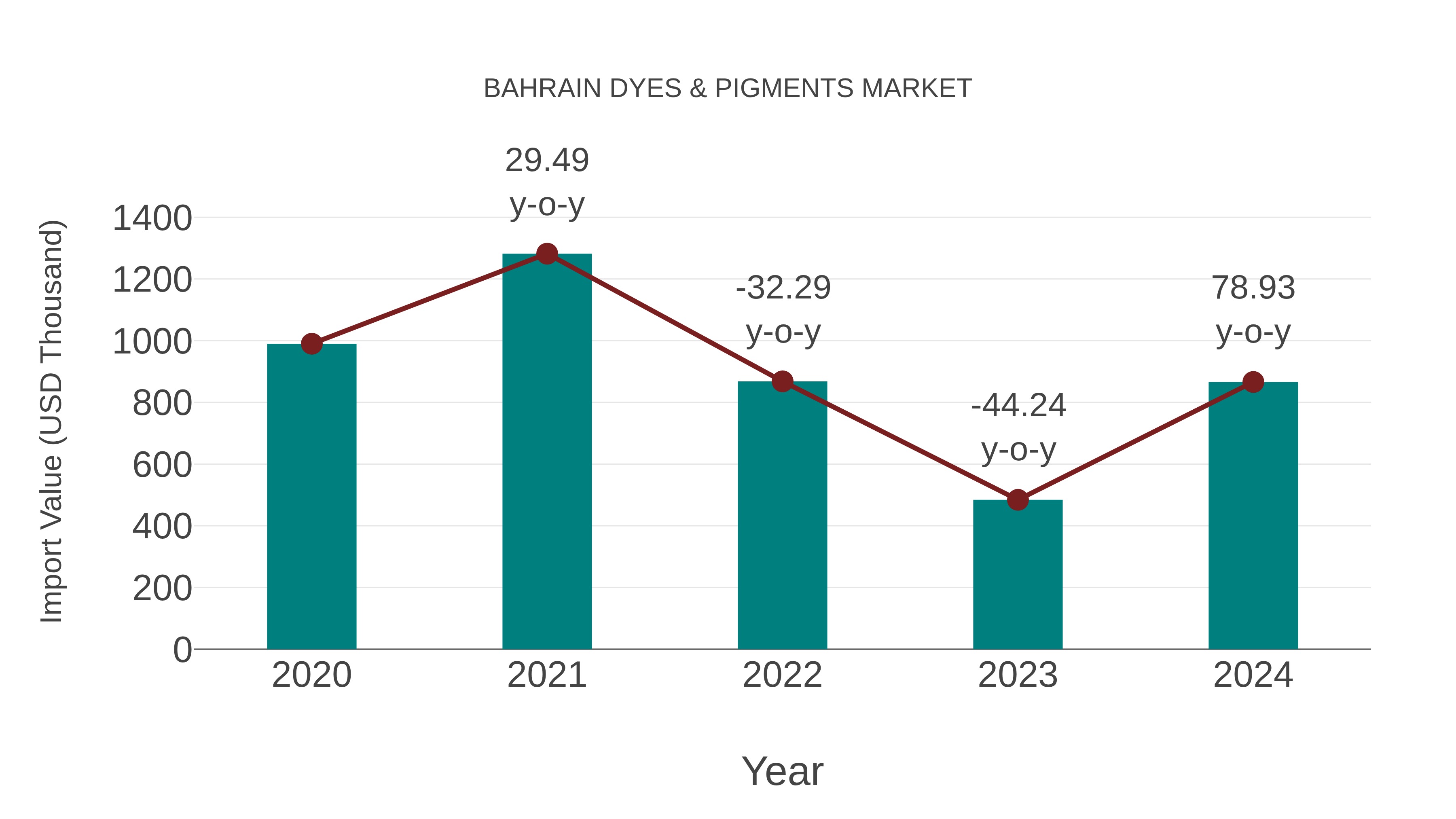
In the Bahrain dyes & pigments market, imports experienced a notable uptick from 2023 to 2024, with a growth rate of 78.93%. However, the compound annual growth rate (CAGR) for the period 2020-2024 stood at -3.29%. This shift may be attributed to evolving demand patterns or changes in trade policies impacting market dynamics.
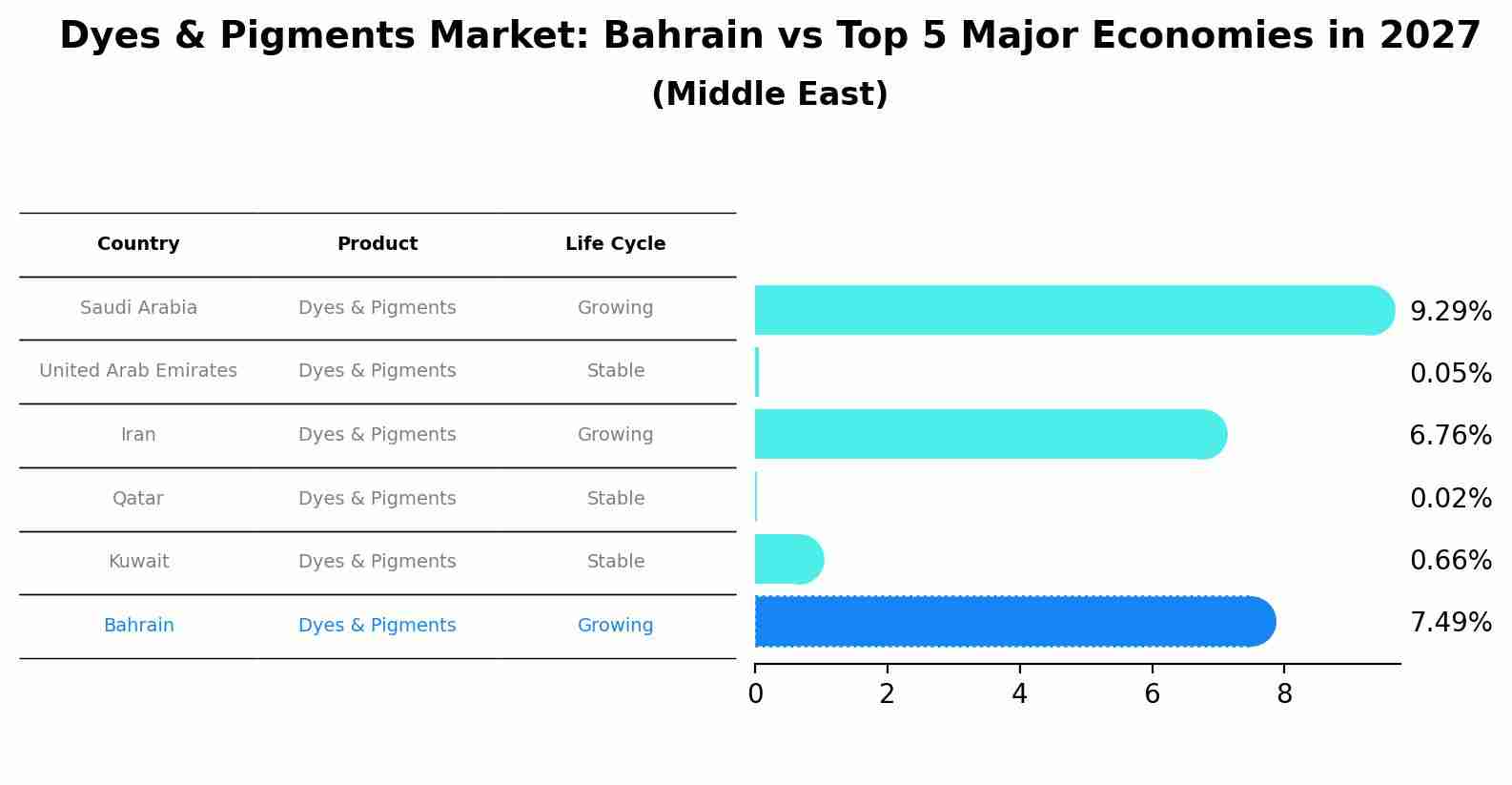
Dyes & Pigments Market: Bahrain vs Top 5 Major Economies in 2027 (Middle East)
By 2027, Bahrain's Dyes & Pigments market is forecasted to achieve a growing growth rate of 7.49%, with Saudi Arabia leading the Middle East region, followed by United Arab Emirates, Iran, Qatar and Kuwait.
Bahrain Dyes & Pigments Market Synopsis
The dyes and pigments market in Bahrain is supported by growth in the textile, automotive, and construction sectors. With increasing demand for colored materials and aesthetically appealing products, the market is seeing a rise in the use of both natural and synthetic dyes and pigments. Additionally, the government`s push for local manufacturing and industrial diversification is playing a role in stimulating market growth.
Trends of the market
Bahrains dyes and pigments market is driven by applications in textiles, plastics, paints, and printing inks. The market is characterized by the demand for vibrant, long-lasting, and environmentally safe colorants. While synthetic dyes continue to dominate, there`s a rising shift toward organic and low-VOC pigments as regulatory pressures and sustainability awareness increase. The local market heavily relies on imports, with opportunities emerging in specialized pigment production for industrial and textile use.
Challenges of the market
The dyes and pigments market in Bahrain faces challenges primarily due to the rising concerns about the environmental and health impacts of synthetic dyes and pigments. These products are under increased scrutiny for their toxicity and the potential harm they can cause during the manufacturing process and after disposal. As a result, there is growing pressure from both regulatory bodies and environmentally conscious consumers to shift toward eco-friendly alternatives. Additionally, fluctuations in the prices of raw materials, along with the competition from cheaper imports, add complexity to the market dynamics, making it harder for local manufacturers to remain competitive while complying with environmental standards.
Investment opportunities in the Market
The dyes and pigments market in Bahrain is poised for steady growth, driven by the demand from the textile, paint, and plastics industries. As local manufacturing and industrial output expand, theres a growing need for high-quality coloring agents. Investors can find opportunities in producing eco-friendly, low-VOC dyes and pigments, which are increasingly sought after due to environmental regulations and consumer awareness. Collaborations with textile or coatings manufacturers to provide custom formulations could also be lucrative.
Government Policy of the market
The dyes and pigments market in Bahrain primarily serves the textiles, plastics, and paints sectors. Government policies require that all dyes comply with chemical safety regulations enforced by the Supreme Council for Environment and the Ministry of Industry and Commerce. Import and use of azo dyes and heavy metal-based pigments are closely monitored, with bans or restrictions on certain hazardous substances. Bahrain`s alignment with international environmental protocols, such as REACH (Registration, Evaluation, Authorisation, and Restriction of Chemicals), influences the regulatory framework and supports the shift toward sustainable, non-toxic pigments.
Key Highlights of the Report:
- Bahrain Dyes & Pigments Market Outlook
- Market Size of Bahrain Dyes & Pigments Market, 2021
- Forecast of Bahrain Dyes & Pigments Market, 2031
- Historical Data and Forecast of Bahrain Dyes & Pigments Revenues & Volume for the Period 2018 - 2031
- Bahrain Dyes & Pigments Market Trend Evolution
- Bahrain Dyes & Pigments Market Drivers and Challenges
- Bahrain Dyes & Pigments Price Trends
- Bahrain Dyes & Pigments Porter's Five Forces
- Bahrain Dyes & Pigments Industry Life Cycle
- Historical Data and Forecast of Bahrain Dyes & Pigments Market Revenues & Volume By Product for the Period 2018 - 2031
- Historical Data and Forecast of Bahrain Dyes & Pigments Market Revenues & Volume By Dyes for the Period 2018 - 2031
- Historical Data and Forecast of Bahrain Dyes & Pigments Market Revenues & Volume By Pigments for the Period 2018 - 2031
- Bahrain Dyes & Pigments Import Export Trade Statistics
- Market Opportunity Assessment By Product
- Bahrain Dyes & Pigments Top Companies Market Share
- Bahrain Dyes & Pigments Competitive Benchmarking By Technical and Operational Parameters
- Bahrain Dyes & Pigments Company Profiles
- Bahrain Dyes & Pigments Key Strategic Recommendations






































