Bangladesh Threat Intelligence Market Size & Growth Rate (2026-2032)
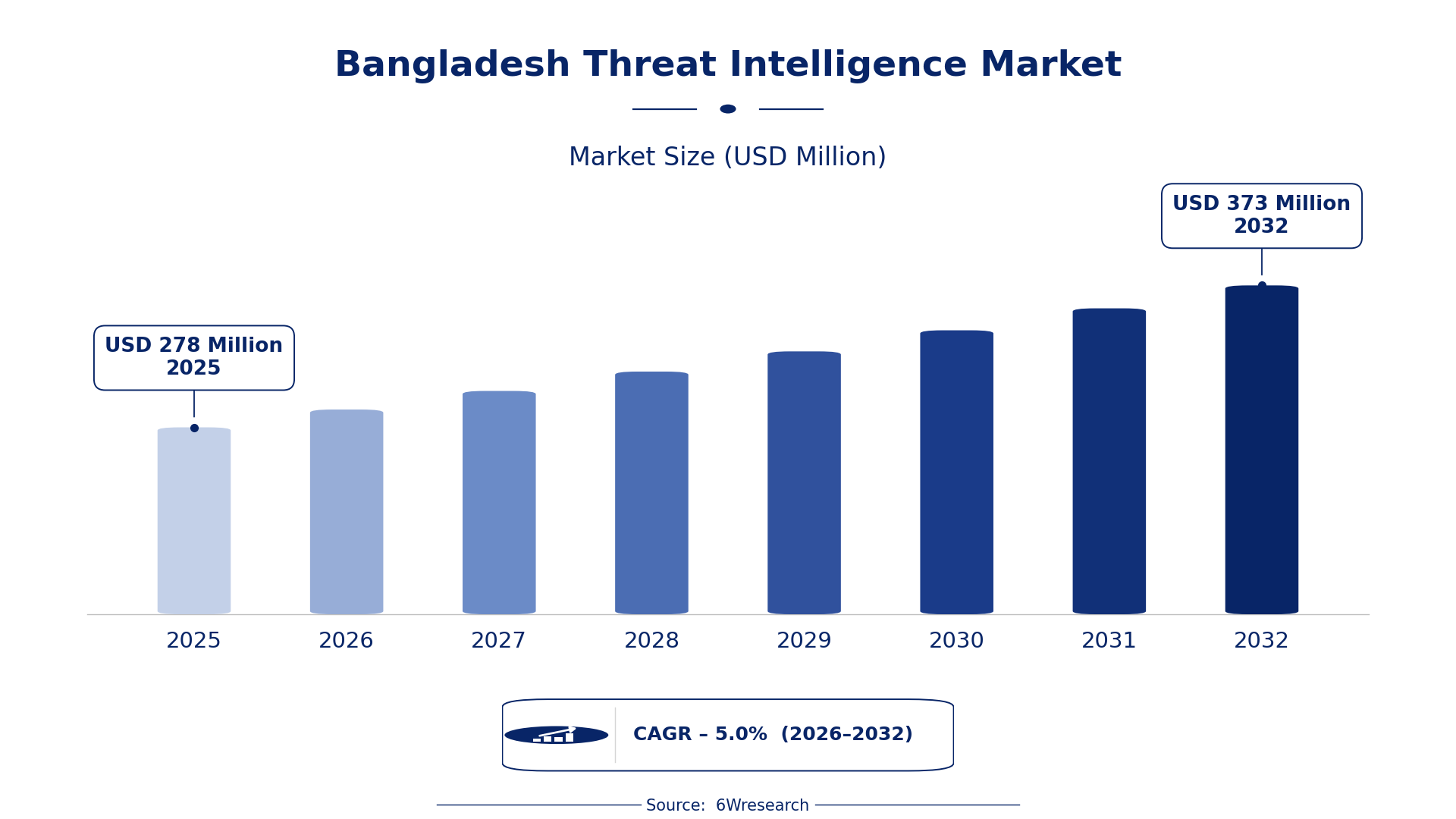
The Bangladesh Threat Intelligence Market was estimated at USD 278 Million in 2025 and is projected to reach USD 373 Million by 2032, growing at a CAGR of 5.0% from 2026 to 2032.
Bangladesh Threat Intelligence Market Synopsis
The surge in cyber threats targeting Bangladeshi organizations is the foremost factor driving the demand for threat intelligence solutions. As businesses across various sectors increasingly adopt digital technologies, they face an array of sophisticated attacks that undermine their cybersecurity frameworks.
In response, companies are now prioritizing robust threat intelligence solutions that encompass threat detection, analysis, and incident response. The market is experiencing a blend of intense competition among local and international vendors, which fosters innovation in cybersecurity technologies designed to combat these emerging threats.
Bangladesh Threat Intelligence Market Year-wise Growth Rate and Key Drivers
This graph illustrates the annual growth rates of the Bangladesh Threat Intelligence Market from 2021 to 2032, highlighting a steady upward trajectory and projected expansion over the forecast period.
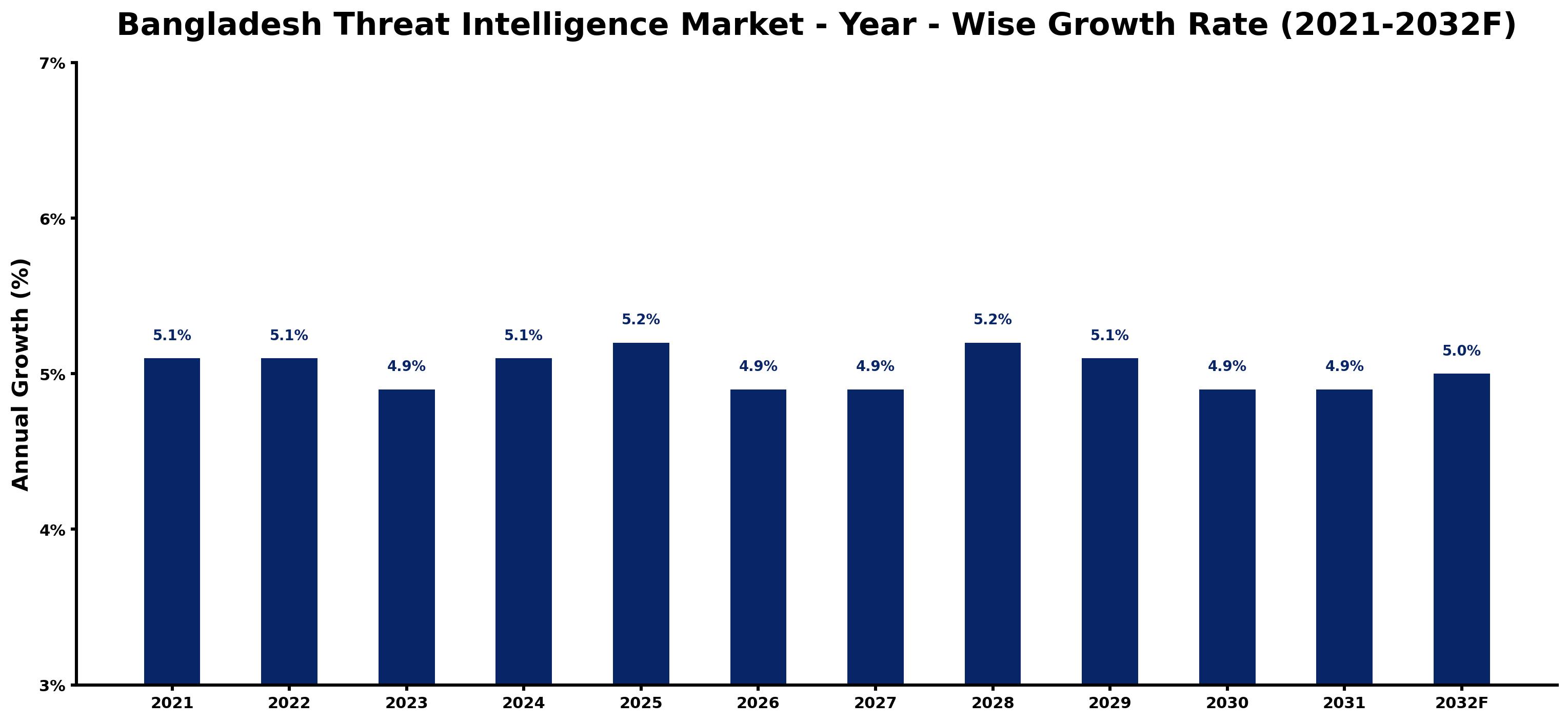
The table below presents the year‑wise growth rates along with the key drivers influencing the market
| Year | Growth Rate | Major Drivers |
| 2021 | 5.1% | Government's Digital Security Act encouraging cybersecurity investments |
| 2022 | 5.1% | Rising cyber threats prompting increased demand for threat intelligence |
| 2023 | 4.9% | Bangladesh Bank's mandates for enhanced financial security measures |
| 2024 | 5.1% | Growth in fintech sector requiring advanced security solutions |
| 2025 | 5.2% | Educational institutions adopting cybersecurity courses boosting skills |
| 2026 | 4.9% | Increased international partnerships for sharing cyber threat data |
| 2027 | 4.9% | Local startups innovating in cybersecurity technologies and services |
| 2028 | 5.2% | Government initiatives to protect critical infrastructure against cyberattacks |
| 2029 | 5.1% | Regulatory bodies pushing for improved data protection practices |
| 2030 | 4.9% | Telecom sector enhancing security due to increasing digital users |
| 2031 | 4.9% | Public-private collaborations bolstering national cyber defense strategies |
| 2032 | 5.0% | Local hackerspace communities fostering innovation in security solutions |
Note: Market size estimations and growth projections presented in this report are based on 6Wresearch's proprietary forecasting methodology, utilizing the latest available industry data, government publications, and primary research inputs.
Bangladesh Threat Intelligence Market Key Takeaways
Below are some of the specific key takeaways from the market, including:
- The market is projected to achieve USD 373 Million by 2032, underscoring robust growth driven by rising cyber threats.
- Organizations are increasingly adopting AI and machine learning technologies to enhance threat detection capabilities.
- Cloud-based threat intelligence platforms are gaining traction for their scalability and flexibility.
- Proactive threat hunting and real-time monitoring are becoming standard practices among businesses aiming to bolster security.
- Government initiatives are actively supporting the growth of cybersecurity infrastructure and threat intelligence frameworks.
Evaluation of Restraints in Bangladesh Threat Intelligence Market
Despite the positive growth trajectory, several restraints hinder the Bangladesh Threat Intelligence Market. A general lack of awareness regarding the significance of threat intelligence persists among organizations, leading to inadequate investment in necessary cybersecurity measures. This is compounded by a shortage of skilled professionals, which stifles innovation and progress within the sector. Outdated IT infrastructure is another significant barrier, making it challenging for organizations to effectively adopt modern cybersecurity solutions. The absence of collaborative information-sharing mechanisms among sectors also detracts from the overall efficacy of threat intelligence strategies, leaving numerous organizations vulnerable to the evolving threats posed by increasingly sophisticated cybercriminals.
Bangladesh Threat Intelligence Market Trends
Current trends reveal a marked shift toward advanced threat detection solutions. As cyber threats become more frequent and complex, organizations are keenly focused on integrating machine learning and AI to enhance their threat intelligence capabilities. Cloud-based platforms are also on the rise, offering organizations improved flexibility and scalability. Additionally, there is a growing emphasis on information sharing among organizations to bolster collective defenses against cyber threats. Enhanced focus on proactive threat hunting and real-time incident monitoring highlights a significant change in the security approach among enterprises.
Bangladesh Threat Intelligence Market Opportunities
The market landscape is ripe with investment opportunities, particularly for companies specializing in cybersecurity solutions. The escalating threats of cyber attacks create a pressing need for advanced threat intelligence services tailored to local contexts. Investment in developing customized threat intelligence platforms, as well as security analytics solutions, is a promising venture. Consultancy services related to threat detection and incident response, alongside training programs aimed at enhancing regional cybersecurity skills, present additional avenues for growth and investment. The current environment in Bangladesh offers fertile ground for cutting-edge cybersecurity technology development.
Government Initiatives in the Bangladesh Threat Intelligence Market
The Bangladeshi government is taking significant steps to strengthen the nation’s cybersecurity framework through a series of strategic initiatives. Policymakers are prioritizing the development of advanced threat intelligence capabilities to combat rising cyber threats. Collaboration with international partners enhances resource sharing and intelligence collaboration, making government support crucial for market evolution.
- A national cybersecurity strategy was recently adopted to outline the government's long-term vision for enhancing digital security measures.
- Currently, the implementation of the Digital Security Act aims to regulate and protect digital communications and data privacy standards.
- A new cybersecurity training initiative is underway, aimed at building a skilled workforce capable of addressing emerging cyber threats.
- Plans for the Bangladesh Cyber Threat Intelligence Program are in motion, focusing on the establishment of a national framework for threat intelligence sharing.
- Ongoing collaboration with international cybersecurity organizations to share intelligence and best practices is a core strategy for improving national security.
Future Insights of the Bangladesh Threat Intelligence Market
Looking ahead to 2026-2032, the Bangladesh Threat Intelligence Market appears set for substantial growth. As organizations continue to embrace digital transformation, the demand for sophisticated threat intelligence solutions will only increase. The government’s commitment to enhancing cybersecurity infrastructure further reinforces this trend. With businesses increasingly recognizing the importance of safeguarding sensitive data, investments in advanced threat intelligence strategies are expected to grow, leading to a promising outlook for the future.
Bangladesh Threat Intelligence Market Latest Developments
Over the past year, the Bangladesh Threat Intelligence Market has witnessed a flurry of activity, with significant developments shaping its trajectory. Organizations are increasingly investing in cutting-edge cybersecurity technologies, recognizing the urgent need to combat escalating cyber threats.
- A major technology vendor launched a new AI-driven threat detection platform in early 2025, aimed at enhancing real-time threat response capabilities for local businesses.
- An ongoing initiative to upgrade national cybersecurity infrastructure began in mid-2025, focusing on improving protection measures across critical sectors.
- A partnership between leading cybersecurity firms was formed in Q3 2025, aimed at sharing threat intelligence and resources to bolster defenses against cyber attacks.
- A planned public-private program is expected to kick off in 2026, targeting skills development and training for cybersecurity professionals in the country.
Bangladesh Threat Intelligence Market - Key Attractiveness of the Report
- 10 Years of Market Numbers
- Historical Data Starting from 2022 to 2025
- Base Year: 2025
- Forecast Data until 2032
- Key Performance Indicators Impacting the Market
- Major Upcoming Developments and Projects
Key Highlights of the Report:
- Bangladesh Threat Intelligence Market Outlook
- Market Size of Bangladesh Threat Intelligence Market, 2025
- Forecast of Bangladesh Threat Intelligence Market, 2032
- Historical Data and Forecast of Bangladesh Threat Intelligence Revenues & Volume for the Period 2022-2032F
- Bangladesh Threat Intelligence Market Trend Evolution
- Bangladesh Threat Intelligence Market Drivers and Challenges
- Bangladesh Threat Intelligence Price Trends
- Bangladesh Threat Intelligence Porter's Five Forces
- Bangladesh Threat Intelligence Industry Life Cycle
- Historical Data and Forecast of Bangladesh Threat Intelligence Market Revenues & Volume By Component for the Period 2022-2032F
- Historical Data and Forecast of Bangladesh Threat Intelligence Market Revenues & Volume By Solutions for the Period 2022-2032F
- Historical Data and Forecast of Bangladesh Threat Intelligence Market Revenues & Volume By Services for the Period 2022-2032F
- Historical Data and Forecast of Bangladesh Threat Intelligence Market Revenues & Volume By Vertical for the Period 2022-2032F
- Historical Data and Forecast of Bangladesh Threat Intelligence Market Revenues & Volume By BFSI for the Period 2022-2032F
- Historical Data and Forecast of Bangladesh Threat Intelligence Market Revenues & Volume By IT for the Period 2022-2032F
- Historical Data and Forecast of Bangladesh Threat Intelligence Market Revenues & Volume By ITeS for the Period 2022-2032F
- Historical Data and Forecast of Bangladesh Threat Intelligence Market Revenues & Volume By Retail for the Period 2022-2032F
- Historical Data and Forecast of Bangladesh Threat Intelligence Market Revenues & Volume By Healthcare for the Period 2022-2032F
- Historical Data and Forecast of Bangladesh Threat Intelligence Market Revenues & Volume By Life Sciences for the Period 2022-2032F
- Historical Data and Forecast of Bangladesh Threat Intelligence Market Revenues & Volume By Organization Size for the Period 2022-2032F
- Historical Data and Forecast of Bangladesh Threat Intelligence Market Revenues & Volume By Large Enterprises for the Period 2022-2032F
- Historical Data and Forecast of Bangladesh Threat Intelligence Market Revenues & Volume By SMEs for the Period 2022-2032F
- Historical Data and Forecast of Bangladesh Threat Intelligence Market Revenues & Volume By Application for the Period 2022-2032F
- Historical Data and Forecast of Bangladesh Threat Intelligence Market Revenues & Volume By Security Information and Event Management for the Period 2022-2032F
- Historical Data and Forecast of Bangladesh Threat Intelligence Market Revenues & Volume By Government, Risk, and Compliance for the Period 2022-2032F
- Historical Data and Forecast of Bangladesh Threat Intelligence Market Revenues & Volume By Business Continuity Planning and Management for the Period 2022-2032F
- Historical Data and Forecast of Bangladesh Threat Intelligence Market Revenues & Volume By Deployment Mode for the Period 2022-2032F
- Historical Data and Forecast of Bangladesh Threat Intelligence Market Revenues & Volume By Cloud for the Period 2022-2032F
- Historical Data and Forecast of Bangladesh Threat Intelligence Market Revenues & Volume By On-premises for the Period 2022-2032F
- Bangladesh Threat Intelligence Import Export Trade Statistics
- Market Opportunity Assessment By Component
- Market Opportunity Assessment By Vertical
- Market Opportunity Assessment By Organization Size
- Market Opportunity Assessment By Application
- Market Opportunity Assessment By Deployment Mode
- Bangladesh Threat Intelligence Top Companies Market Share
- Bangladesh Threat Intelligence Competitive Benchmarking By Technical and Operational Parameters
- Bangladesh Threat Intelligence Company Profiles
- Bangladesh Threat Intelligence Key Strategic Recommendations






































