Belgium Naphtha Market Top 5 Importing Countries and Market Competition (HHI) Analysis
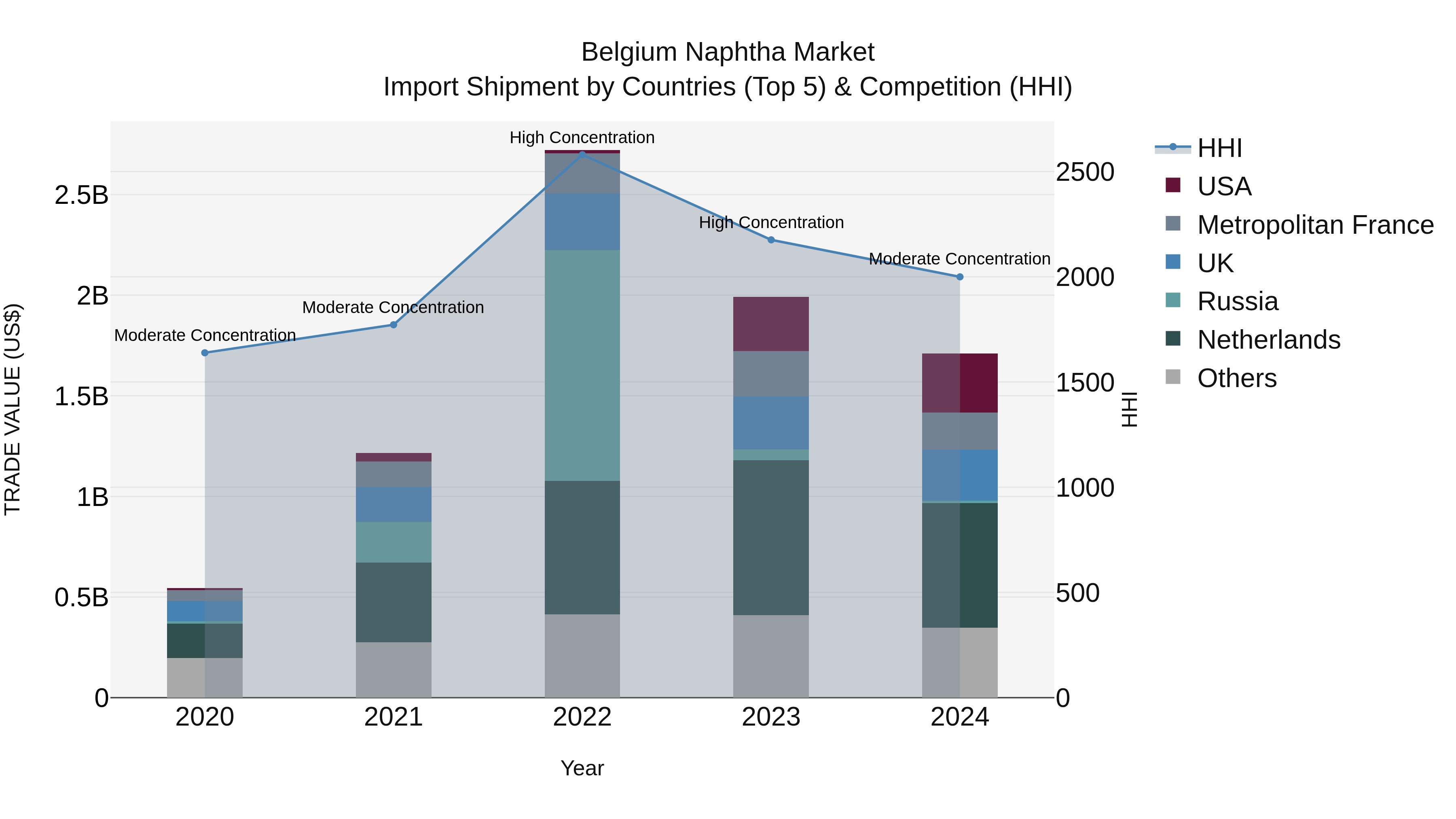
In 2024, Belgium`s naphtha import market saw a shift in concentration levels from high to moderate, indicating a more balanced distribution among top exporting countries. The top exporters to Belgium included neighboring Netherlands, the USA, and the UK, as well as Metropolitan France and Norway. Despite a negative growth rate from 2023 to 2024, the compound annual growth rate (CAGR) over the 2020-2024 period remained strong at 33.16%. This suggests ongoing demand for naphtha imports in Belgium, with a diverse mix of suppliers contributing to the market dynamics.
Belgium Naphtha Market Synopsis
The Belgium naphtha market is a significant segment of the country`s petrochemical industry, driven primarily by demand from the production of ethylene and other petrochemicals. Naphtha serves as a key feedstock for steam crackers, which are essential in the manufacturing of various petrochemical products. As Belgium is a major player in the European petrochemical sector, the demand for naphtha remains robust. The market is influenced by factors such as global crude oil prices, supply chain logistics, and regulatory policies. Additionally, with the increasing focus on sustainability and environmental concerns, there is a growing interest in exploring alternative feedstocks and technologies within the naphtha market. Overall, the Belgium naphtha market is dynamic and closely linked to the broader trends in the petrochemical industry both domestically and globally.
Belgium Naphtha Market Trends
The Belgium Naphtha Market is experiencing a growing demand for petrochemical feedstock, driven by the increasing consumption in the plastics and chemicals industries. With Belgium being a key player in the European petrochemical sector, there are opportunities for market expansion and investment in infrastructure to support the growing demand for naphtha. Additionally, the transition towards cleaner energy sources is creating opportunities for the development of sustainable naphtha production processes, such as bio-naphtha derived from renewable sources. As the market continues to evolve, companies can capitalize on these trends by focusing on innovation, sustainability, and strategic partnerships to maintain a competitive edge and meet the changing needs of the industry and consumers.
Belgium Naphtha Market Challenges
In the Belgium Naphtha Market, some key challenges include volatile crude oil prices, which directly impact naphtha prices and profitability for companies operating in the market. Additionally, fluctuations in demand from key industries such as petrochemicals and refineries can create uncertainty in naphtha consumption patterns. Regulatory changes and environmental concerns related to the use of naphtha as a feedstock also pose challenges for market participants, leading to potential shifts towards more sustainable alternatives. Competition from other regions and sources of feedstock could further impact the Belgium Naphtha Market, requiring companies to stay agile and innovative in their strategies to maintain a competitive edge. Overall, navigating these challenges requires a deep understanding of market dynamics, regulatory landscape, and evolving industry trends.
Belgium Naphtha Market Investment Opportunities
The Belgium Naphtha Market is primarily driven by factors such as the increasing demand for petrochemical products, particularly in industries like plastics, chemicals, and fuel production. The growth of the automotive sector also plays a significant role in driving the demand for naphtha as a feedstock for gasoline production. Additionally, the strategic location of Belgium as a key hub for trade and transportation in Europe further boosts the demand for naphtha in the region. Market dynamics such as fluctuating crude oil prices, regulatory policies on emissions, and advancements in naphtha production technologies also influence the market trends in Belgium. Overall, the Belgium Naphtha Market is driven by a combination of industrial demand, economic activities, and global market conditions.
Belgium Naphtha Market Government Polices
In Belgium, government policies related to the Naphtha Market primarily focus on environmental regulations and sustainability measures. The government has implemented strict regulations to control emissions and ensure compliance with environmental standards in the production and use of naphtha. Additionally, there are incentives and subsidies in place to promote the use of cleaner and more sustainable alternatives to naphtha, such as bio-based feedstocks. The government also supports research and development efforts for innovative technologies that can reduce the environmental impact of naphtha production and consumption. Overall, the government`s policies in Belgium aim to balance the economic importance of the naphtha market with environmental protection and sustainability goals.
Belgium Naphtha Market Future Outlook
The future outlook for the Belgium Naphtha Market appears to be positive, driven by factors such as the increasing demand for petrochemical products and the growing emphasis on cleaner energy sources. With Belgium being a key player in the European petrochemical industry, the naphtha market is expected to witness steady growth in the coming years. The shift towards sustainable practices and the development of innovative technologies are also likely to influence the market dynamics, leading to opportunities for market expansion and diversification. However, challenges such as volatile crude oil prices and environmental concerns may pose some risks to market growth. Overall, the Belgium Naphtha Market is poised for growth, supported by various factors contributing to the evolving energy landscape in the region.
Key Highlights of the Report:
- Belgium Naphtha Market Outlook
- Market Size of Belgium Naphtha Market, 2024
- Forecast of Belgium Naphtha Market, 2031
- Historical Data and Forecast of Belgium Naphtha Revenues & Volume for the Period 2021- 2031
- Belgium Naphtha Market Trend Evolution
- Belgium Naphtha Market Drivers and Challenges
- Belgium Naphtha Price Trends
- Belgium Naphtha Porter's Five Forces
- Belgium Naphtha Industry Life Cycle
- Historical Data and Forecast of Belgium Naphtha Market Revenues & Volume By Application for the Period 2021- 2031
- Historical Data and Forecast of Belgium Naphtha Market Revenues & Volume By Chemicals for the Period 2021- 2031
- Historical Data and Forecast of Belgium Naphtha Market Revenues & Volume By Energy/Fuel for the Period 2021- 2031
- Historical Data and Forecast of Belgium Naphtha Market Revenues & Volume By Others for the Period 2021- 2031
- Belgium Naphtha Import Export Trade Statistics
- Market Opportunity Assessment By Application
- Belgium Naphtha Top Companies Market Share
- Belgium Naphtha Competitive Benchmarking By Technical and Operational Parameters
- Belgium Naphtha Company Profiles
- Belgium Naphtha Key Strategic Recommendations






































