Belgium Table Olives Market Top 5 Importing Countries and Market Competition (HHI) Analysis
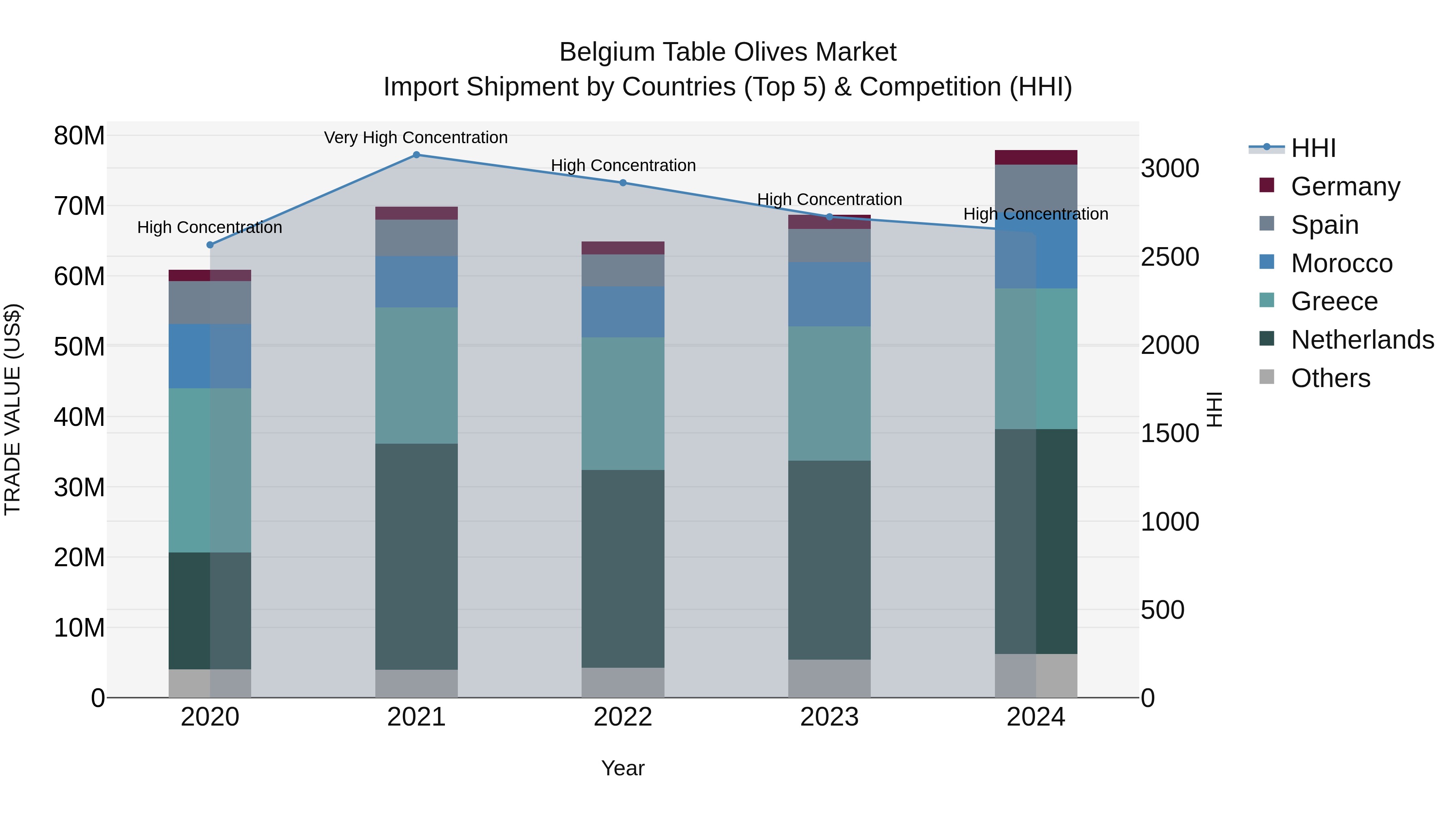
The Belgium table olives import market in 2024 continued to show a high level of concentration, with the top countries exporting being Netherlands, Greece, Morocco, Spain, and Germany. The market experienced a strong Compound Annual Growth Rate (CAGR) of 6.36% from 2020 to 2024, indicating sustained growth. Additionally, the growth rate from 2023 to 2024 was notable at 13.38%, pointing towards increasing demand for table olives in Belgium. This data suggests a dynamic and competitive market landscape for table olive imports in Belgium, with key players vying for a larger share of the market.
Belgium Table Olives Market Synopsis
The Belgium Table Olives Market is characterized by a growing demand for high-quality olives among consumers seeking healthy and flavorful snack options. The market is influenced by increasing awareness of the health benefits associated with olives, such as their high antioxidant content and healthy fats. Belgian consumers are also showing a preference for a wide variety of olive types and flavors, driving producers and manufacturers to expand their product offerings to cater to diverse tastes. The market is also witnessing a trend towards sustainability and ethical sourcing practices, with consumers showing a preference for organic and locally sourced olives. Overall, the Belgium Table Olives Market presents opportunities for producers to innovate and differentiate their products to meet the evolving preferences of consumers.
Belgium Table Olives Market Trends
In the Belgium Table Olives Market, there is a growing trend towards healthy and natural food choices, leading to increased demand for high-quality table olives with unique flavors and varied textures. Consumers are increasingly seeking out Mediterranean-inspired products, creating opportunities for producers to introduce innovative olive varieties and flavor profiles to cater to this demand. Additionally, the rising popularity of charcuterie boards and tapas-style dining experiences has boosted the consumption of table olives as a versatile and flavorful ingredient. Producers can capitalize on this trend by expanding their product offerings and marketing strategies to target a broader consumer base, including younger demographics interested in exploring new culinary experiences. Overall, the Belgium Table Olives Market presents opportunities for differentiation through product innovation and aligning with consumer preferences for healthy, gourmet food options.
Belgium Table Olives Market Challenges
In the Belgium Table Olives Market, some challenges include increasing competition from other snack options, fluctuating olive prices due to global supply and demand dynamics, and changing consumer preferences towards healthier and more diverse snacking choices. Additionally, regulatory requirements and quality standards can pose challenges for smaller producers looking to enter or expand in the market. Furthermore, the impact of environmental factors such as climate change on olive production can also affect the availability and pricing of table olives. Overall, navigating these challenges requires a strategic approach that considers market trends, consumer behavior, and regulatory compliance to ensure sustained growth and competitiveness in the Belgium Table Olives Market.
Belgium Table Olives Market Investment Opportunities
The Belgium Table Olives Market is primarily driven by the growing consumer preference for healthy and natural food products, leading to an increased demand for olives as a nutritious and versatile ingredient. Additionally, the rising awareness about the health benefits of olives, such as being rich in antioxidants and healthy fats, is driving the market growth. The popularity of Mediterranean cuisine and the increasing trend of snacking on healthy foods are also contributing to the increasing consumption of table olives in Belgium. Furthermore, the expanding retail sector and the availability of a variety of flavored olives are attracting more consumers towards this product. Overall, the combination of health consciousness, culinary trends, and market accessibility are key drivers fueling the growth of the Belgium Table Olives Market.
Belgium Table Olives Market Government Polices
The Belgium Table Olives Market is governed by the European Union`s Common Agricultural Policy (CAP), which provides support for olive producers through subsidies, market measures, and rural development programs. Additionally, Belgium follows regulations set by the European Commission on quality standards, labeling, and food safety for table olives. These regulations aim to ensure consumer protection and fair competition among producers. Belgium also enforces trade policies in line with the EU`s trade agreements with olive-producing countries outside the EU, affecting imports and exports of table olives. Overall, the government policies in Belgium related to the Table Olives Market prioritize the sustainability of olive production, quality assurance, and compliance with EU standards to maintain a competitive market environment.
Belgium Table Olives Market Future Outlook
The future outlook for the Belgium Table Olives Market is expected to remain positive, driven by increasing consumer awareness of the health benefits associated with olives and the growing trend of Mediterranean diet adoption. Consumers are increasingly seeking healthier and more diverse food options, leading to a higher demand for table olives in the market. Additionally, the rising popularity of Mediterranean cuisine in Belgium is likely to further boost the consumption of table olives. However, market players will need to focus on product innovation, sustainable production practices, and effective marketing strategies to capitalize on these opportunities and stay competitive in the evolving market landscape. Overall, the Belgium Table Olives Market is anticipated to experience steady growth in the coming years.
Key Highlights of the Report:
- Belgium Table Olives Market Outlook
- Market Size of Belgium Table Olives Market, 2024
- Forecast of Belgium Table Olives Market, 2031
- Historical Data and Forecast of Belgium Table Olives Revenues & Volume for the Period 2021- 2031
- Belgium Table Olives Market Trend Evolution
- Belgium Table Olives Market Drivers and Challenges
- Belgium Table Olives Price Trends
- Belgium Table Olives Porter's Five Forces
- Belgium Table Olives Industry Life Cycle
- Historical Data and Forecast of Belgium Table Olives Market Revenues & Volume By Type for the Period 2021- 2031
- Historical Data and Forecast of Belgium Table Olives Market Revenues & Volume By Black Olive for the Period 2021- 2031
- Historical Data and Forecast of Belgium Table Olives Market Revenues & Volume By Green Olive for the Period 2021- 2031
- Historical Data and Forecast of Belgium Table Olives Market Revenues & Volume By Application for the Period 2021- 2031
- Historical Data and Forecast of Belgium Table Olives Market Revenues & Volume By Online Store for the Period 2021- 2031
- Historical Data and Forecast of Belgium Table Olives Market Revenues & Volume By Supermarket for the Period 2021- 2031
- Historical Data and Forecast of Belgium Table Olives Market Revenues & Volume By Convenience Store for the Period 2021- 2031
- Historical Data and Forecast of Belgium Table Olives Market Revenues & Volume By Other for the Period 2021- 2031
- Belgium Table Olives Import Export Trade Statistics
- Market Opportunity Assessment By Type
- Market Opportunity Assessment By Application
- Belgium Table Olives Top Companies Market Share
- Belgium Table Olives Competitive Benchmarking By Technical and Operational Parameters
- Belgium Table Olives Company Profiles
- Belgium Table Olives Key Strategic Recommendations






































