Benin Electric Mobility Market: Import Trend Analysis
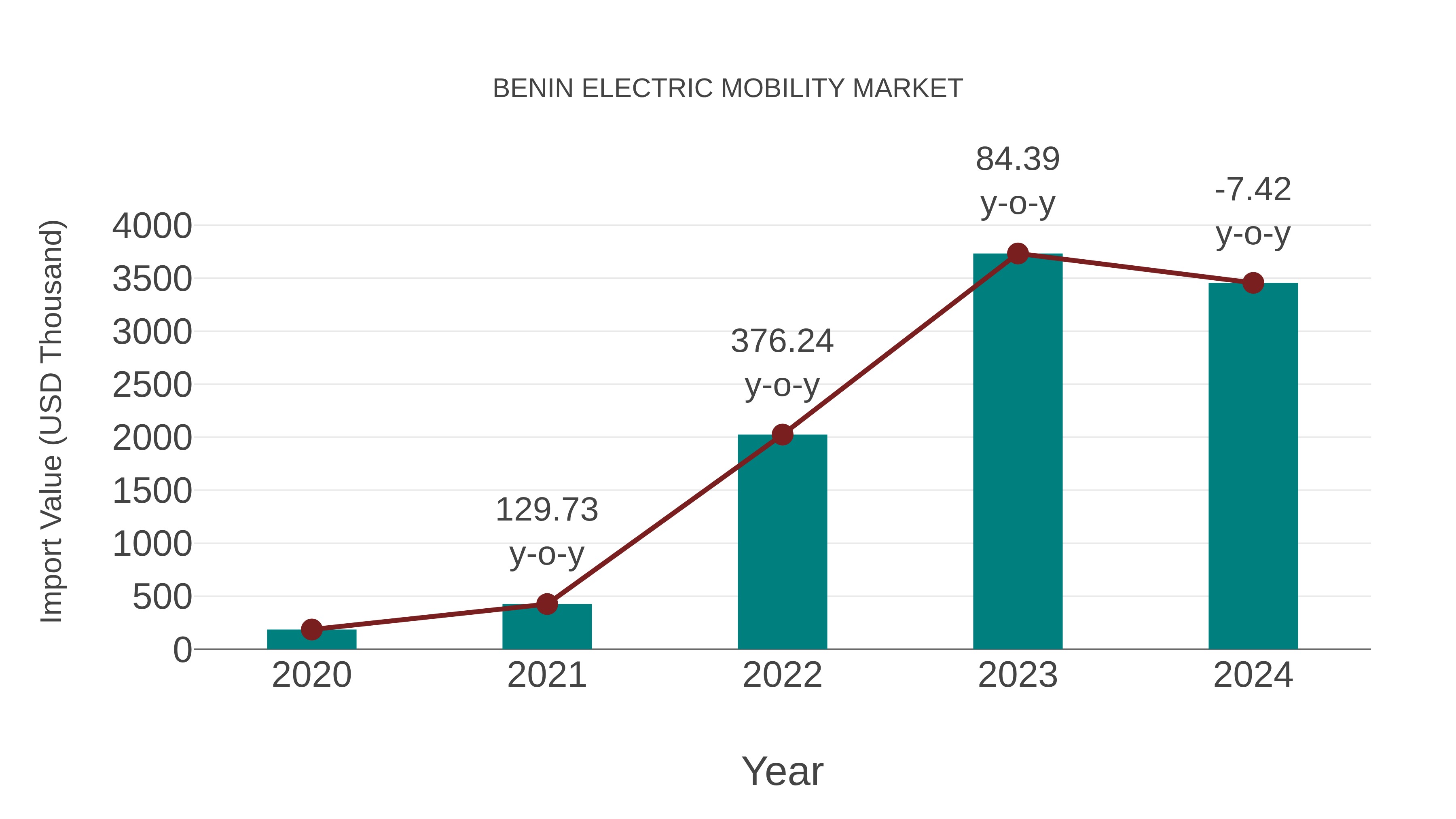
Between 2020 and 2024, the Benin electric mobility market saw a significant increase in imports, with a Compound Annual Growth Rate (CAGR) of 107.88%. In 2023-2024, the year-on-year growth rate was -7.42%, indicating a slight decrease compared to previous years.
Benin Electric Mobility Market Overview
The Benin Electric Mobility Market is a growing sector driven by increasing awareness of environmental issues and the government`s efforts to reduce carbon emissions. The market is primarily characterized by a rising demand for electric motorcycles and bicycles as viable alternatives to traditional gas-powered vehicles. Key players in this market include local startups and international brands offering a range of electric vehicles. However, challenges such as limited charging infrastructure and high initial costs hinder faster adoption rates. To promote further growth, stakeholders should focus on expanding charging stations, providing incentives for electric vehicle purchases, and raising awareness about the benefits of electric mobility in Benin.
Benin Electric Mobility Market Trends and Opportunities
The Benin Electric Mobility Market is experiencing a growing interest in sustainable transportation solutions, driven by concerns over pollution and fuel costs. The government`s initiatives to promote clean energy and reduce carbon emissions are creating opportunities for electric vehicle manufacturers and service providers to enter the market. There is a rising demand for electric bikes and scooters as affordable and efficient modes of transportation in urban areas. Additionally, the increasing investment in charging infrastructure and incentives for electric vehicle adoption are further driving the growth of the electric mobility sector in Benin. This presents a favorable environment for businesses to capitalize on the growing trend towards electric vehicles and sustainable transportation solutions in the country.
Benin Electric Mobility Market Challenges
The Benin Electric Mobility Market faces several challenges, including a lack of infrastructure to support electric vehicles such as charging stations and maintenance facilities, limited consumer awareness and acceptance of electric vehicles, high initial costs of purchasing electric vehicles compared to traditional vehicles, and inadequate government policies and incentives to promote the adoption of electric mobility. Additionally, the country`s unreliable electricity supply and grid instability pose significant obstacles to the widespread adoption of electric vehicles. Overcoming these challenges will require a coordinated effort from government agencies, private sector stakeholders, and international partners to invest in infrastructure development, raise awareness about the benefits of electric vehicles, and implement supportive policies to create a conducive environment for the growth of the electric mobility market in Benin.
Benin Electric Mobility Market Drivers
The Benin Electric Mobility Market is primarily being driven by several key factors. Firstly, the increasing focus on sustainable transportation solutions to reduce carbon emissions and combat climate change is pushing the adoption of electric vehicles in the country. Additionally, rising awareness about the environmental benefits of electric vehicles, such as lower air pollution and noise levels, is influencing consumer preferences. Government initiatives and policies promoting the use of electric vehicles, including tax incentives and subsidies, are also playing a significant role in driving the market forward. Furthermore, advancements in technology leading to improved battery performance, charging infrastructure development, and a growing number of electric vehicle models available in the market are further fueling the growth of the electric mobility sector in Benin.
Benin Electric Mobility Market Government Policy
The Benin government has shown interest in promoting electric mobility through various policies and initiatives. One significant measure is the exemption of electric vehicles from import duties and taxes, making them more affordable for consumers. Additionally, the government has been working on developing charging infrastructure across the country to support the growth of the electric vehicle market. Benin has also implemented regulations to encourage the adoption of electric vehicles, such as setting emission standards for vehicles and providing incentives for manufacturers and consumers. Overall, the government`s policies aim to reduce greenhouse gas emissions, improve air quality, and promote sustainable transportation options in Benin.
Benin Electric Mobility Market Future Outlook
The future outlook for the Electric Mobility Market in Benin appears promising, with increasing awareness and interest in sustainable transportation solutions. As the government and international organizations push for environmental initiatives and cleaner energy sources, there is a growing emphasis on electric vehicles as a means to reduce carbon emissions and combat climate change. Benin`s strategic location in West Africa, coupled with a rising middle class and urbanization trends, provide a conducive environment for the adoption of electric vehicles. However, challenges such as high initial costs, limited charging infrastructure, and consumer awareness remain barriers to widespread adoption. Overall, as technology improves, costs decrease, and infrastructure develops, the Benin Electric Mobility Market is expected to experience gradual growth and transformation in the coming years.
Key Highlights of the Report:
- Benin Electric Mobility Market Outlook
- Market Size of Benin Electric Mobility Market, 2025
- Forecast of Benin Electric Mobility Market, 2032
- Historical Data and Forecast of Benin Electric Mobility Revenues & Volume for the Period 2022 - 2032F
- Benin Electric Mobility Market Trend Evolution
- Benin Electric Mobility Market Drivers and Challenges
- Benin Electric Mobility Price Trends
- Benin Electric Mobility Porter's Five Forces
- Benin Electric Mobility Industry Life Cycle
- Historical Data and Forecast of Benin Electric Mobility Market Revenues & Volume By Product for the Period 2022 - 2032F
- Historical Data and Forecast of Benin Electric Mobility Market Revenues & Volume By Electric Bikes for the Period 2022 - 2032F
- Historical Data and Forecast of Benin Electric Mobility Market Revenues & Volume By Electric Scooters for the Period 2022 - 2032F
- Historical Data and Forecast of Benin Electric Mobility Market Revenues & Volume By Electric Motorized Scooters for the Period 2022 - 2032F
- Historical Data and Forecast of Benin Electric Mobility Market Revenues & Volume By Electric Motorcycles for the Period 2022 - 2032F
- Historical Data and Forecast of Benin Electric Mobility Market Revenues & Volume By Drive for the Period 2022 - 2032F
- Historical Data and Forecast of Benin Electric Mobility Market Revenues & Volume By Belt Drive for the Period 2022 - 2032F
- Historical Data and Forecast of Benin Electric Mobility Market Revenues & Volume By Chain Drive for the Period 2022 - 2032F
- Historical Data and Forecast of Benin Electric Mobility Market Revenues & Volume By Hub Drive for the Period 2022 - 2032F
- Historical Data and Forecast of Benin Electric Mobility Market Revenues & Volume By Battery for the Period 2022 - 2032F
- Historical Data and Forecast of Benin Electric Mobility Market Revenues & Volume By Lead Acid Battery for the Period 2022 - 2032F
- Historical Data and Forecast of Benin Electric Mobility Market Revenues & Volume By Li-Ion Battery for the Period 2022 - 2032F
- Historical Data and Forecast of Benin Electric Mobility Market Revenues & Volume By End-use for the Period 2022 - 2032F
- Historical Data and Forecast of Benin Electric Mobility Market Revenues & Volume By Personal for the Period 2022 - 2032F
- Historical Data and Forecast of Benin Electric Mobility Market Revenues & Volume By Commercial for the Period 2022 - 2032F
- Benin Electric Mobility Import Export Trade Statistics
- Market Opportunity Assessment By Product
- Market Opportunity Assessment By Drive
- Market Opportunity Assessment By Battery
- Market Opportunity Assessment By End-use
- Benin Electric Mobility Top Companies Market Share
- Benin Electric Mobility Competitive Benchmarking By Technical and Operational Parameters
- Benin Electric Mobility Company Profiles
- Benin Electric Mobility Key Strategic Recommendations






































