Benin Naphtha Market: Import Trend Analysis
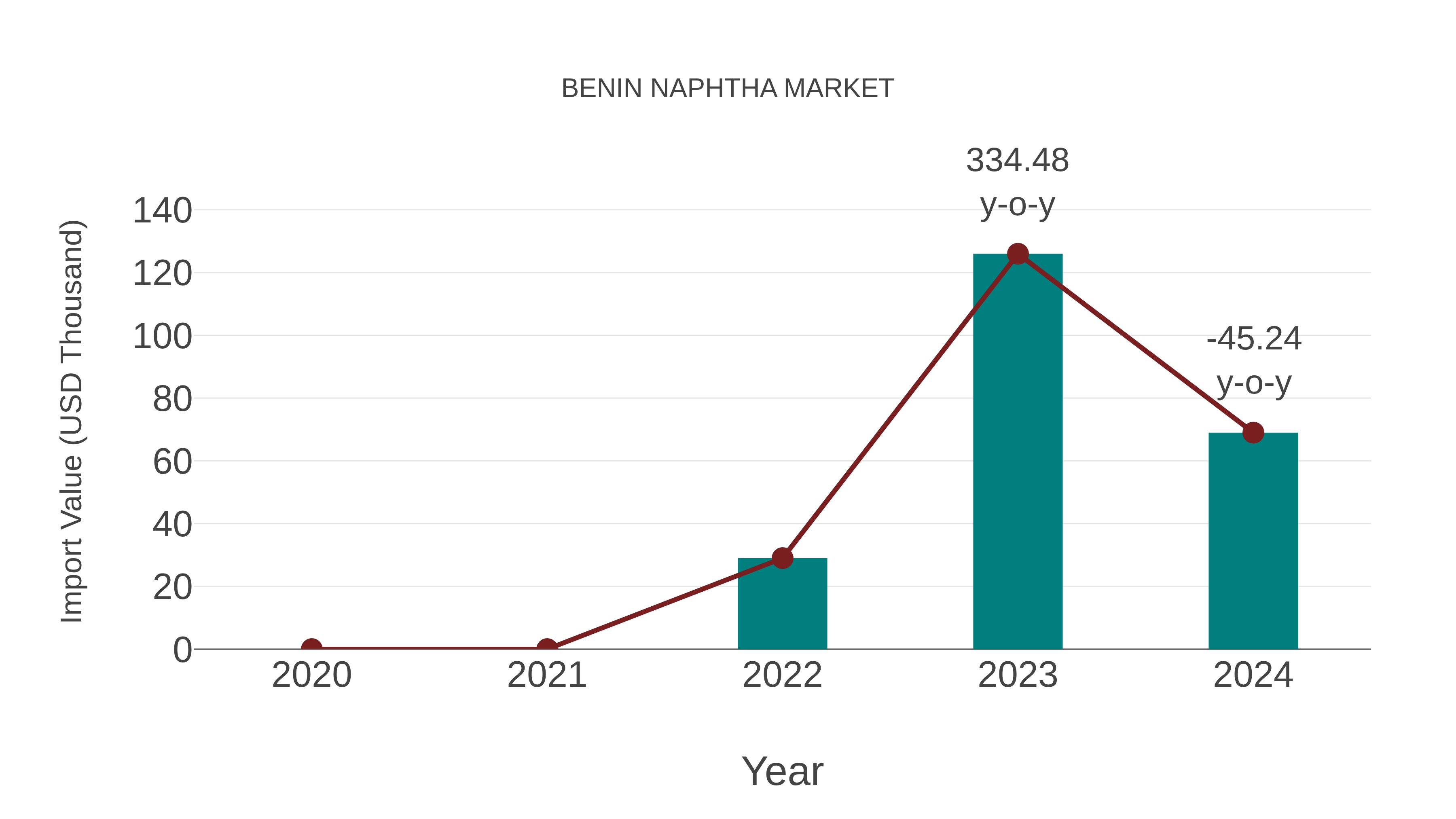
Benin`s import trend for the naphtha market experienced a significant decline from 2023 to 2024, with a growth rate of -45.24%. However, the compound annual growth rate (CAGR) for the period 2020-2024 stood at a notable 54.25%. This sharp decline in import growth could be attributed to shifts in demand dynamics or changes in trade policies during the period.
Benin Naphtha Market Synopsis
The Benin Naphtha Market is characterized by steady growth driven by factors such as increasing demand for petrochemical products, industrial development, and infrastructure projects in the country. Naphtha is a key feedstock for the petrochemical industry in Benin, used in the production of plastics, synthetic fibers, and other chemical products. The market is influenced by global oil prices, supply and demand dynamics, as well as government policies and regulations. Major players in the Benin Naphtha Market include refineries, petrochemical companies, and distributors. With ongoing industrialization and economic development efforts in Benin, the naphtha market is expected to continue expanding, presenting opportunities for market participants to capitalize on the growing demand for petrochemical products in the country.
Benin Naphtha Market Trends
The Benin Naphtha market is experiencing steady growth due to the country`s increasing industrialization and demand for petrochemical products. With the government`s focus on diversifying the economy and attracting foreign investments, opportunities for expansion and development in the naphtha sector are abundant. The rising interest in renewable energy sources and sustainable practices also presents avenues for innovation and growth within the market. Additionally, the strategic location of Benin as a gateway to the West African market further enhances the potential for the naphtha industry to flourish. Companies operating in the Benin Naphtha market can capitalize on these trends by investing in infrastructure, technology upgrades, and partnerships to meet the evolving needs of the market and stay ahead of the competition.
Benin Naphtha Market Challenges
In the Benin Naphtha Market, several challenges are faced, including fluctuating global oil prices, competition from alternative energy sources, regulatory uncertainties, and infrastructure constraints. The market is heavily influenced by international oil prices, making it vulnerable to price volatility and impacting profit margins for naphtha producers and distributors in Benin. Additionally, the increasing focus on renewable energy sources poses a threat to the demand for naphtha, leading to potential market saturation. Regulatory uncertainties and changing government policies also create challenges for market participants in terms of compliance and operational stability. Furthermore, inadequate infrastructure, such as storage facilities and transportation networks, hinders the efficient distribution of naphtha within the country, limiting market growth and profitability. Addressing these challenges will be crucial for the sustainable development of the Benin Naphtha Market.
Benin Naphtha Market Investment Opportunities
The Benin Naphtha market is primarily driven by factors such as the growing demand for petrochemical products, the expansion of industrial activities, and increasing investments in infrastructure development in the country. Additionally, the rise in population and urbanization rates are also contributing to the demand for naphtha as a feedstock for various industries. The government`s support for the oil and gas sector, favorable regulatory policies, and strategic partnerships with international players are further propelling the growth of the Benin Naphtha market. Moreover, the country`s strategic location and access to major transportation routes make it an attractive hub for naphtha trade, attracting key market players and driving market expansion.
Benin Naphtha Market Government Polices
The Benin government has implemented various policies related to the Naphtha Market to regulate and support the industry. These policies include setting quality standards for naphtha products to ensure consumer safety and environmental protection, as well as implementing pricing mechanisms to stabilize market prices and prevent price manipulation. Additionally, the government has introduced licensing requirements for naphtha producers and distributors to maintain industry standards and promote fair competition. Furthermore, there are regulations in place to monitor and control the import and export of naphtha products to manage supply and demand dynamics effectively. Overall, the government`s policies aim to promote a transparent and sustainable naphtha market in Benin while safeguarding the interests of consumers and industry stakeholders.
Benin Naphtha Market Future Outlook
The future outlook for the Benin Naphtha Market appears positive, driven by increasing industrial activities and infrastructure development in the country. Benin`s growing population and urbanization are likely to lead to rising demand for petrochemical products, including naphtha, for use in various industries such as plastics, textiles, and chemicals. Additionally, government initiatives to attract foreign investments and promote economic growth are expected to further boost the naphtha market in Benin. However, challenges such as volatility in crude oil prices, regulatory changes, and environmental concerns may impact the market`s growth trajectory. Overall, the Benin Naphtha Market is poised for expansion in the coming years, presenting opportunities for market players to capitalize on the country`s evolving industrial landscape.
Key Highlights of the Report:
- Benin Naphtha Market Outlook
- Market Size of Benin Naphtha Market, 2025
- Forecast of Benin Naphtha Market, 2032
- Historical Data and Forecast of Benin Naphtha Revenues & Volume for the Period 2022 - 2032F
- Benin Naphtha Market Trend Evolution
- Benin Naphtha Market Drivers and Challenges
- Benin Naphtha Price Trends
- Benin Naphtha Porter's Five Forces
- Benin Naphtha Industry Life Cycle
- Historical Data and Forecast of Benin Naphtha Market Revenues & Volume By Application for the Period 2022 - 2032F
- Historical Data and Forecast of Benin Naphtha Market Revenues & Volume By Chemicals for the Period 2022 - 2032F
- Historical Data and Forecast of Benin Naphtha Market Revenues & Volume By Energy/Fuel for the Period 2022 - 2032F
- Historical Data and Forecast of Benin Naphtha Market Revenues & Volume By Others for the Period 2022 - 2032F
- Benin Naphtha Import Export Trade Statistics
- Market Opportunity Assessment By Application
- Benin Naphtha Top Companies Market Share
- Benin Naphtha Competitive Benchmarking By Technical and Operational Parameters
- Benin Naphtha Company Profiles
- Benin Naphtha Key Strategic Recommendations






































