Botswana Carotenoids Market: Import Trend Analysis
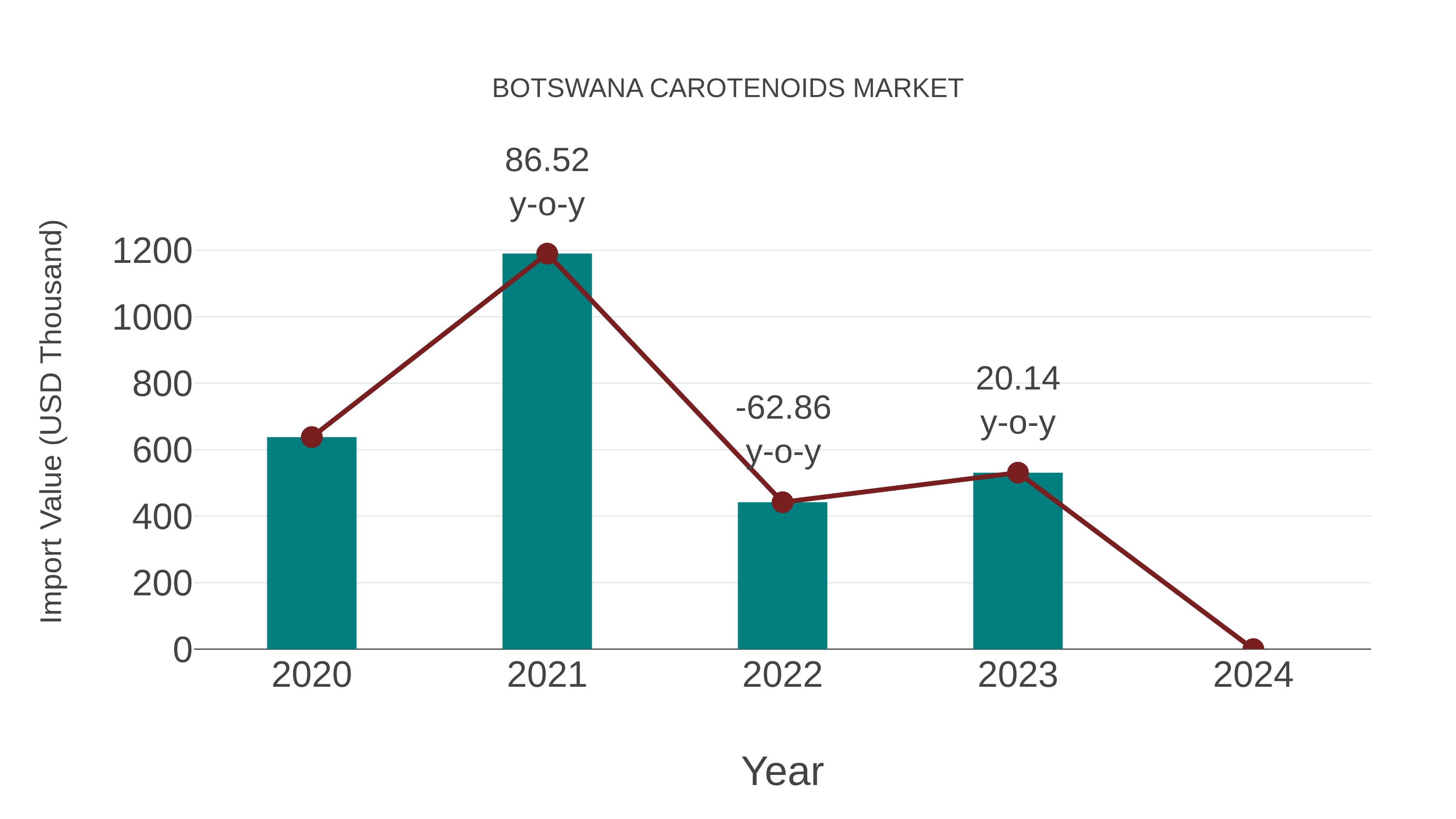
The import trend of carotenoids in the Botswana market experienced a decline from 2020 to 2024, with a compound annual growth rate (CAGR) of -5.94%. This negative growth rate is attributed to the stagnant year-on-year growth in 2023-2024, resulting in an overall decrease in imports during the specified period.
Botswana Carotenoids Market Overview
Botswana`s carotenoids market is growing, driven by their applications in food and beverages, cosmetics, pharmaceuticals, and animal feed. Carotenoids are valued for their antioxidant properties, health benefits, and natural colorants, offering benefits such as enhanced nutritional value, product stability, and visual appeal. The market growth is supported by the demand for natural and functional ingredients, the growth of end-use industries, and the emphasis on health and wellness. Innovations in extraction techniques, product formulations, and application methods are enhancing the functionality and appeal of carotenoids, supporting market growth.
Drivers of the market
The carotenoids market in Botswana is expanding as industries recognize the health benefits and applications of carotenoids in food, cosmetics, and pharmaceuticals. Carotenoids are natural pigments found in plants and are known for their antioxidant properties and health benefits, including supporting eye health and reducing the risk of chronic diseases. The market is driven by the increasing demand for functional foods and dietary supplements, the growth of the cosmetics industry, and the rising awareness of the importance of antioxidants in promoting health and wellness. Additionally, the use of carotenoids as natural colorants in food products is contributing to market growth.
Challenges of the market
The carotenoids market in Botswana faces challenges related to the high cost of production and the limited availability of raw materials, leading to reliance on imports. The market is also constrained by the small size of the local food, pharmaceutical, and cosmetics industries, which reduces demand for carotenoids. Additionally, the market faces competition from synthetic alternatives and other natural pigments that may be more cost-effective or have broader applications.
Government Policy of the market
The carotenoids market in Botswana is influenced by government policies related to food and beverage regulations, as well as the health and nutrition sector. Policies that support the use of carotenoids as dietary supplements and food additives drive market growth. Government initiatives aimed at improving public health and ensuring product safety contribute to market development. Additionally, regulations on import duties and product standards impact market dynamics.
Key Highlights of the Report:
- Botswana Carotenoids Market Outlook
- Market Size of Botswana Carotenoids Market, 2025
- Forecast of Botswana Carotenoids Market, 2032
- Historical Data and Forecast of Botswana Carotenoids Revenues & Volume for the Period 2022-2032F
- Botswana Carotenoids Market Trend Evolution
- Botswana Carotenoids Market Drivers and Challenges
- Botswana Carotenoids Price Trends
- Botswana Carotenoids Porter`s Five Forces
- Botswana Carotenoids Industry Life Cycle
- Historical Data and Forecast of Botswana Carotenoids Market Revenues & Volume By Type for the Period 2022-2032F
- Historical Data and Forecast of Botswana Carotenoids Market Revenues & Volume By Astaxanthin for the Period 2022-2032F
- Historical Data and Forecast of Botswana Carotenoids Market Revenues & Volume By Beta-Carotene for the Period 2022-2032F
- Historical Data and Forecast of Botswana Carotenoids Market Revenues & Volume By Lutein for the Period 2022-2032F
- Historical Data and Forecast of Botswana Carotenoids Market Revenues & Volume By Lycopene for the Period 2022-2032F
- Historical Data and Forecast of Botswana Carotenoids Market Revenues & Volume By Canthaxanthin for the Period 2022-2032F
- Historical Data and Forecast of Botswana Carotenoids Market Revenues & Volume By Zeaxanthin for the Period 2022-2032F
- Historical Data and Forecast of Botswana Carotenoids Market Revenues & Volume By Application for the Period 2022-2032F
- Historical Data and Forecast of Botswana Carotenoids Market Revenues & Volume By Feed for the Period 2022-2032F
- Historical Data and Forecast of Botswana Carotenoids Market Revenues & Volume By Food & Beverages for the Period 2022-2032F
- Historical Data and Forecast of Botswana Carotenoids Market Revenues & Volume By Dietary Supplements for the Period 2022-2032F
- Historical Data and Forecast of Botswana Carotenoids Market Revenues & Volume By Cosmetics for the Period 2022-2032F
- Historical Data and Forecast of Botswana Carotenoids Market Revenues & Volume By Pharmaceuticals for the Period 2022-2032F
- Botswana Carotenoids Import Export Trade Statistics
- Market Opportunity Assessment By Type
- Market Opportunity Assessment By Application
- Botswana Carotenoids Top Companies Market Share
- Botswana Carotenoids Competitive Benchmarking By Technical and Operational Parameters
- Botswana Carotenoids Company Profiles
- Botswana Carotenoids Key Strategic Recommendations






































