Brazil Paraffin Market Top 5 Importing Countries and Market Competition (HHI) Analysis
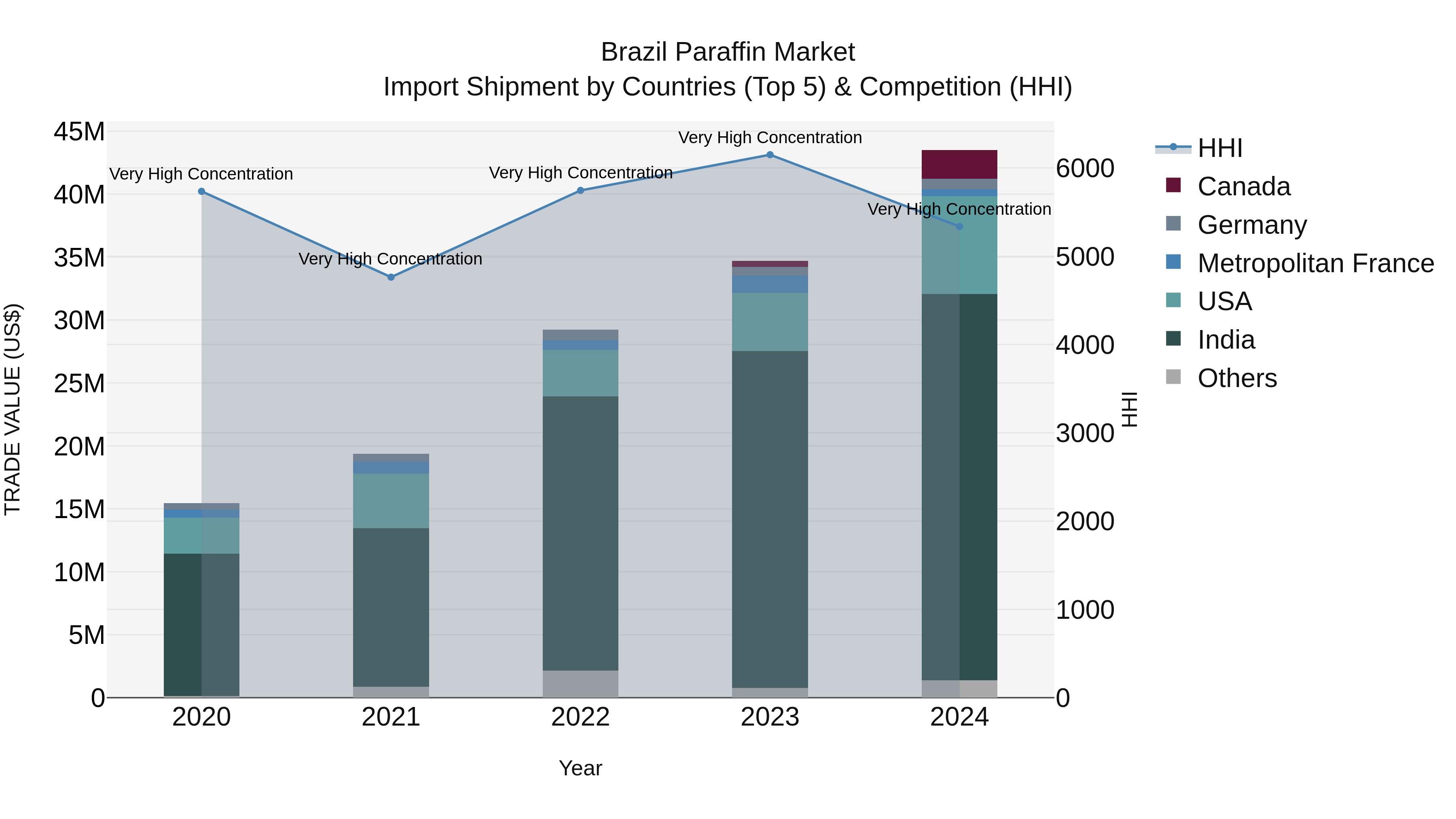
Brazil`s paraffin import market in 2024 saw significant growth, with top exporting countries including India, USA, Canada, Germany, and Spain. The market concentration, as measured by the Herfindahl-Hirschman Index (HHI), remained very high, indicating a concentrated market structure. The compound annual growth rate (CAGR) from 2020 to 2024 was an impressive 29.54%, showcasing a strong upward trend in import volumes. Additionally, the growth rate from 2023 to 2024 stood at 25.39%, highlighting continued momentum in the Brazilian paraffin import market.
Brazil Paraffin Market Synopsis
The Brazil Paraffin Market is witnessing steady growth driven by various industries such as cosmetics, packaging, pharmaceuticals, and candles. The increasing demand for paraffin wax in cosmetic products like lipsticks, creams, and lotions due to its moisturizing properties is a significant factor fueling market growth. Additionally, the packaging industry`s reliance on paraffin wax for coating cardboard and paper products to enhance their durability and appearance is boosting market demand. Moreover, the pharmaceutical sector`s use of paraffin wax in ointments and creams for various medical applications is contributing to market expansion. The growing popularity of scented candles in households and the hospitality sector is also driving the demand for paraffin wax in Brazil. Overall, the Brazil Paraffin Market is poised for further growth due to its versatile applications across multiple industries.
Brazil Paraffin Market Trends
The Brazil Paraffin Market is experiencing steady growth due to increasing demand from various industries such as cosmetics, food packaging, and candles. A key trend in the market is the shift towards bio-based paraffin products to meet the growing consumer demand for sustainable and environmentally-friendly options. Additionally, the rising popularity of scented candles and the expanding cosmetic industry in Brazil are creating new opportunities for paraffin manufacturers to diversify their product offerings and cater to evolving consumer preferences. With the country`s strong economic growth and increasing disposable income levels, the Brazil Paraffin Market is poised for further expansion, making it an attractive market for both domestic and international players looking to capitalize on the growing demand for paraffin products.
Brazil Paraffin Market Challenges
In the Brazil Paraffin Market, some of the key challenges faced include fluctuations in crude oil prices, which directly impact the production costs of paraffin wax. Additionally, competition from alternative products such as synthetic waxes and bio-based alternatives pose a threat to the market share of traditional paraffin wax. Regulatory hurdles related to environmental concerns and sustainability issues also impact the market, with increasing pressure to adopt more sustainable practices. Moreover, the volatility in supply chains and logistics due to factors like transportation costs and infrastructure limitations further add to the challenges faced by players in the Brazil Paraffin Market. Overall, navigating these challenges requires market players to adapt to changing market dynamics, innovate in product offerings, and ensure compliance with evolving regulations to maintain a competitive edge.
Brazil Paraffin Market Investment Opportunities
The Brazil Paraffin Market is primarily driven by the growing demand from various end-use industries such as cosmetics, pharmaceuticals, and food packaging. The increasing disposable income of consumers in Brazil is leading to a rise in the consumption of products that use paraffin, such as candles, ointments, and packaging materials. Additionally, the expanding industrial sector in the country is fueling the demand for paraffin as a raw material in the production of various industrial products. Moreover, the versatility of paraffin in terms of its properties like low melting point, stability, and odorless nature makes it a preferred choice for manufacturers in different sectors. Overall, the market growth is also influenced by factors like technological advancements in production processes and the increasing preference for environmentally friendly paraffin products.
Brazil Paraffin Market Government Polices
Government policies related to the Brazil Paraffin Market include regulations on quality standards, import restrictions, and environmental regulations. The Brazilian government has implemented strict quality control measures to ensure that paraffin products meet certain standards for purity and safety. Additionally, import restrictions are in place to protect domestic paraffin producers from foreign competition. Environmental regulations also play a significant role, with the government imposing rules on waste disposal and emissions to minimize the environmental impact of paraffin production. Overall, these policies aim to promote a competitive and sustainable paraffin market in Brazil while ensuring consumer safety and environmental protection.
Brazil Paraffin Market Future Outlook
The future outlook for the Brazil Paraffin Market appears promising, with steady growth anticipated over the coming years. Factors such as increasing industrialization, expanding end-use industries like cosmetics, pharmaceuticals, and packaging, and rising demand for candles are expected to drive market growth. Additionally, advancements in production techniques, product innovations, and a growing focus on sustainability and environmentally friendly solutions are likely to further boost the market. However, challenges such as fluctuating raw material prices and regulatory constraints may impact market dynamics. Overall, with a positive economic outlook and increasing consumer demand for paraffin-based products, the Brazil Paraffin Market is projected to experience continued growth and opportunities for market players in the foreseeable future.
Key Highlights of the Report:
- Brazil Paraffin Market Outlook
- Market Size of Brazil Paraffin Market, 2024
- Forecast of Brazil Paraffin Market, 2031
- Historical Data and Forecast of Brazil Paraffin Revenues & Volume for the Period 2021- 2031
- Brazil Paraffin Market Trend Evolution
- Brazil Paraffin Market Drivers and Challenges
- Brazil Paraffin Price Trends
- Brazil Paraffin Porter's Five Forces
- Brazil Paraffin Industry Life Cycle
- Historical Data and Forecast of Brazil Paraffin Market Revenues & Volume By Type for the Period 2021- 2031
- Historical Data and Forecast of Brazil Paraffin Market Revenues & Volume By Paraffin Wax for the Period 2021- 2031
- Historical Data and Forecast of Brazil Paraffin Market Revenues & Volume By Liquid Paraffin for the Period 2021- 2031
- Historical Data and Forecast of Brazil Paraffin Market Revenues & Volume By Kerosene for the Period 2021- 2031
- Historical Data and Forecast of Brazil Paraffin Market Revenues & Volume By Petroleum Jelly for the Period 2021- 2031
- Historical Data and Forecast of Brazil Paraffin Market Revenues & Volume By Application for the Period 2021- 2031
- Historical Data and Forecast of Brazil Paraffin Market Revenues & Volume By Cosmetics and Personal Care for the Period 2021- 2031
- Historical Data and Forecast of Brazil Paraffin Market Revenues & Volume By Paperboard and Packaging for the Period 2021- 2031
- Historical Data and Forecast of Brazil Paraffin Market Revenues & Volume By Fuel for the Period 2021- 2031
- Historical Data and Forecast of Brazil Paraffin Market Revenues & Volume By Rubber for the Period 2021- 2031
- Historical Data and Forecast of Brazil Paraffin Market Revenues & Volume By Lubricants for the Period 2021- 2031
- Historical Data and Forecast of Brazil Paraffin Market Revenues & Volume By Other Applications for the Period 2021- 2031
- Brazil Paraffin Import Export Trade Statistics
- Market Opportunity Assessment By Type
- Market Opportunity Assessment By Application
- Brazil Paraffin Top Companies Market Share
- Brazil Paraffin Competitive Benchmarking By Technical and Operational Parameters
- Brazil Paraffin Company Profiles
- Brazil Paraffin Key Strategic Recommendations






































