Brazil Probiotics Market Growth Rate
According to 6Wresearch internal database and industry insights, the Brazil Probiotics Market is projected to grow at a compound annual growth rate (CAGR) of 8.1% during the forecast period (2026-2032).
Brazil Probiotics Market Year-wise Growth Rate and Key Drivers
This graph highlights how the Brazil Probiotics Market has steadily grown over the past five years, supported by major growth factors.
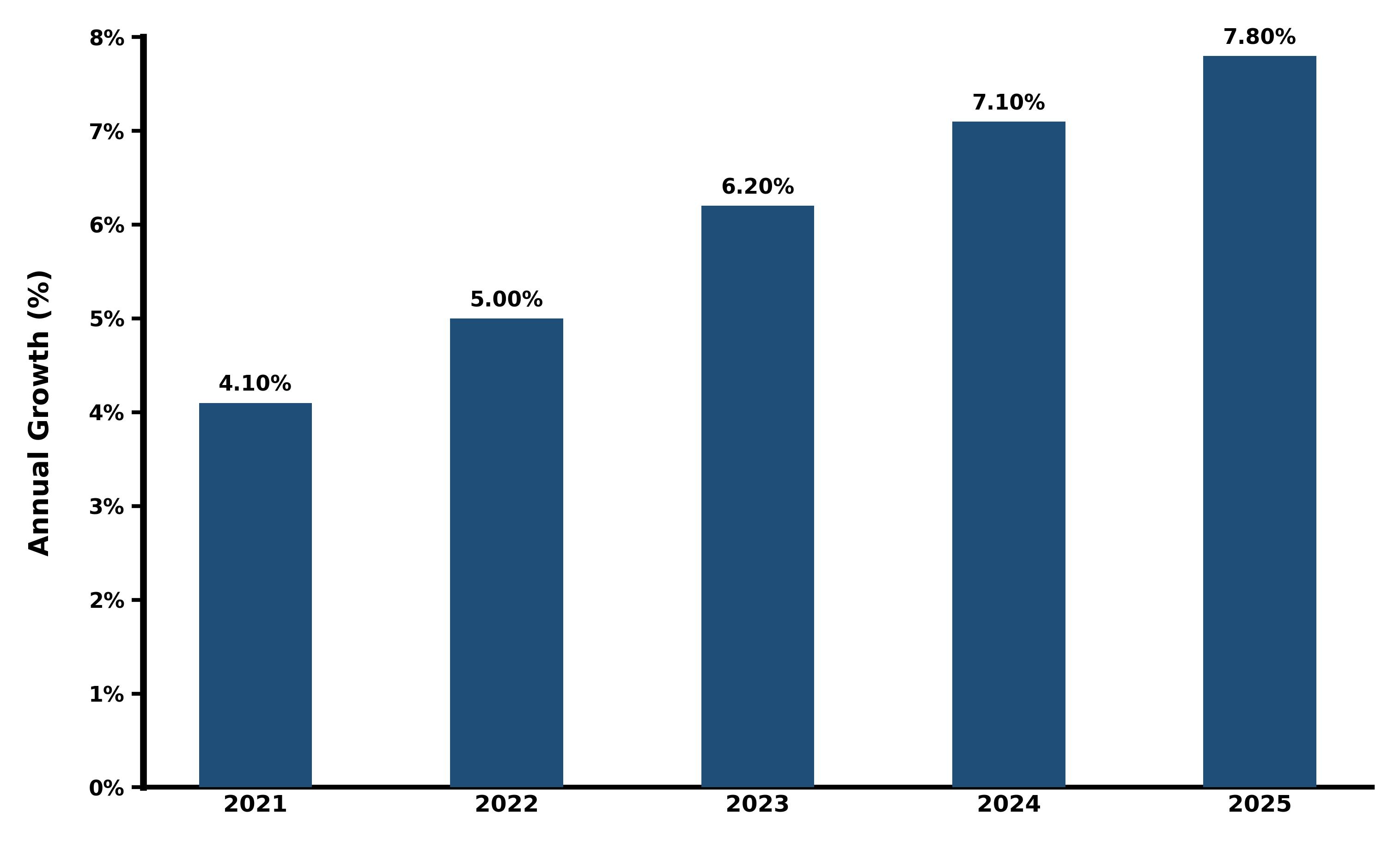
The table below presents the year‑wise growth rates along with the key drivers influencing the market
| Year | Est. Annual Growth (%) | Growth Drivers |
| 2021 | 4.1% | Increasing awareness about digestive health and functional foods. |
| 2022 | 5% | Expansion of probiotic dairy and fortified beverages in supermarkets. |
| 2023 | 6.2% | Regulatory clarity by ANVISA encouraging new product launches. |
| 2024 | 7.1% | Growth in online supplement sales and retail pharmacy penetration. |
| 2025 | 7.8% | Local fermentation development and distribution expansion. |
Topics Covered in the Brazil Probiotics Market Report
Brazil Probiotics Market report thoroughly covers the market by ingredient, product type, and end user. The market report provides an unbiased and detailed analysis of ongoing market trends, opportunities/high growth areas, and market drivers, which would help stakeholders devise and align their market strategies according to the current and future market dynamics.
Brazil Probiotics Market Highlights
| Report Name | Brazil Probiotics Market |
| Forecast period | 2026-2032 |
| CAGR | 8.1% |
| Growing Sector | Food & Beverages |
Brazil Probiotics Market Synopsis
The Brazil Probiotics Market is expected to witness strong growth driven by increasing consumer preference for functional foods that support gut health, immunity, and overall wellness. The growing awareness of preventive healthcare and the availability of probiotic dairy, beverages, and supplements across urban and semi-urban areas have strengthened market adoption. Government support through ANVISA regulatory framework has promoted product safety, innovation, and new strain introduction. Furthermore, local production expansion and e-commerce growth have improved accessibility and pricing competitiveness across Brazil.
Evaluation of Growth Drivers in the Brazil Probiotics Market
Below mentioned some growth drivers and their impact on market dynamics:
| Drivers | Primary Segments Affected | Why It Matters |
| Regulatory Clarity and Labeling Norms | Functional Foods, Supplements | Boosts consumer confidence and supports innovation. |
| Health Awareness and Preventive Nutrition | Functional Beverages, Supplements | Drives consistent consumption and repeat purchases. |
| Expansion of Retail and E-commerce | All Segments | Increases accessibility and penetration in new regions. |
| Local Fermentation & Cold Chain Infrastructure | Bacteria-based Products | Enhances stability and reduces import dependency. |
| Rising Livestock Productivity Goals | Feed Segment | Encourages adoption of probiotics in poultry and cattle feed |
Brazil Probiotics Market is expected to grow significantly, with a CAGR of 8.1% during the forecast period of 2026-2032. The Brazil Probiotics Market is projected to grow continuously, driven by rising consumer awareness of gut health, immunity, and preventive nutrition. Brazil Probiotics Market Growth is further supported by innovations in spore-forming strains, favorable regulatory policies for new product introductions, and the expansion of probiotic-enriched dairy and beverage segments. Rising applications in animal feed and dietary supplements are also enhancing market penetration, strengthening the country probiotics landscape, and creating sustained opportunities for manufacturers and distributors across both urban and rural regions.
Evaluation of Restraints in the Brazil Probiotics Market
Below mentioned are some major restraints and their influence on market dynamics:
| Restraints | Primary Segments Affected | What This Means |
| High Production & Storage Costs | Functional Foods | Increases final product price for consumers. |
| Limited Cold Chain Infrastructure | Bacteria-based Probiotics | Affects strain stability and shelf life. |
| Awareness Gap in Rural Areas | Supplements | Restricts consumption beyond urban markets. |
| Strain Import Dependency | All Segments | Increases lead time and limits local innovation. |
| Regulatory Approval Time | Supplements, Feed | Slows new product introductions. |
Brazil Probiotics Market Challenges
The Brazil Probiotics Industry is facing substantial challenges even with opportunities for significant growth. The difficulties associated with producing products that would be stable in tropical conditions; cold-chain logistics; and complying with, and facing ANVISA regulations, presents major issues. The lack of consumer awareness in rural areas limits the expansion potential of the industry beyond large urban areas, and reliance on imported strains and high research and development costs compounds the need for global suppliers. Consistent efficacy, compliance, and affordability will be important factors to sustain competitiveness and promote advancement in the probiotic industry in Brazil.
Brazil Probiotics Market Trends
Some major trends contributing to the development of the Brazil Probiotics Market
- Increased Demand for Synbiotic Products: Consumers prefer combined prebiotic and probiotic formulations for enhanced digestive benefits.
- Rising Popularity of Dairy-Based Functional Foods: Fortified yogurts, drinks, and fermented milk are expanding rapidly across supermarkets.
- Emergence of Spore-Forming Probiotics: Shelf-stable products suitable for Brazil’s warm climate are gaining traction.
- Growing Use in Animal Nutrition: Farmers are adopting probiotics to improve feed efficiency and animal health.
- Expansion of E-commerce & D2C Channels: Online retail platforms are driving greater awareness and product accessibility.
Investment Opportunities in the Brazil Probiotics Market
Here are some investment opportunities in the Brazil Probiotics Market:
- Local Manufacturing Infrastructure: Establishing fermentation and encapsulation units to improve supply chain control.
- Product Innovation in Functional Foods: Development of non-dairy probiotic drinks and bakery items to expand usage.
- Digital & D2C Platforms: Investment in e-commerce and subscription-based health supplement services.
- Sustainable and Plant-Based Solutions: Development of vegan probiotic beverages for health-conscious consumers.
- Animal Feed Probiotics: Rising investments in livestock health products for poultry and dairy farms.
Top 5 Leading Players in the Brazil Probiotics Market
Here are some top companies contributing to Brazil Probiotics Market Share:
1. Danone Brasil
| Company Name | Danone Brasil |
| Established Year | 1970 |
| Headquarters |
São Paulo, Brazil |
| Official Website | Click Here |
Global leader in dairy-based probiotics, offering yogurts and fermented drinks focused on digestive and immune health for Brazilian consumers.
2. Yakult Brasil
| Company Name | Yakult Brasil |
| Established Year | 1968 |
| Headquarters |
São Paulo, Brazil |
| Official Website | - |
Pioneer in probiotic drinks, Yakult provides daily-dose products with proven strains to promote gut health and immunity.
3. Nestlé Brasil
| Company Name | Nestlé Brasil |
| Established Year | 1921 |
| Headquarters |
São Paulo, Brazil |
| Official Website | Click Here |
Develops probiotic-enriched dairy and beverage products aimed at improving digestive comfort and supporting everyday wellness.
4. Chr. Hansen Brasil
| Company Name | Chr. Hansen Brasil |
| Established Year | 1874 |
| Headquarters |
Valinhos, Brazil |
| Official Website | Click Here |
Supplier of clinically proven probiotic strains for food, supplements, and feed manufacturers with local application support.
5. Lallemand Animal Nutrition Brasil
| Company Name | Lallemand Animal Nutrition Brasil |
| Established Year | 1915 |
| Headquarters |
Curitiba, Brazil |
| Official Website | Click Here |
Specializes in microbial feed solutions to enhance animal health, productivity, and sustainability through probiotic innovation.
Government Regulations Introduced in the Brazil Probiotics Market
According to Brazilian government authorities, ANVISA has implemented regulatory frameworks for probiotic labeling and health claims to ensure safety, efficacy, and truthful communication. Programs like the “National Food and Nutrition Policy” promote healthier diets and fermented dairy adoption. The Ministry of Agriculture (MAPA) has approved probiotic feed additives to enhance livestock productivity. Additionally, industrial policies and funding from BNDES and EMBRAPA support biotechnology advancements and local fermentation infrastructure development, promoting innovation and sustainable growth in Brazil probiotics sector.
Future Insights of the Brazil Probiotics Market
The Brazil Probiotics Market is expected to face robust growth during the forecast period. The market will expand due to strong consumer focus on digestive and immune health, innovation in probiotic ingredients, and rising acceptance of functional foods. Enhanced supply chains, local manufacturing, and advanced encapsulation technologies will further boost quality and reach. Animal feed applications will continue to rise as farmers seek natural growth promoters. Overall, probiotic consumption is expected to become a mainstream element of wellness and preventive nutrition across Brazil.
Market Segmentation Analysis
The report offers a comprehensive study of the subsequent market segments and their leading categories.
Bacteria to Dominate the Market – By Ingredient
According to Ritika Kalra, Senior Research Analyst, 6Wresearch, Bacteria-based probiotics dominate the market as they are widely utilized in functional food, dairy, and supplement formulations. Their extensive clinical validation and compatibility with traditional fermented products like yogurts and drinks make them the preferred choice among consumers and manufacturers.
Functional Food & Beverages to Dominate the Market – By Product Type
The functional food & beverages segment leads due to increased adoption of probiotic-enriched dairy products, fortified drinks, and snacks. With rising consumer preference for convenient nutrition, this category continues to witness innovation in flavor, packaging, and strain diversity.
Human to Dominate the Market – By End User
The human segment holds the largest share owing to increased awareness of gut health, preventive healthcare, and immunity-focused nutrition. Expansion in retail, pharmacies, and online sales has further accelerated demand among urban consumers.
Key attractiveness of the report
- 10 Years Market Numbers.
- Historical Data Starting from 2022 to 2025.
- Base Year: 2025
- Forecast Data until 2032
- Key Performance Indicators Impacting the Market.
- Major Upcoming Developments and Projects.
Key Highlights of the Report:
- Brazil Probiotics Market Outlook
- Market Size of Brazil Probiotics Market, 2025
- Forecast of Brazil Probiotics Market, 2032
- Historical Data and Forecast of Brazil Probiotics Revenues & Volume for the Period 2022-2032
- Brazil Probiotics Market Trend Evolution
- Brazil Probiotics Market Drivers and Challenges
- Brazil Probiotics Price Trends
- Brazil Probiotics Porter's Five Forces
- Brazil Probiotics Industry Life Cycle
- Historical Data and Forecast of Brazil Probiotics Market Revenues & Volume By Ingredient for the Period 2022-2032
- Historical Data and Forecast of Brazil Probiotics Market Revenues & Volume By Bacteria for the Period 2022-2032
- Historical Data and Forecast of Brazil Probiotics Market Revenues & Volume By Yeast for the Period 2022-2032
- Historical Data and Forecast of Brazil Probiotics Market Revenues & Volume By Product Type for the Period 2022-2032
- Historical Data and Forecast of Brazil Probiotics Market Revenues & Volume By Functional Food & Beverages for the Period 2022-2032
- Historical Data and Forecast of Brazil Probiotics Market Revenues & Volume By Dietary Supplements for the Period 2022-2032
- Historical Data and Forecast of Brazil Probiotics Market Revenues & Volume By Feed for the Period 2022-2032
- Historical Data and Forecast of Brazil Probiotics Market Revenues & Volume By End User for the Period 2022-2032
- Historical Data and Forecast of Brazil Probiotics Market Revenues & Volume By Human for the Period 2022-2032
- Historical Data and Forecast of Brazil Probiotics Market Revenues & Volume By Animal for the Period 2022-2032
- Brazil Probiotics Import Export Trade Statistics
- Market Opportunity Assessment By Ingredient
- Market Opportunity Assessment By Product Type
- Market Opportunity Assessment By End User
- Brazil Probiotics Top Companies Market Share
- Brazil Probiotics Competitive Benchmarking By Technical and Operational Parameters
- Brazil Probiotics Company Profiles
- Brazil Probiotics Key Strategic Recommendations
Market Covered
The report subsequently covers the market by following segments and subsegments:
By Ingredient
- Bacteria
- Yeast
By Product Type
- Functional Food & Beverages
- Dietary Supplements
- Feed
By End User
- Human
- Animal






































