Brunei Darussalam Plastic Bottles Market Growth Rate Analysis (2025 - 2031)
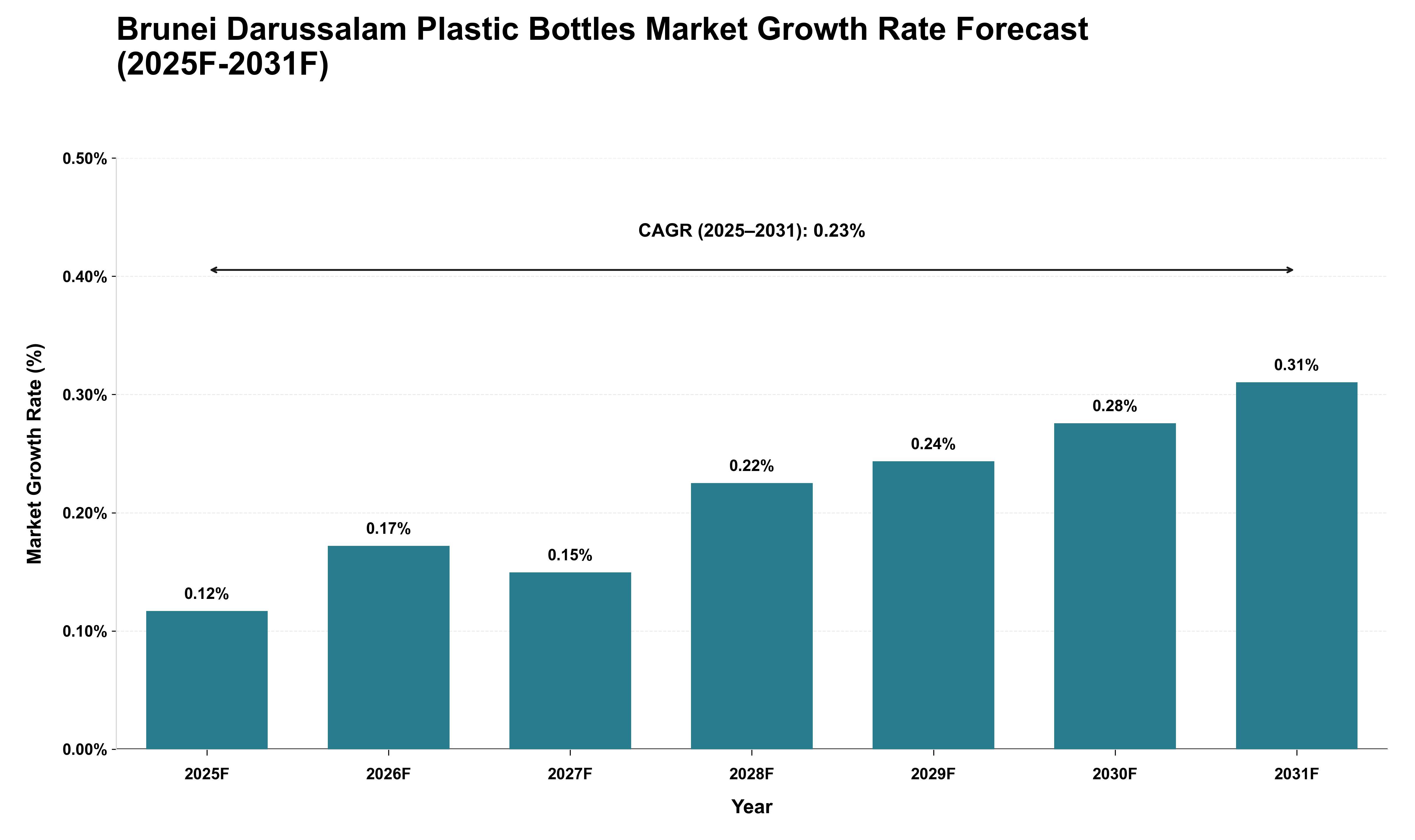
The Brunei Darussalam plastic bottles market will experience a modest growth trajectory driven by several macroeconomic factors, including increasing consumer demand for packaged beverages and a gradual shift towards sustainable packaging solutions. As the forecasted CAGR of 0.23% suggests, annual growth rates will incrementally rise from 0.12% in 2025 to 0.31% by 2031, reflecting an anticipated uptick in import volumes as local production may not fully meet domestic needs. This trend will be influenced by global supply chain dynamics and fluctuating raw material costs, which could impact pricing strategies for imported plastic bottles. Additionally, regulatory pressures aimed at reducing plastic waste may spur innovation in recycling technologies and alternative materials, further shaping trade flows within the sector. Overall, these factors will collectively underpin a steady yet cautious expansion of the market during this period.
Key Highlights of the Report:
- Brunei Plastic Bottles Market Outlook
- Market Size of Brunei Plastic Bottles Market, 2024
- Forecast of Brunei Plastic Bottles Market, 2031
- Historical Data and Forecast of Brunei Plastic Bottles Revenues & Volume for the Period 2021-2031
- Brunei Plastic Bottles Market Trend Evolution
- Brunei Plastic Bottles Market Drivers and Challenges
- Brunei Plastic Bottles Price Trends
- Brunei Plastic Bottles Porter`s Five Forces
- Brunei Plastic Bottles Industry Life Cycle
- Historical Data and Forecast of Brunei Plastic Bottles Market Revenues & Volume By Raw Material Type for the Period 2021-2031
- Historical Data and Forecast of Brunei Plastic Bottles Market Revenues & Volume By Polyethylene Terephthalate (PET) for the Period 2021-2031
- Historical Data and Forecast of Brunei Plastic Bottles Market Revenues & Volume By Poly Propylene (PP) for the Period 2021-2031
- Historical Data and Forecast of Brunei Plastic Bottles Market Revenues & Volume By Low-density Polyethylene (LDPE) for the Period 2021-2031
- Historical Data and Forecast of Brunei Plastic Bottles Market Revenues & Volume By High-density Polyethylene (HDPE) for the Period 2021-2031
- Historical Data and Forecast of Brunei Plastic Bottles Market Revenues & Volume By Other Raw Materials for the Period 2021-2031
- Historical Data and Forecast of Brunei Plastic Bottles Market Revenues & Volume By End-user for the Period 2021-2031
- Historical Data and Forecast of Brunei Plastic Bottles Market Revenues & Volume By Beverage for the Period 2021-2031
- Historical Data and Forecast of Brunei Plastic Bottles Market Revenues & Volume By Food for the Period 2021-2031
- Historical Data and Forecast of Brunei Plastic Bottles Market Revenues & Volume By Cosmetics for the Period 2021-2031
- Historical Data and Forecast of Brunei Plastic Bottles Market Revenues & Volume By Pharmaceutical for the Period 2021-2031
- Historical Data and Forecast of Brunei Plastic Bottles Market Revenues & Volume By Household Care for the Period 2021-2031
- Historical Data and Forecast of Brunei Plastic Bottles Market Revenues & Volume By Other for the Period 2021-2031
- Brunei Plastic Bottles Import Export Trade Statistics
- Market Opportunity Assessment By Raw Material Type
- Market Opportunity Assessment By End-user
- Brunei Plastic Bottles Top Companies Market Share
- Brunei Plastic Bottles Competitive Benchmarking By Technical and Operational Parameters
- Brunei Plastic Bottles Company Profiles
- Brunei Plastic Bottles Key Strategic Recommendations






































