Canada Dermocosmetics Market: Import Trend Analysis
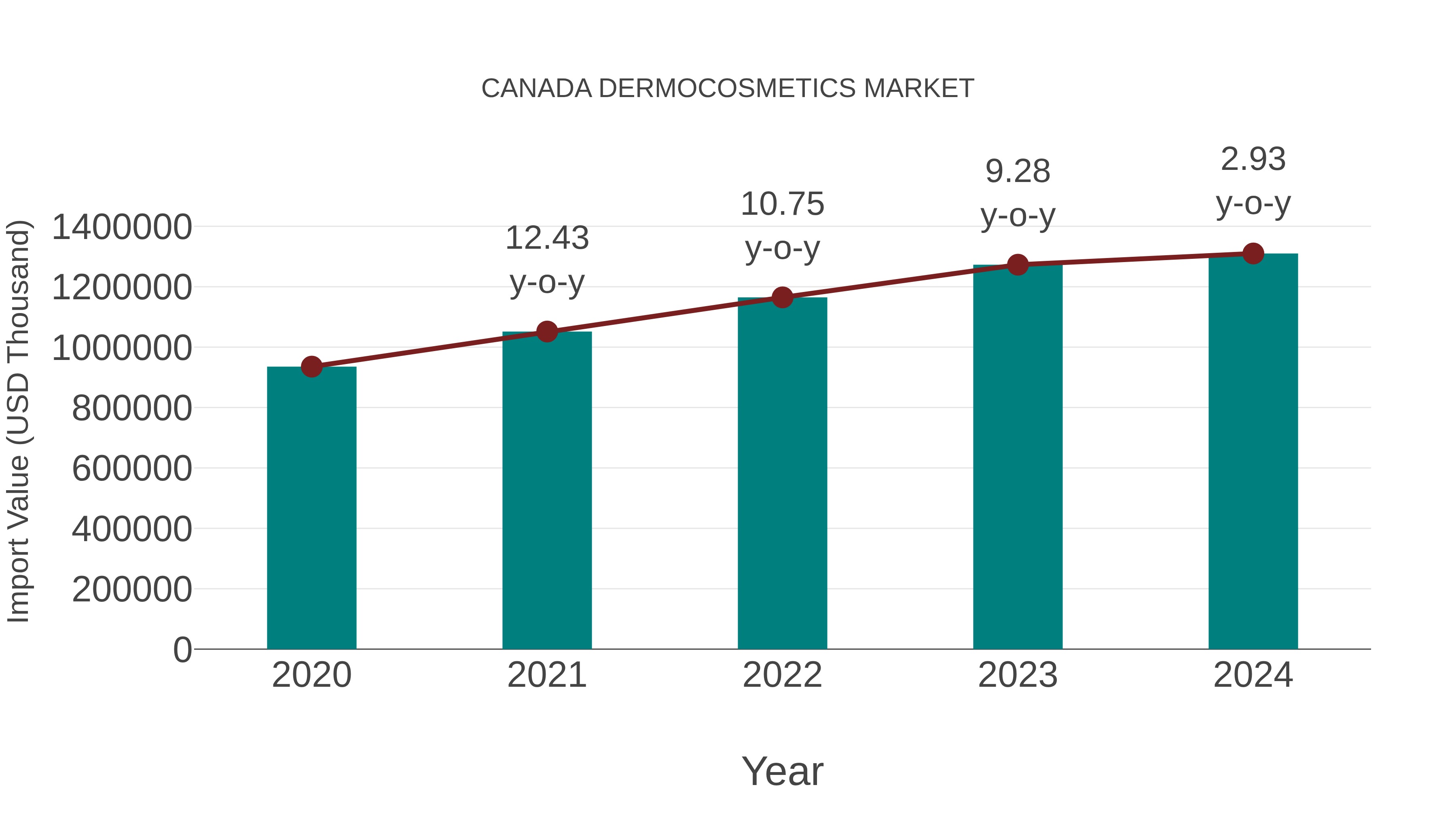
Canada`s import trend for the dermocosmetics market saw a growth rate of 2.93% from 2023 to 2024, with a compound annual growth rate (CAGR) of 8.79% for the period 2020-2024. This increase can be attributed to a steady demand shift towards premium skincare products, indicating a stable market with sustained import momentum.
Canada Dermocosmetics Market Overview
The Canada dermocosmetics market is experiencing steady growth driven by increasing consumer awareness about skin health and wellness. The demand for dermocosmetic products, which are formulated with dermatological benefits and often recommended by healthcare professionals, is rising as Canadians prioritize skincare routines. Key trends in the market include a preference for natural and organic ingredients, advanced anti-aging solutions, and products tailored to address specific skin concerns like acne, sensitivity, and hyperpigmentation. Major players in the Canadian dermocosmetics market are investing in research and development to introduce innovative formulations and expand their product portfolios. With a focus on efficacy and safety, dermocosmetics are gaining popularity among consumers seeking high-quality skincare solutions, positioning the market for continued growth and opportunities for new entrants and market expansion strategies.
Canada Dermocosmetics Market Trends
In Canada, the dermocosmetics market is witnessing a surge in demand for products that offer both cosmetic and therapeutic benefits. Consumers are increasingly looking for skincare solutions that are backed by science and formulated with dermatologist-recommended ingredients. There is a growing preference for products that address specific skin concerns such as anti-aging, hyperpigmentation, and sensitive skin issues. Natural and organic ingredients are gaining popularity as consumers become more conscious of the ingredients they are putting on their skin. Moreover, there is a rising trend towards personalized skincare regimens tailored to individual skin types and concerns, driving the demand for customizable dermocosmetics products. Brands that emphasize transparency, efficacy, and safety in their formulations are likely to see continued growth in the Canadian dermocosmetics market.
Canada Dermocosmetics Market Challenges
In the Canadian dermocosmetics market, challenges such as increasing competition from both established and new brands, changing consumer preferences towards clean and natural ingredients, and regulatory hurdles for certain active ingredients pose significant obstacles for companies operating in the sector. Additionally, the need for continuous innovation to meet evolving consumer demands, the impact of economic fluctuations on consumer spending, and the growing popularity of online purchasing channels are also key challenges faced by players in the Canadian dermocosmetics market. Companies must navigate these challenges by investing in research and development, maintaining strong relationships with regulatory bodies, and implementing effective marketing strategies to stay competitive in this dynamic and rapidly evolving market.
Canada Dermocosmetics Market Investment Opportunities
The Canada dermocosmetics market presents promising investment opportunities due to the increasing consumer demand for skincare products that offer both cosmetic and therapeutic benefits. The market is driven by factors such as a growing awareness of skincare routines, aging population, and the preference for natural and organic ingredients. Investors can explore opportunities in product innovation, marketing strategies targeting specific skin concerns, and partnerships with dermatologists or skincare professionals. Additionally, investing in research and development to create advanced formulations and expanding distribution channels through e-commerce platforms can further capitalize on the growing demand for dermocosmetics in Canada. Overall, the market offers a lucrative landscape for investors looking to tap into the intersection of beauty and dermatology.
Canada Dermocosmetics Market Government Policy
In Canada, the dermocosmetics market is regulated by Health Canada, which oversees the safety, efficacy, and labeling of cosmetic products. Dermocosmetics must comply with the Cosmetic Regulations under the Food and Drugs Act, ensuring that they do not contain prohibited or restricted ingredients and are safe for consumer use. The regulations also require accurate labeling of dermocosmetics, providing consumers with transparent information about ingredients and potential allergens. Additionally, Health Canada has guidelines for advertising and marketing dermocosmetics to prevent misleading claims and ensure that products are promoted in a truthful and ethical manner. Overall, the government policies in Canada aim to protect consumers and promote the safety and effectiveness of dermocosmetic products in the market.
Canada Dermocosmetics Market Future Outlook
The future outlook for the Canada dermocosmetics market appears promising with anticipated growth driven by factors such as increasing consumer awareness about skincare, rising concerns over skin health, and a growing aging population. The demand for dermocosmetics, which offer both cosmetic and pharmaceutical benefits, is expected to surge as consumers seek more effective and science-backed skincare solutions. Additionally, advancements in technology, such as personalized skincare products and innovative formulations, are likely to further propel market growth. With a focus on natural and organic ingredients and a shift towards sustainable and eco-friendly products, the Canada dermocosmetics market is poised for expansion in the coming years, presenting opportunities for both established players and new entrants in the industry.
Key Highlights of the Report:
- Canada Dermocosmetics Market Outlook
- Market Size of Canada Dermocosmetics Market,2025
- Forecast of Canada Dermocosmetics Market, 2032
- Historical Data and Forecast of Canada Dermocosmetics Revenues & Volume for the Period 2022-2032F
- Canada Dermocosmetics Market Trend Evolution
- Canada Dermocosmetics Market Drivers and Challenges
- Canada Dermocosmetics Price Trends
- Canada Dermocosmetics Porter's Five Forces
- Canada Dermocosmetics Industry Life Cycle
- Historical Data and Forecast of Canada Dermocosmetics Market Revenues & Volume By Type for the Period 2022-2032F
- Historical Data and Forecast of Canada Dermocosmetics Market Revenues & Volume By Anti-Aging Products for the Period 2022-2032F
- Historical Data and Forecast of Canada Dermocosmetics Market Revenues & Volume By Acne Treatment Products for the Period 2022-2032F
- Historical Data and Forecast of Canada Dermocosmetics Market Revenues & Volume By Skin Brightening Products for the Period 2022-2032F
- Historical Data and Forecast of Canada Dermocosmetics Market Revenues & Volume By Application for the Period 2022-2032F
- Historical Data and Forecast of Canada Dermocosmetics Market Revenues & Volume By Skincare for the Period 2022-2032F
- Historical Data and Forecast of Canada Dermocosmetics Market Revenues & Volume By Haircare for the Period 2022-2032F
- Historical Data and Forecast of Canada Dermocosmetics Market Revenues & Volume By Distribution Channel for the Period 2022-2032F
- Historical Data and Forecast of Canada Dermocosmetics Market Revenues & Volume By Retail Pharmacies for the Period 2022-2032F
- Historical Data and Forecast of Canada Dermocosmetics Market Revenues & Volume By Online Stores for the Period 2022-2032F
- Historical Data and Forecast of Canada Dermocosmetics Market Revenues & Volume By Dermatology Clinics for the Period 2022-2032F
- Canada Dermocosmetics Import Export Trade Statistics
- Market Opportunity Assessment By Type
- Market Opportunity Assessment By Application
- Market Opportunity Assessment By Distribution Channel
- Canada Dermocosmetics Top Companies Market Share
- Canada Dermocosmetics Competitive Benchmarking By Technical and Operational Parameters
- Canada Dermocosmetics Company Profiles
- Canada Dermocosmetics Key Strategic Recommendations






































