Canada Packaging Foams Market Growth Rate Analysis (2025 - 2031)
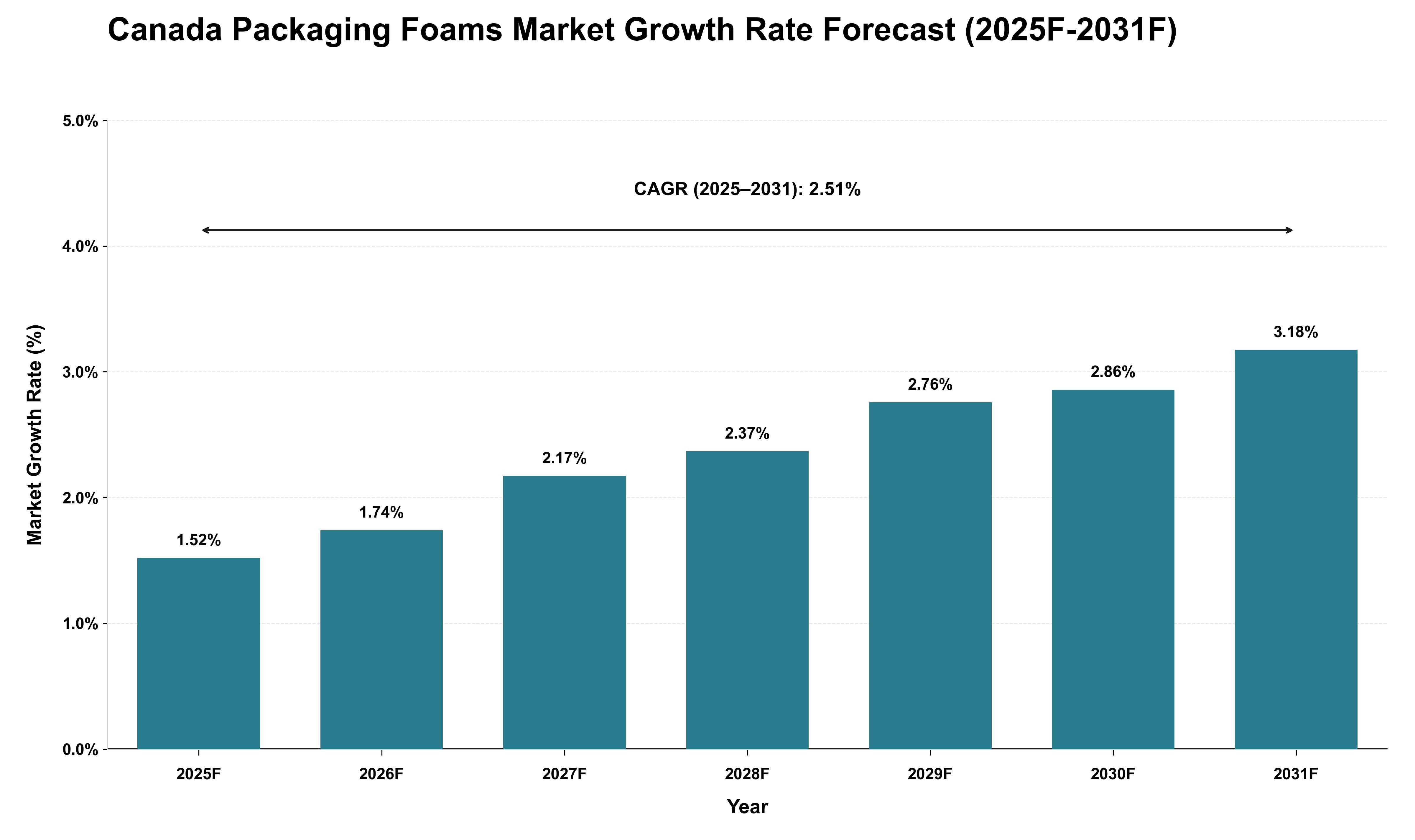
The Canada packaging foams market is projected to experience a compound annual growth rate of 2.51% from 2025 to 2031, reflecting a gradual increase in demand driven by evolving consumer preferences and sustainability initiatives. The anticipated growth trajectory will be influenced by the availability and pricing of raw materials, particularly petrochemical derivatives and bio-based alternatives, which are critical for foam production. As global supply chains stabilize post-pandemic, fluctuations in crude oil prices will likely impact production costs, thereby affecting market pricing dynamics. Additionally, the increasing emphasis on lightweight packaging solutions will drive innovation in foam formulations, potentially enhancing performance while maintaining cost-effectiveness. Import dependencies on specific raw materials may introduce volatility; however, domestic sourcing initiatives could mitigate risks associated with supply chain disruptions. Overall, the market's growth will hinge on balancing material availability with competitive pricing strategies throughout this forecast period.
Key Highlights of the Report:
- Canada Packaging Foams Market Outlook
- Market Size of Canada Packaging Foams Market, 2024
- Forecast of Canada Packaging Foams Market, 2031
- Historical Data and Forecast of Canada Packaging Foams Revenues & Volume for the Period 2021-2031
- Canada Packaging Foams Market Trend Evolution
- Canada Packaging Foams Market Drivers and Challenges
- Canada Packaging Foams Price Trends
- Canada Packaging Foams Porter`s Five Forces
- Canada Packaging Foams Industry Life Cycle
- Historical Data and Forecast of Canada Packaging Foams Market Revenues & Volume By Structure Type for the Period 2021-2031
- Historical Data and Forecast of Canada Packaging Foams Market Revenues & Volume By Flexible Foam for the Period 2021-2031
- Historical Data and Forecast of Canada Packaging Foams Market Revenues & Volume By Rigid Foam for the Period 2021-2031
- Historical Data and Forecast of Canada Packaging Foams Market Revenues & Volume By Material Type for the Period 2021-2031
- Historical Data and Forecast of Canada Packaging Foams Market Revenues & Volume By Polystyrene Foam for the Period 2021-2031
- Historical Data and Forecast of Canada Packaging Foams Market Revenues & Volume By Polyurethane Foam for the Period 2021-2031
- Historical Data and Forecast of Canada Packaging Foams Market Revenues & Volume By Polyolefin Foam for the Period 2021-2031
- Historical Data and Forecast of Canada Packaging Foams Market Revenues & Volume By Service Type for the Period 2021-2031
- Historical Data and Forecast of Canada Packaging Foams Market Revenues & Volume By Food Service for the Period 2021-2031
- Historical Data and Forecast of Canada Packaging Foams Market Revenues & Volume By Protective Packaging for the Period 2021-2031
- Canada Packaging Foams Import Export Trade Statistics
- Market Opportunity Assessment By Structure Type
- Market Opportunity Assessment By Material Type
- Market Opportunity Assessment By Service Type
- Canada Packaging Foams Top Companies Market Share
- Canada Packaging Foams Competitive Benchmarking By Technical and Operational Parameters
- Canada Packaging Foams Company Profiles
- Canada Packaging Foams Key Strategic Recommendations






































