Canada Spice Market: Import Trend Analysis
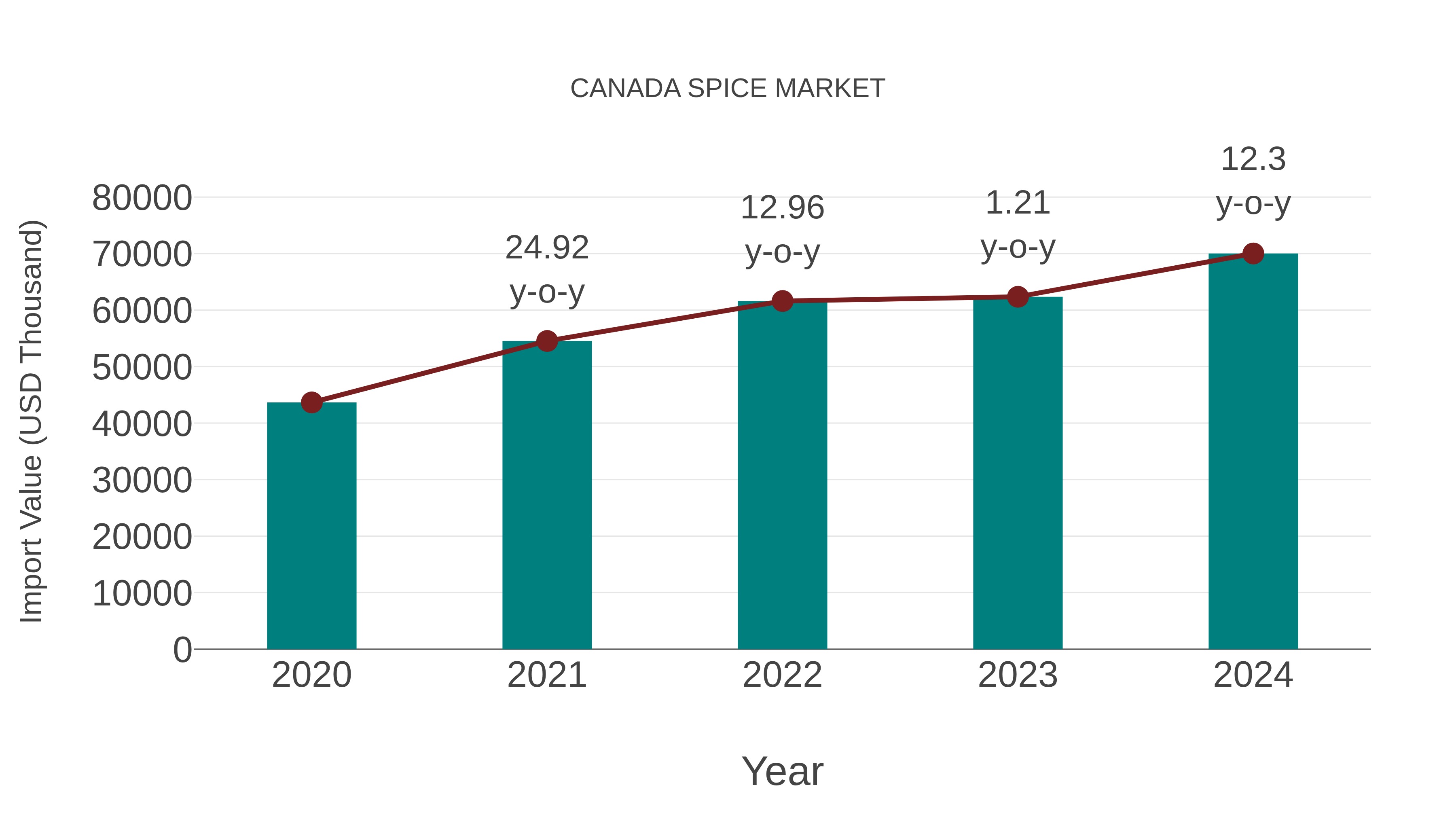
Canada`s import trend for the spice market saw significant growth from 2023 to 2024, with a growth rate of 12.3%. The compound annual growth rate (CAGR) for the period 2020-2024 stood at 12.54%. This robust import momentum can be attributed to shifting consumer preferences towards diverse culinary experiences, driving demand for a wider variety of spices in the Canadian market.
Canada Spice Market Overview
The Canada spice market is witnessing steady growth driven by increasing consumer demand for diverse flavor profiles and culinary experiences. Factors such as multiculturalism, changing dietary preferences, and the influence of global cuisine have contributed to the popularity of spices in Canadian households. The market offers a wide range of spices including pepper, cinnamon, turmeric, and paprika, catering to both traditional and innovative cooking styles. With a focus on quality, organic, and sustainably sourced products, consumers are increasingly seeking premium and exotic spices. The market is also witnessing a rise in online spice retailers and specialty stores, providing convenient access to a variety of high-quality spices. Overall, the Canada spice market is evolving to meet the growing demand for flavorful and authentic ingredients in the culinary landscape.
Canada Spice Market Trends
In the Canada spice market, there is a growing demand for ethnic and exotic flavors, driven by increasing multiculturalism and consumer interest in global cuisines. Consumers are seeking out spices and blends from various regions such as India, the Middle East, and Southeast Asia for their unique and authentic flavors. There is also a rising preference for organic and natural spices, as health-conscious consumers are looking for clean label products with no additives or preservatives. Furthermore, there is a trend towards innovative spice blends and seasonings that offer convenience and versatility for home cooks and food enthusiasts. Overall, the Canada spice market is experiencing a shift towards diverse, high-quality, and sustainable products to meet the evolving tastes and preferences of consumers.
Canada Spice Market Challenges
In the Canada spice market, some of the key challenges include intense competition among both domestic and international suppliers, fluctuating prices of spices due to factors like weather conditions and geopolitical events, stringent regulations and quality standards imposed by health and safety authorities, and changing consumer preferences towards healthier and organic options. Additionally, managing supply chain logistics and ensuring timely delivery of fresh products can be a challenge in such a vast and diverse country. Companies operating in the Canada spice market need to stay updated with market trends, invest in quality control measures, and focus on sustainable sourcing practices to overcome these challenges and stay competitive in the dynamic market landscape.
Canada Spice Market Investment Opportunities
The Canada spice market presents several attractive investment opportunities. With a growing trend towards diverse and international cuisine, there is increasing demand for a wide variety of spices in the country. Investors can consider opportunities in spice import/export businesses, spice processing and packaging facilities, and even specialty spice shops catering to the gourmet market. Additionally, the rise of health-conscious consumers seeking natural and organic products presents a niche for investing in organic spice production. Investing in innovative technologies for spice cultivation, harvesting, and processing can also yield significant returns in this market. Overall, the Canada spice market offers a range of investment avenues for those looking to capitalize on the growing demand for high-quality, diverse spices in the country.
Canada Spice Market Government Policy
The Canadian government has strict regulations in place regarding the spice market to ensure consumer safety and quality control. The Canadian Food Inspection Agency (CFIA) oversees the import, sale, and labeling of spices, enforcing standards for minimum quality and safety requirements. Additionally, the Safe Food for Canadians Regulations (SFCR) require that spices are stored, handled, and transported in a manner that prevents contamination and ensures product integrity. Importers and manufacturers are obligated to adhere to these regulations, providing transparency and accountability in the spice industry. Overall, the government policies aim to uphold the highest standards of food safety and quality in the Canadian spice market, protecting consumers and promoting trust in the products available.
Canada Spice Market Future Outlook
The future outlook for the Canada spice market appears promising, driven by increasing consumer interest in diverse cuisines, growing awareness of health benefits associated with certain spices, and the popularity of home cooking. As Canadians continue to explore global flavors and seek out authentic ingredients, the demand for a wide range of spices is expected to rise. Additionally, the trend towards healthier eating habits and the incorporation of spices for their medicinal properties are likely to further fuel market growth. Industry players are anticipated to focus on product innovation, sustainable sourcing practices, and packaging advancements to cater to evolving consumer preferences. Overall, the Canada spice market is poised for steady expansion in the coming years, presenting opportunities for both domestic and international spice suppliers.
Key Highlights of the Report:
- Canada Spice Market Outlook
- Market Size of Canada Spice Market,2025
- Forecast of Canada Spice Market, 2032
- Historical Data and Forecast of Canada Spice Revenues & Volume for the Period 2022-2032F
- Canada Spice Market Trend Evolution
- Canada Spice Market Drivers and Challenges
- Canada Spice Price Trends
- Canada Spice Porter's Five Forces
- Canada Spice Industry Life Cycle
- Historical Data and Forecast of Canada Spice Market Revenues & Volume By Type for the Period 2022-2032F
- Historical Data and Forecast of Canada Spice Market Revenues & Volume By Hot Spices for the Period 2022-2032F
- Historical Data and Forecast of Canada Spice Market Revenues & Volume By Aromatic Spices for the Period 2022-2032F
- Historical Data and Forecast of Canada Spice Market Revenues & Volume By Nutty Spices for the Period 2022-2032F
- Historical Data and Forecast of Canada Spice Market Revenues & Volume By Bitter Spices for the Period 2022-2032F
- Historical Data and Forecast of Canada Spice Market Revenues & Volume By Nature for the Period 2022-2032F
- Historical Data and Forecast of Canada Spice Market Revenues & Volume By Organic for the Period 2022-2032F
- Historical Data and Forecast of Canada Spice Market Revenues & Volume By Conventional for the Period 2022-2032F
- Historical Data and Forecast of Canada Spice Market Revenues & Volume By Blended for the Period 2022-2032F
- Historical Data and Forecast of Canada Spice Market Revenues & Volume By Essential Oil based for the Period 2022-2032F
- Historical Data and Forecast of Canada Spice Market Revenues & Volume By Form for the Period 2022-2032F
- Historical Data and Forecast of Canada Spice Market Revenues & Volume By Whole for the Period 2022-2032F
- Historical Data and Forecast of Canada Spice Market Revenues & Volume By Powdered for the Period 2022-2032F
- Historical Data and Forecast of Canada Spice Market Revenues & Volume By Crushed for the Period 2022-2032F
- Historical Data and Forecast of Canada Spice Market Revenues & Volume By Paste for the Period 2022-2032F
- Historical Data and Forecast of Canada Spice Market Revenues & Volume By Application for the Period 2022-2032F
- Historical Data and Forecast of Canada Spice Market Revenues & Volume By Culinary for the Period 2022-2032F
- Historical Data and Forecast of Canada Spice Market Revenues & Volume By Medicinal for the Period 2022-2032F
- Historical Data and Forecast of Canada Spice Market Revenues & Volume By Industrial for the Period 2022-2032F
- Historical Data and Forecast of Canada Spice Market Revenues & Volume By Personal Care for the Period 2022-2032F
- Canada Spice Import Export Trade Statistics
- Market Opportunity Assessment By Type
- Market Opportunity Assessment By Nature
- Market Opportunity Assessment By Form
- Market Opportunity Assessment By Application
- Canada Spice Top Companies Market Share
- Canada Spice Competitive Benchmarking By Technical and Operational Parameters
- Canada Spice Company Profiles
- Canada Spice Key Strategic Recommendations






































