China Bamboos Market Top 5 Importing Countries and Market Competition (HHI) Analysis
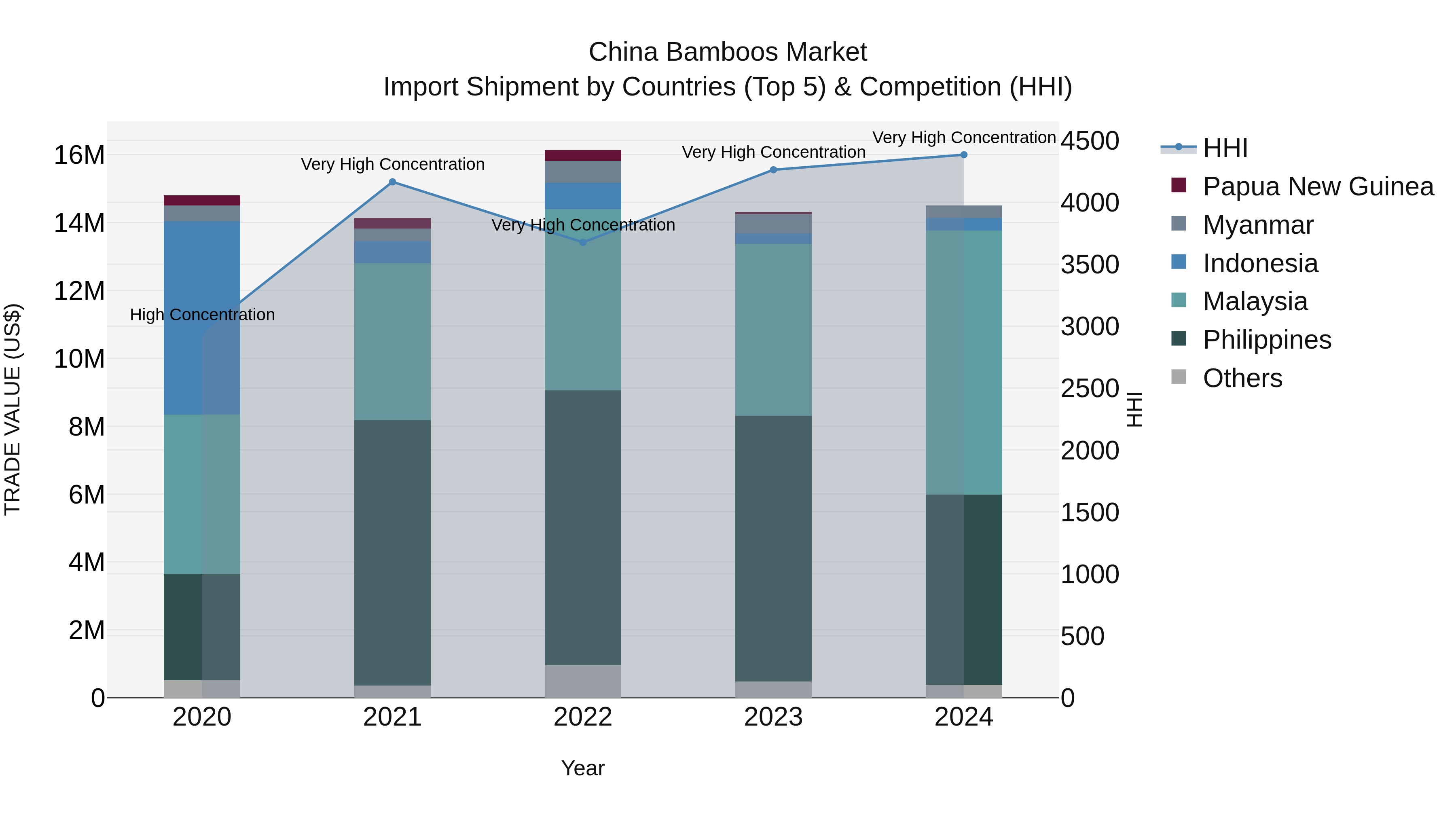
In 2024, China continued to be a significant importer of bamboos, with top countries such as Malaysia, Philippines, Indonesia, Myanmar, and Singapore leading the export shipments. Despite a high concentration of supply, the industry experienced a slight decline with a CAGR of -0.51% from 2020 to 2024. However, there was a promising growth rate of 1.31% from 2023 to 2024, indicating potential opportunities for the market in the coming years. The competitive landscape and evolving market dynamics will be crucial factors to monitor for stakeholders in the bamboo import sector.
China Bamboos Market Overview
The China Bamboos Market is experiencing robust growth driven by increasing demand for sustainable and eco-friendly materials across various industries such as construction, furniture, and packaging. Bamboo`s versatility, durability, and fast growth rate make it an attractive alternative to traditional materials. The market is also benefiting from government initiatives promoting bamboo cultivation and usage, as well as rising awareness among consumers regarding the environmental benefits of bamboo products. Key players in the market are focusing on product innovation, quality improvement, and expanding their distribution channels to capitalize on the growing demand. Overall, the China Bamboos Market is poised for sustained growth in the coming years, fueled by changing consumer preferences and the shift towards sustainable practices in the industrial sector.
China Bamboos Market Trends
The China Bamboos Market is experiencing growth driven by the increasing demand for sustainable and eco-friendly materials. Bamboo is being widely used in various industries, including construction, furniture, and textiles, due to its durability, flexibility, and environmental benefits. The market is also witnessing innovation in bamboo products, such as bamboo flooring, bio-based plastics, and bamboo charcoal. Additionally, the government`s support for the bamboo industry through initiatives promoting sustainable forestry practices and research and development is further fueling the market growth. With the rising awareness of environmental issues and the shift towards green living, the China Bamboos Market is expected to continue its upward trajectory in the coming years.
China Bamboos Market Challenges
In the China Bamboos Market, some challenges include increasing competition from alternative materials, such as plastic, steel, and wood, which can impact the demand for bamboo products. Additionally, issues related to sustainability and environmental concerns, such as deforestation and habitat destruction, can affect the reputation of bamboo as a green and eco-friendly material. Supply chain complexities, including transportation and logistics inefficiencies, can also pose challenges for market players in ensuring timely delivery and quality control. Furthermore, fluctuations in raw material prices and regulatory hurdles, such as trade restrictions and certification requirements, can create uncertainty and hinder market growth. Overall, navigating these challenges requires a strategic approach that emphasizes innovation, sustainability, and market differentiation.
China Bamboos Market Investment Opportunities
The China Bamboos Market presents various investment opportunities due to the increasing demand for sustainable and eco-friendly products. Investors can consider investing in bamboo plantations for the production of raw materials, as bamboo is a fast-growing and renewable resource. Additionally, there is a growing market for bamboo-based products such as furniture, flooring, textiles, and even eco-friendly packaging. With the government promoting sustainable development and the use of bamboo in various industries, there is a favorable environment for investment in the China Bamboos Market. Investors can also explore opportunities in technology and innovation for bamboo processing and product development to capitalize on the growing trend towards sustainable and green alternatives in the market.
China Bamboos Market Government Policy
The Chinese government has implemented various policies related to the bamboo market to promote sustainable development and boost the industry. These policies include incentivizing bamboo cultivation, supporting research and development in bamboo products, and promoting the use of bamboo in construction and manufacturing. Additionally, there are regulations in place to protect natural bamboo forests, enhance the quality of bamboo products, and encourage environmentally friendly practices in the industry. The government also provides financial support and technical assistance to bamboo farmers and businesses to improve productivity and competitiveness in the global market. Overall, these policies aim to harness the economic and environmental benefits of bamboo while ensuring its long-term viability as a key sector in China`s economy.
China Bamboos Market Future Outlook
The China bamboos market is poised for significant growth in the coming years due to the increasing demand for sustainable and eco-friendly materials across various industries. Bamboo`s versatility, durability, and rapid growth rate make it an attractive choice for construction, furniture, textiles, and other applications. With the Chinese government`s push for environmental conservation and sustainable development, the bamboo industry is expected to receive further support and investment, leading to advancements in processing technology, product innovation, and market expansion. Additionally, the rising global awareness of the benefits of bamboo as a renewable resource will further drive the growth of the China bamboos market, positioning it as a key player in the global green economy.
Key Highlights of the Report:
- China Bamboos Market Outlook
- Market Size of China Bamboos Market, 2021
- Forecast of China Bamboos Market, 2031
- Historical Data and Forecast of China Bamboos Revenues & Volume for the Period 2018 - 2031
- China Bamboos Market Trend Evolution
- China Bamboos Market Drivers and Challenges
- China Bamboos Price Trends
- China Bamboos Porter's Five Forces
- China Bamboos Industry Life Cycle
- Historical Data and Forecast of China Bamboos Market Revenues & Volume By Application for the Period 2018 - 2031
- Historical Data and Forecast of China Bamboos Market Revenues & Volume By Raw Materials for the Period 2018 - 2031
- Historical Data and Forecast of China Bamboos Market Revenues & Volume By Industrial Products for the Period 2018 - 2031
- Historical Data and Forecast of China Bamboos Market Revenues & Volume By Furniture for the Period 2018 - 2031
- Historical Data and Forecast of China Bamboos Market Revenues & Volume By Shoots for the Period 2018 - 2031
- Historical Data and Forecast of China Bamboos Market Revenues & Volume By Others for the Period 2018 - 2031
- China Bamboos Import Export Trade Statistics
- Market Opportunity Assessment By Application
- China Bamboos Top Companies Market Share
- China Bamboos Competitive Benchmarking By Technical and Operational Parameters
- China Bamboos Company Profiles
- China Bamboos Key Strategic Recommendations






































