Congo Colorants Market: Top 5 Importing Countries and Market Competition (HHI) Analysis
In 2023, Congo colorants import market saw a significant shift with top exporters being Ivory Coast, Lebanon, Belgium, South Korea, and Gabon. The market concentration increased from moderate to high, indicating a more competitive landscape. Despite a negative CAGR of -4.32%, the impressive growth rate of 90.87% signals opportunities for both exporters and importers in the colorants industry. The dynamic changes in the market highlight the importance of staying informed and adaptable in order to capitalize on emerging trends and opportunities in the sector.
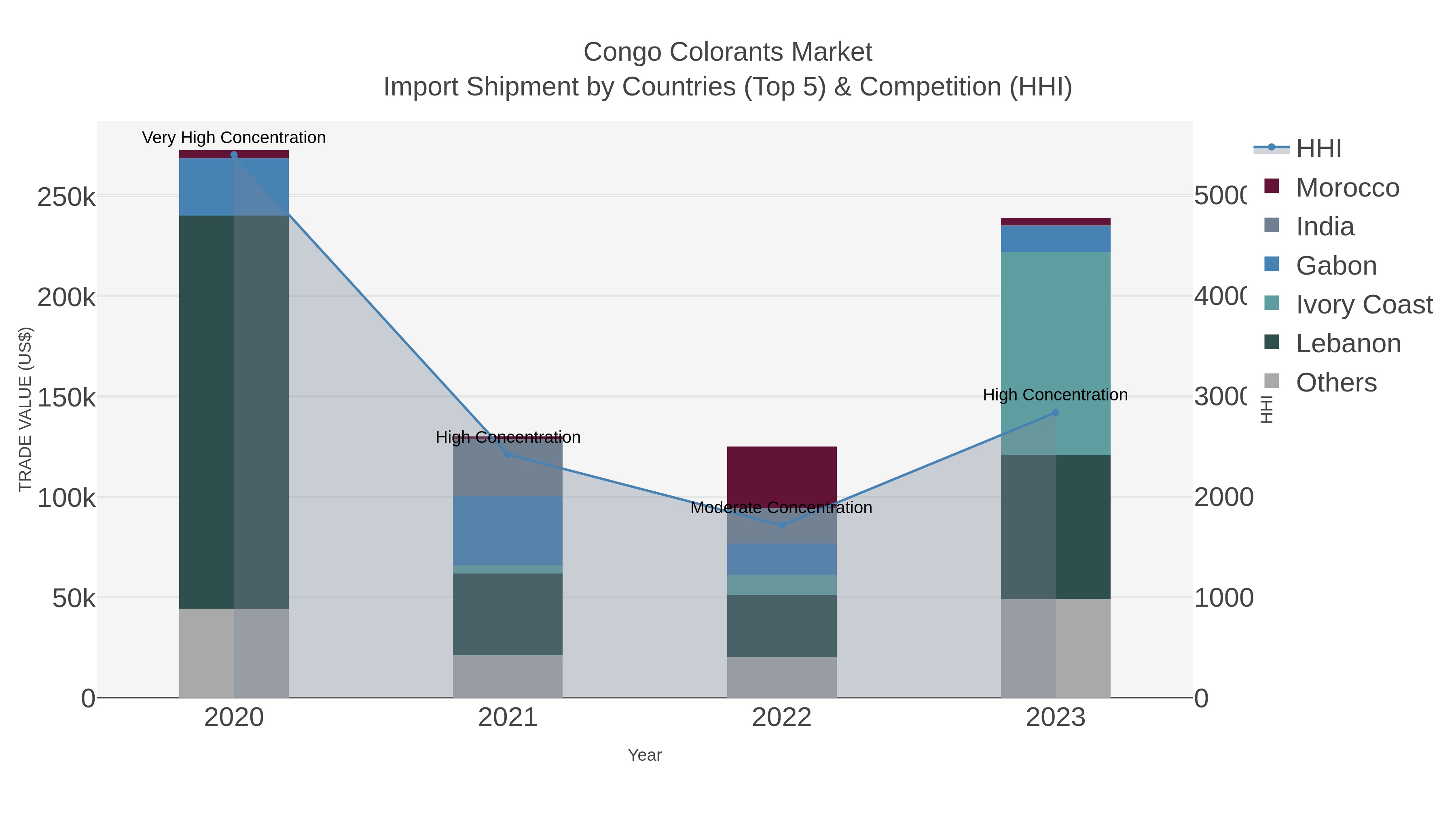
Congo Colorants Market Overview
The Congo Colorants Market is expanding as industries such as textiles, food and beverages, and plastics continue to grow. The market`s growth is fueled by the rising demand for vibrant and long-lasting colors across different applications. Innovations in natural and synthetic dyes and pigments are further boosting the market. However, the market faces challenges, including stringent environmental regulations, high production costs, and competition from cheaper imports. The shift towards sustainable and non-toxic colorants is also reshaping the market landscape.
Drivers of the market
The Congo colorants market is primarily propelled by the growing textile, paint, and coating industries. With the construction boom and increased consumer spending on home decor and clothing, the demand for both organic and inorganic colorants is on the rise. Additionally, the food and beverage industrys need for natural colorants is boosting growth due to changing consumer preferences for non-synthetic additives.
Challenges of the market
The Congo Colorants Market experiences challenges related to the instability of raw material supplies and the high costs of importing synthetic dyes and pigments. Additionally, the market is constrained by regulatory restrictions aimed at reducing the environmental and health impacts of certain colorants. There is also a growing demand for natural colorants, which requires significant investment in R&D to match synthetic alternatives in performance and cost. Inconsistent quality and lack of technological infrastructure further hinder the development of the colorants market.
Government Policy of the market
The Congo government has established policies to support the Colorants Market by promoting industrial growth and innovation. These policies include offering financial incentives to companies that invest in the research and development of new colorants, particularly those that are environmentally friendly. The government is also focused on improving infrastructure and energy supply, which are critical to the manufacturing processes involved in the colorants market. Import regulations have been put in place to protect domestic producers, ensuring that local industries remain competitive against international products.
Key Highlights of the Report:
- Congo Colorants Market Outlook
- Market Size of Congo Colorants Market, 2024
- Forecast of Congo Colorants Market, 2031
- Historical Data and Forecast of Congo Colorants Revenues & Volume for the Period 2021-2031
- Congo Colorants Market Trend Evolution
- Congo Colorants Market Drivers and Challenges
- Congo Colorants Price Trends
- Congo Colorants Porter`s Five Forces
- Congo Colorants Industry Life Cycle
- Historical Data and Forecast of Congo Colorants Market Revenues & Volume By Type for the Period 2021-2031
- Historical Data and Forecast of Congo Colorants Market Revenues & Volume By Dyes for the Period 2021-2031
- Historical Data and Forecast of Congo Colorants Market Revenues & Volume By Pigments for the Period 2021-2031
- Historical Data and Forecast of Congo Colorants Market Revenues & Volume By Masterbatches for the Period 2021-2031
- Historical Data and Forecast of Congo Colorants Market Revenues & Volume By Color Concentrates for the Period 2021-2031
- Historical Data and Forecast of Congo Colorants Market Revenues & Volume By End Use Industry for the Period 2021-2031
- Historical Data and Forecast of Congo Colorants Market Revenues & Volume By Packaging for the Period 2021-2031
- Historical Data and Forecast of Congo Colorants Market Revenues & Volume By Building & Construction for the Period 2021-2031
- Historical Data and Forecast of Congo Colorants Market Revenues & Volume By Automotive for the Period 2021-2031
- Historical Data and Forecast of Congo Colorants Market Revenues & Volume By Textiles for the Period 2021-2031
- Historical Data and Forecast of Congo Colorants Market Revenues & Volume By Paper & Printing for the Period 2021-2031
- Congo Colorants Import Export Trade Statistics
- Market Opportunity Assessment By Type
- Market Opportunity Assessment By End Use Industry
- Congo Colorants Top Companies Market Share
- Congo Colorants Competitive Benchmarking By Technical and Operational Parameters
- Congo Colorants Company Profiles
- Congo Colorants Key Strategic Recommendations






































