Congo Sail Canvas Market: Top 5 Importing Countries and Market Competition (HHI) Analysis
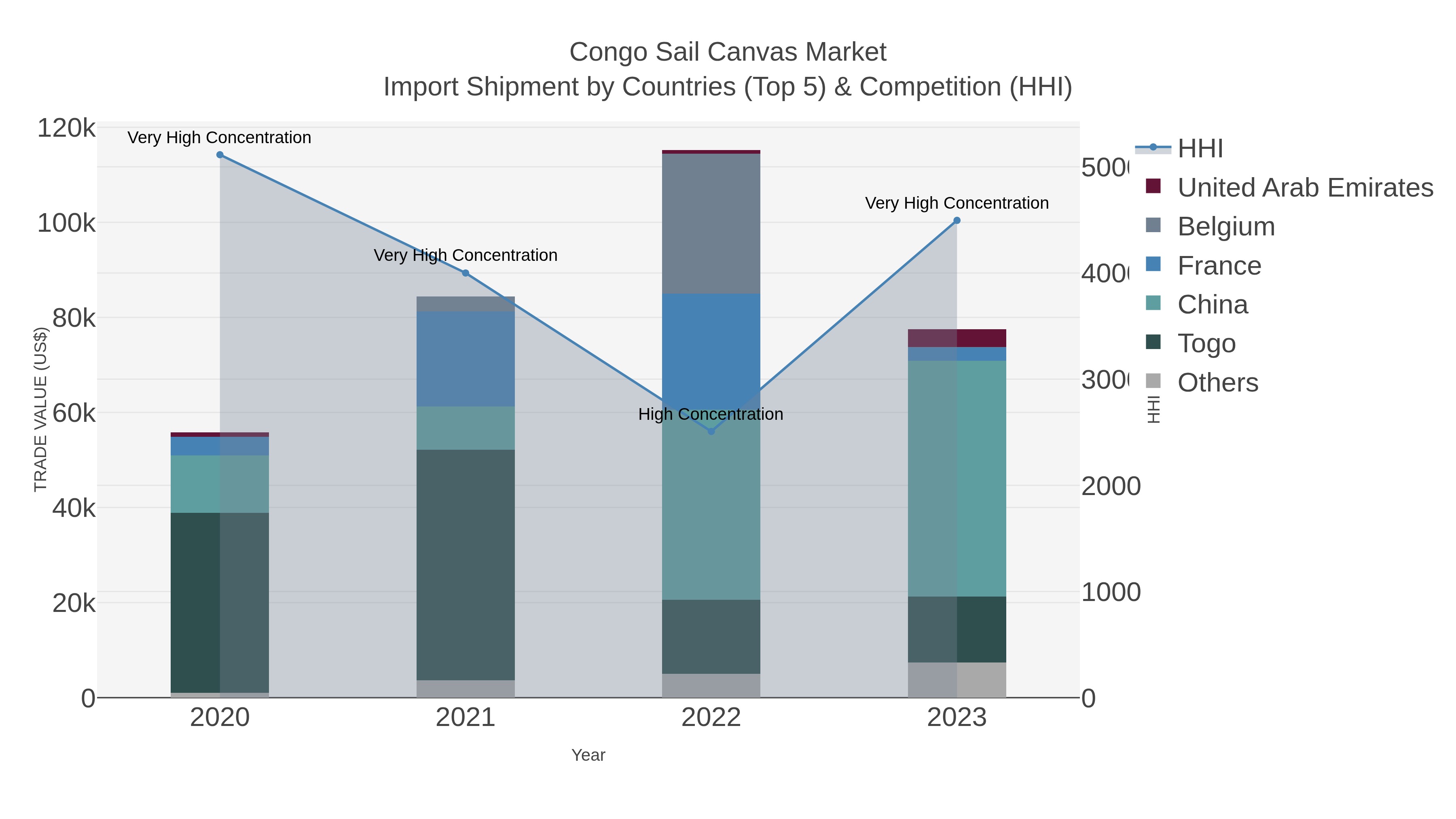
The Congo sail canvas import market experienced a significant shift in concentration in 2023, with top exporters being China, Togo, UK, UAE, and France. This shift to very high concentration indicates a more dominant presence of these key exporting countries. Despite a negative growth rate of -32.7%, the compound annual growth rate (CAGR) of 11.58% suggests long-term potential in the market. Importers and stakeholders should closely monitor trends and developments in the sector to capitalize on emerging opportunities and navigate challenges effectively.
Congo Sail Canvas Market Overview
The sail canvas market in Congo is niche, catering to recreational boating and commercial fishing industries. Sail canvas materials are essential for manufacturing durable and weather-resistant sails for boats, driving demand as water-based activities increase.
Drivers of the market
The Congo Sail Canvas market is driven by the demand for durable and weather-resistant materials in the marine and outdoor industries. Sail canvas is used in the production of sails, tents, and other outdoor gear. The market is expanding due to increased recreational boating activities and outdoor events requiring high-performance fabrics.
Challenges of the market
The sail canvas market in Congo faces challenges such as a limited customer base, as the maritime industry is relatively underdeveloped. Additionally, high costs for importing quality canvas materials and limited local expertise in manufacturing sail canvas products hamper market growth.
Government Policy of the market
Government policies related to the sail canvas market in Congo are focused on supporting local manufacturing and ensuring product quality. Policies provide incentives for domestic production and adherence to industry standards. Challenges include limited local production capabilities and inconsistent regulatory enforcement.
Key Highlights of the Report:
- Congo Sail Canvas Market Outlook
- Market Size of Congo Sail Canvas Market, 2024
- Forecast of Congo Sail Canvas Market, 2031
- Historical Data and Forecast of Congo Sail Canvas Revenues & Volume for the Period 2021-2031
- Congo Sail Canvas Market Trend Evolution
- Congo Sail Canvas Market Drivers and Challenges
- Congo Sail Canvas Price Trends
- Congo Sail Canvas Porter`s Five Forces
- Congo Sail Canvas Industry Life Cycle
- Historical Data and Forecast of Congo Sail Canvas Market Revenues & Volume By Type for the Period 2021-2031
- Historical Data and Forecast of Congo Sail Canvas Market Revenues & Volume By 8 Ann Canvas for the Period 2021-2031
- Historical Data and Forecast of Congo Sail Canvas Market Revenues & Volume By 12 Ann Canvas for the Period 2021-2031
- Historical Data and Forecast of Congo Sail Canvas Market Revenues & Volume By Polyester Canvas for the Period 2021-2031
- Historical Data and Forecast of Congo Sail Canvas Market Revenues & Volume By Others for the Period 2021-2031
- Historical Data and Forecast of Congo Sail Canvas Market Revenues & Volume By Application for the Period 2021-2031
- Historical Data and Forecast of Congo Sail Canvas Market Revenues & Volume By Sailing for the Period 2021-2031
- Historical Data and Forecast of Congo Sail Canvas Market Revenues & Volume By Yacht for the Period 2021-2031
- Historical Data and Forecast of Congo Sail Canvas Market Revenues & Volume By Others for the Period 2021-2031
- Congo Sail Canvas Import Export Trade Statistics
- Market Opportunity Assessment By Type
- Market Opportunity Assessment By Application
- Congo Sail Canvas Top Companies Market Share
- Congo Sail Canvas Competitive Benchmarking By Technical and Operational Parameters
- Congo Sail Canvas Company Profiles
- Congo Sail Canvas Key Strategic Recommendations






































