Croatia Pickled Cucumber Market Size (2020-2030)
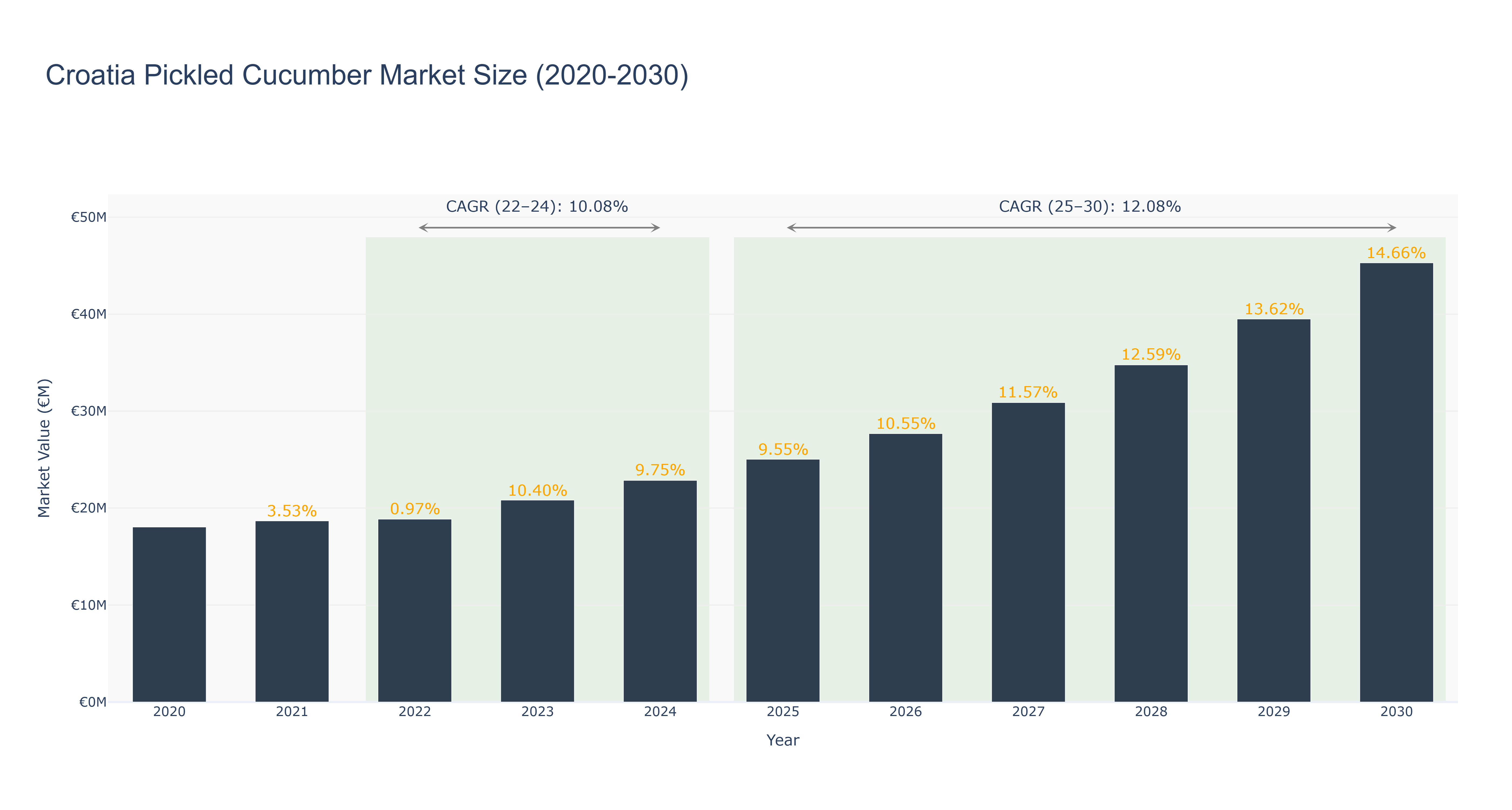
Croatia Pickled Cucumber Market has shown a steady growth trajectory over the years. The market size increased from €18.04 million in 2020 to €22.85 million in 2024. The peak market size was recorded in 2030 at €45.29 million. The CAGR for the period 2022-24 was 10.08%, while for 2025-30, it is projected to be 12.08%. The market experienced a significant growth spurt from 2025 onwards, driven by increasing consumer demand for healthy and organic food products. The recent developments in the market include new packaging innovations to enhance product shelf life and expand export opportunities. Additionally, upcoming projects focus on sustainable farming practices to meet the growing demand while preserving the environment. This market is poised for continued expansion due to evolving consumer preferences and innovative agricultural practices.
Croatia Pickled Cucumber Market: Production & Trade Performance (2019-2025)
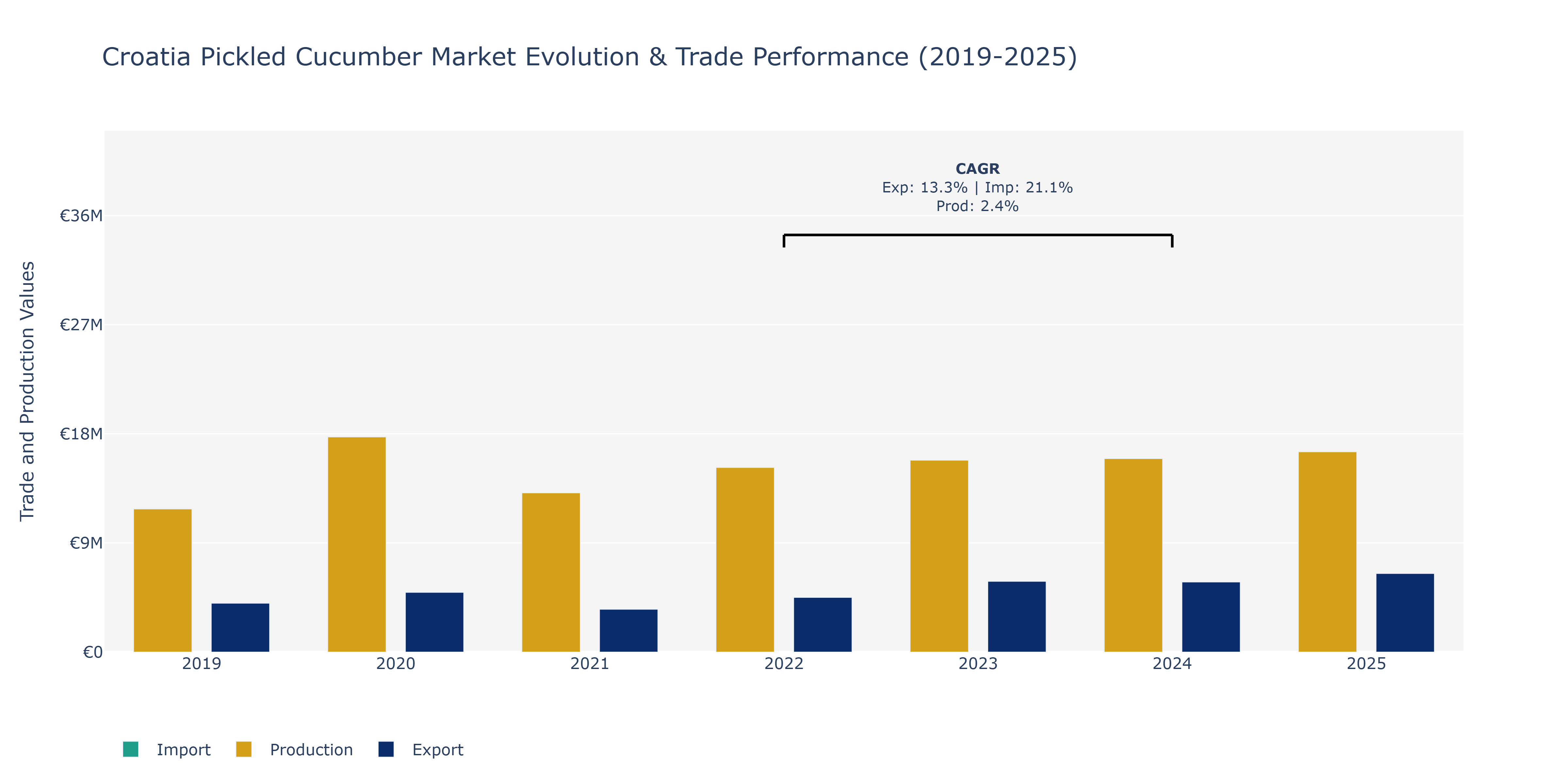
In the Croatia Pickled Cucumber Market, from 2019 to 2025, exports demonstrated an upward trajectory, reaching €6.47 million in 2025. Despite a dip in 2021, exports rebounded and peaked in 2025. Imports, on the other hand, fluctuated notably, with a peak of €14.21 million in 2025 after a decline in 2021. Production grew steadily overall, with a noteworthy increase from €11.80 million in 2019 to €16.51 million in 2025. The market saw a surge in imports in 2025, possibly due to increased demand for foreign cucumbers from Croatia's processing industry. Production growth aligns with the rising consumer preference for healthy and convenient food options, including pickled cucumbers, driving manufacturers to scale up production capacity. These trends indicate a dynamic market adapting to changing consumer preferences and international trade patterns, offering opportunities for market expansion and strategic partnerships within the industry.
Key Highlights of the Report:
- Croatia Pickled Cucumber Market Outlook
- Market Size of Croatia Pickled Cucumber Market, 2025
- Forecast of Croatia Pickled Cucumber Market, 2032
- Historical Data and Forecast of Croatia Pickled Cucumber Revenues & Volume for the Period 2022 - 2032F
- Croatia Pickled Cucumber Market Trend Evolution
- Croatia Pickled Cucumber Market Drivers and Challenges
- Croatia Pickled Cucumber Price Trends
- Croatia Pickled Cucumber Porter`s Five Forces
- Croatia Pickled Cucumber Industry Life Cycle
- Historical Data and Forecast of Croatia Pickled Cucumber Market Revenues & Volume By Type for the Period 2022 - 2032F
- Historical Data and Forecast of Croatia Pickled Cucumber Market Revenues & Volume By Whole Pickled Cucumber for the Period 2022 - 2032F
- Historical Data and Forecast of Croatia Pickled Cucumber Market Revenues & Volume By Pickled Cucumber Slice for the Period 2022 - 2032F
- Historical Data and Forecast of Croatia Pickled Cucumber Market Revenues & Volume By Application for the Period 2022 - 2032F
- Historical Data and Forecast of Croatia Pickled Cucumber Market Revenues & Volume By Households for the Period 2022 - 2032F
- Historical Data and Forecast of Croatia Pickled Cucumber Market Revenues & Volume By Restaurant for the Period 2022 - 2032F
- Historical Data and Forecast of Croatia Pickled Cucumber Market Revenues & Volume By Others for the Period 2022 - 2032F
- Croatia Pickled Cucumber Import Export Trade Statistics
- Market Opportunity Assessment By Type
- Market Opportunity Assessment By Application
- Croatia Pickled Cucumber Top Companies Market Share
- Croatia Pickled Cucumber Competitive Benchmarking By Technical and Operational Parameters
- Croatia Pickled Cucumber Company Profiles
- Croatia Pickled Cucumber Key Strategic Recommendations






































