Croatia Washing Machine Market Size (2020-2030)
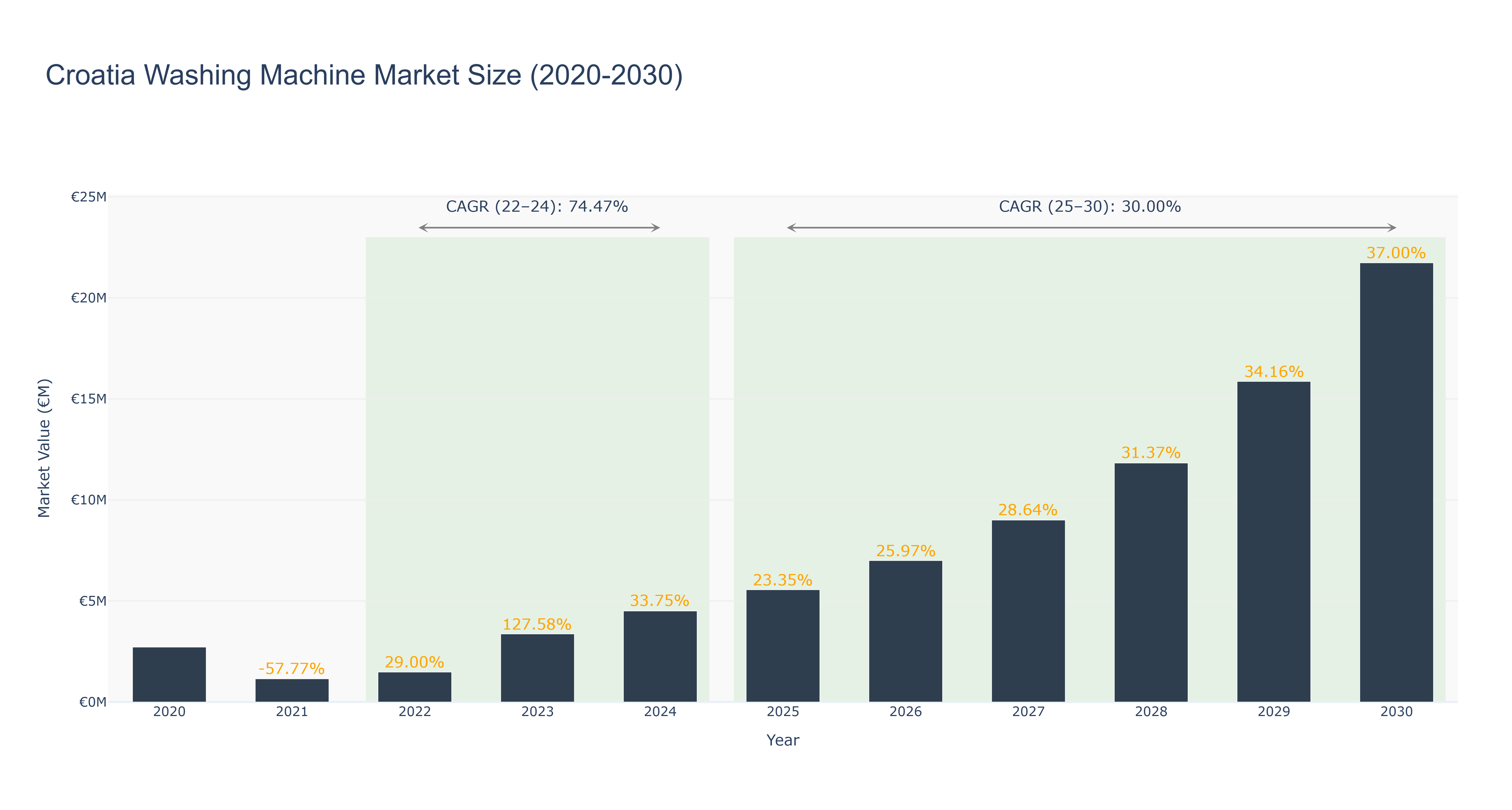
Croatia Washing Machine Market has shown a fluctuating trend in market size over the years. The peak market size of €21.74 million is forecasted for 2030, with a steady growth trajectory. The market experienced a decline from €2.72 million in 2020 to €1.15 million in 2021, attributed to economic downturns. However, a significant rebound was seen in 2023, reaching €3.37 million, driven by increased consumer spending. The market is expected to continue its upward trajectory with a CAGR of 30.0% from 2025 to 2030, indicating strong growth potential. Industry drivers such as technological advancements and rising disposable incomes are fueling market expansion. In the near future, Croatia is set to launch a national energy efficiency program, which is expected to boost demand for energy-efficient washing machines, further driving market growth.
Croatia Washing Machine Market: Production & Trade Performance (2019-2025)
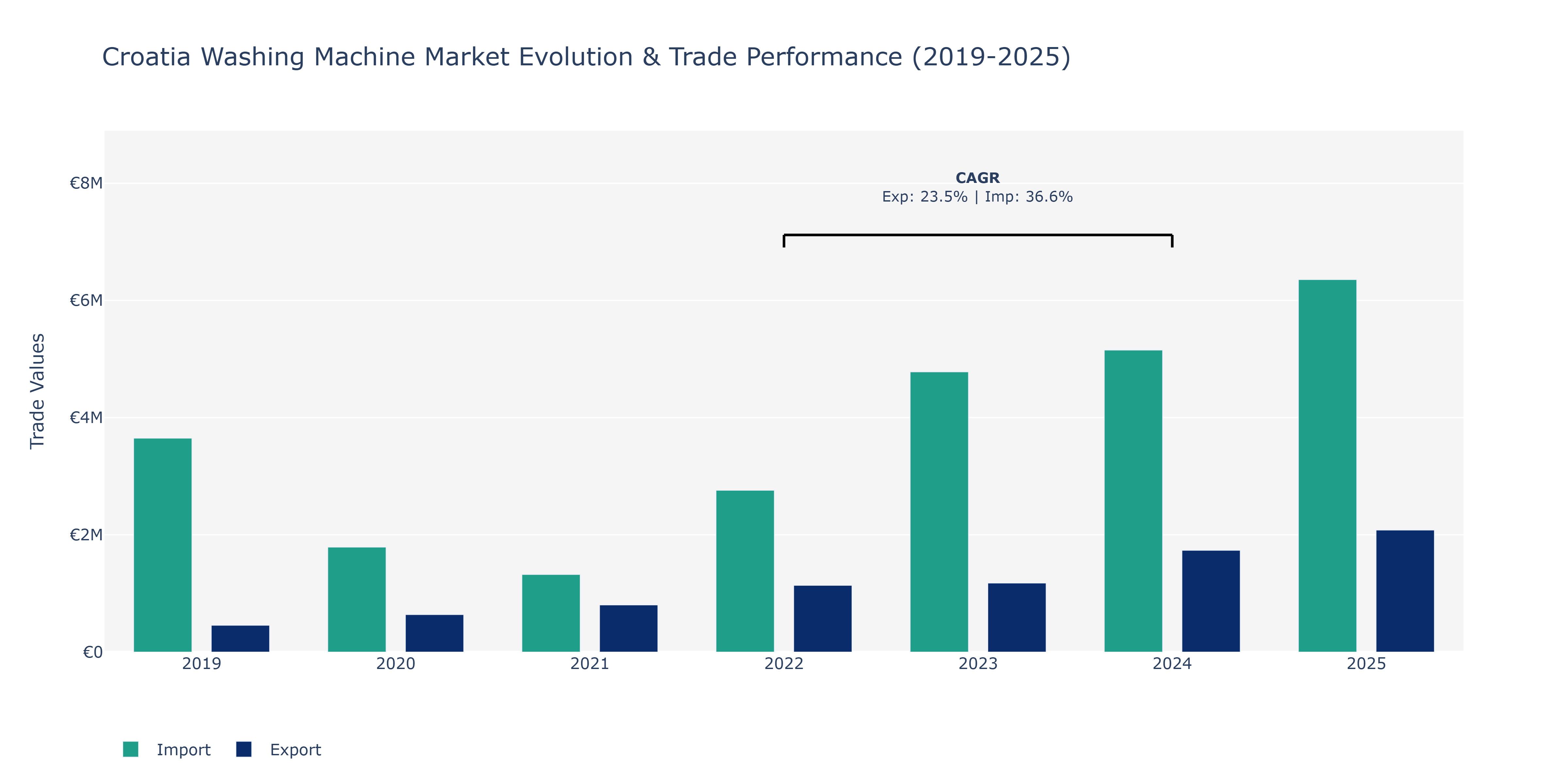
In the Croatia Washing Machine Market, exports and imports witnessed notable fluctuations from 2019 to 2025. Exports showed a consistent upward trajectory, increasing from €454.98 thousand in 2019 to €2.08 million in 2025. The growth can be attributed to the market's improved manufacturing capabilities and increased demand for Croatian washing machines in international markets. Conversely, imports experienced fluctuations, reaching €6.35 million in 2025 from a peak of €5.15 million in 2024. This fluctuation may be due to changes in global trade policies, currency exchange rates, and shifts in consumer preferences for foreign washing machine brands. The CAGR of 23.54% for exports and 36.64% for imports from 2022 to 2024 also indicates a substantial growth in both outbound and inbound trade activities, reflecting Croatia's expanding presence in the washing machine market.
Croatia Washing Machine Market Overview
The washing machine market in Croatia is experiencing steady growth due to rising disposable incomes and the increasing adoption of modern household appliances. Washing machines are becoming more energy-efficient, user-friendly, and technologically advanced, driving demand among Croatian consumers. In addition, the growing trend of smart home appliances, which can be controlled remotely, is influencing the market. With urbanization and changing consumer preferences, the demand for both top-load and front-load washing machines is expected to rise in the coming years.
Drivers of the market
The washing machine market in Croatia is driven by rising consumer demand for home appliances that offer convenience and energy efficiency. The adoption of smart technologies, such as IoT-enabled washing machines, is enhancing the functionality and appeal of these appliances. Urbanization and an increasing standard of living are also contributing to the growth of the washing machine market.
Challenges of the market
The washing machine market in Croatia faces challenges related to high production costs, competition from both local and international brands, and fluctuating raw material prices. The market is also impacted by changing consumer preferences toward energy-efficient appliances, which adds pressure on manufacturers to innovate and meet regulatory standards. Additionally, managing supply chain issues and ensuring affordability while maintaining quality contribute to market complexity.
Government Policy of the market
Croatias energy efficiency and environmental policies promote the adoption of energy-saving washing machines. The government offers incentives for consumers purchasing eco-friendly washing machines and for manufacturers producing energy-efficient appliances.
Key Highlights of the Report:
- Croatia Washing Machine Market Outlook
- Market Size of Croatia Washing Machine Market, 2024
- Forecast of Croatia Washing Machine Market, 2031
- Historical Data and Forecast of Croatia Washing Machine Revenues & Volume for the Period 2021-2031
- Croatia Washing Machine Market Trend Evolution
- Croatia Washing Machine Market Drivers and Challenges
- Croatia Washing Machine Price Trends
- Croatia Washing Machine Porter`s Five Forces
- Croatia Washing Machine Industry Life Cycle
- Historical Data and Forecast of Croatia Washing Machine Market Revenues & Volume By Product for the Period 2021-2031
- Historical Data and Forecast of Croatia Washing Machine Market Revenues & Volume By Fully automatic for the Period 2021-2031
- Historical Data and Forecast of Croatia Washing Machine Market Revenues & Volume By Semi-automatic for the Period 2021-2031
- Historical Data and Forecast of Croatia Washing Machine Market Revenues & Volume By Dryers for the Period 2021-2031
- Historical Data and Forecast of Croatia Washing Machine Market Revenues & Volume By Technology for the Period 2021-2031
- Historical Data and Forecast of Croatia Washing Machine Market Revenues & Volume By Smart connected washing machine for the Period 2021-2031
- Historical Data and Forecast of Croatia Washing Machine Market Revenues & Volume By Conventional washing machine for the Period 2021-2031
- Historical Data and Forecast of Croatia Washing Machine Market Revenues & Volume By Capacity for the Period 2021-2031
- Historical Data and Forecast of Croatia Washing Machine Market Revenues & Volume By Below 6 kg for the Period 2021-2031
- Historical Data and Forecast of Croatia Washing Machine Market Revenues & Volume By 6.1 to 8 kg for the Period 2021-2031
- Historical Data and Forecast of Croatia Washing Machine Market Revenues & Volume By Above 8 kg for the Period 2021-2031
- Historical Data and Forecast of Croatia Washing Machine Market Revenues & Volume By End-use for the Period 2021-2031
- Historical Data and Forecast of Croatia Washing Machine Market Revenues & Volume By Commercial for the Period 2021-2031
- Historical Data and Forecast of Croatia Washing Machine Market Revenues & Volume By Residential for the Period 2021-2031
- Historical Data and Forecast of Croatia Washing Machine Market Revenues & Volume By Application for the Period 2021-2031
- Historical Data and Forecast of Croatia Washing Machine Market Revenues & Volume By Healthcare for the Period 2021-2031
- Historical Data and Forecast of Croatia Washing Machine Market Revenues & Volume By Hospitality for the Period 2021-2031
- Historical Data and Forecast of Croatia Washing Machine Market Revenues & Volume By Others for the Period 2021-2031
- Croatia Washing Machine Import Export Trade Statistics
- Market Opportunity Assessment By Product
- Market Opportunity Assessment By Technology
- Market Opportunity Assessment By Capacity
- Market Opportunity Assessment By End-use
- Market Opportunity Assessment By Application
- Croatia Washing Machine Top Companies Market Share
- Croatia Washing Machine Competitive Benchmarking By Technical and Operational Parameters
- Croatia Washing Machine Company Profiles
- Croatia Washing Machine Key Strategic Recommendations






































