Cyprus Milk Chocolate Market Size (2020-2030)
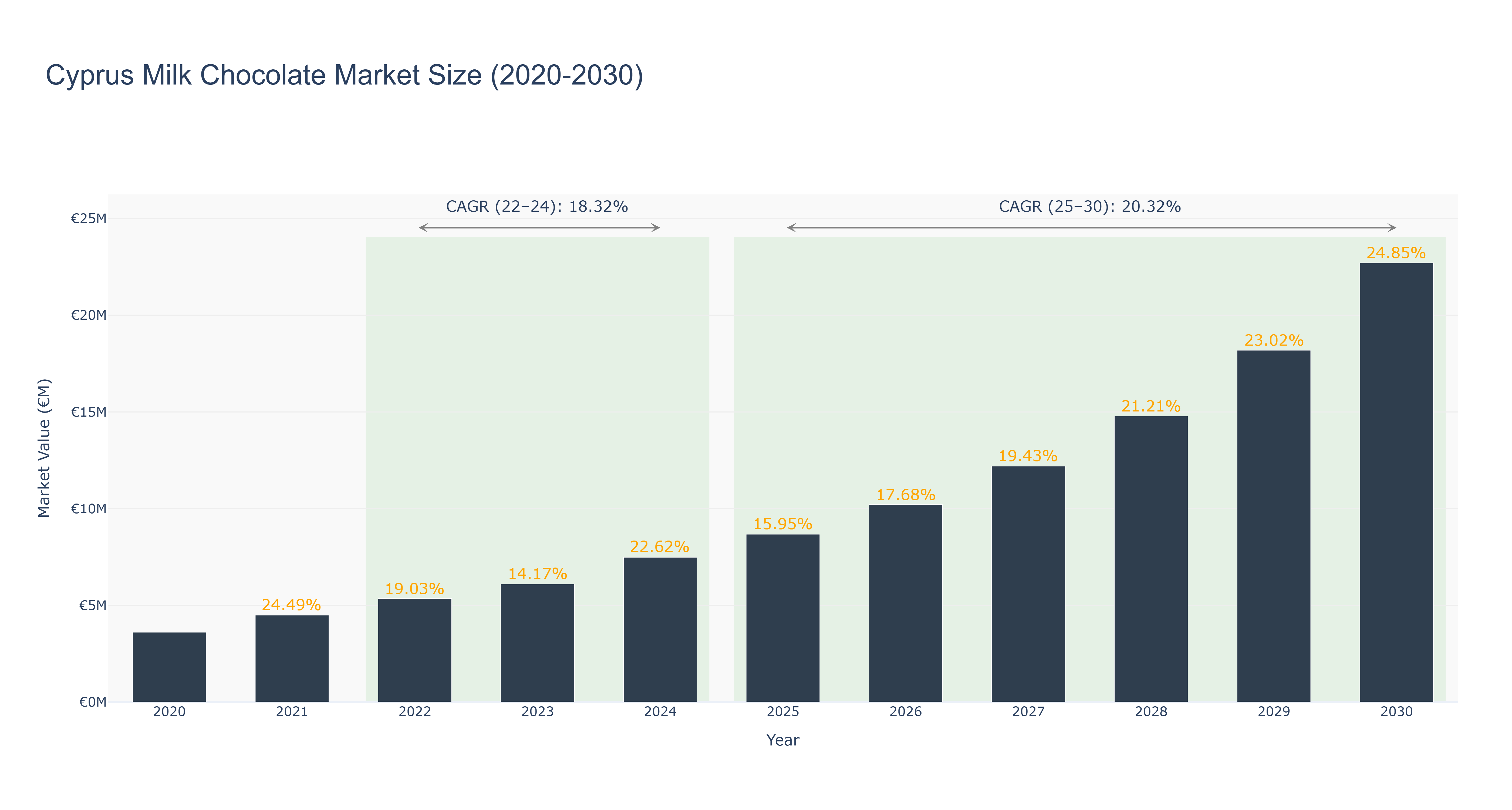
Cyprus Milk Chocolate Market has shown a consistent growth trajectory over the years. The market size peaked at €22.71 million in 2030, with a notable CAGR of 20.32% from 2025 to 2030. The actual market size increased steadily from €3.61 million in 2020 to €7.49 million in 2024, driven by changing consumer preferences towards premium chocolate products. The forecasted growth can be attributed to the rising demand for indulgent treats and the market's ability to innovate with new flavors and packaging. Looking ahead, Cyprus Milk Chocolate Market is set to witness further expansion with the introduction of sustainable sourcing practices and advanced production technologies, positioning it as a key player in the global confectionery market.
Cyprus Milk Chocolate Market: Production & Trade Performance (2019-2025)
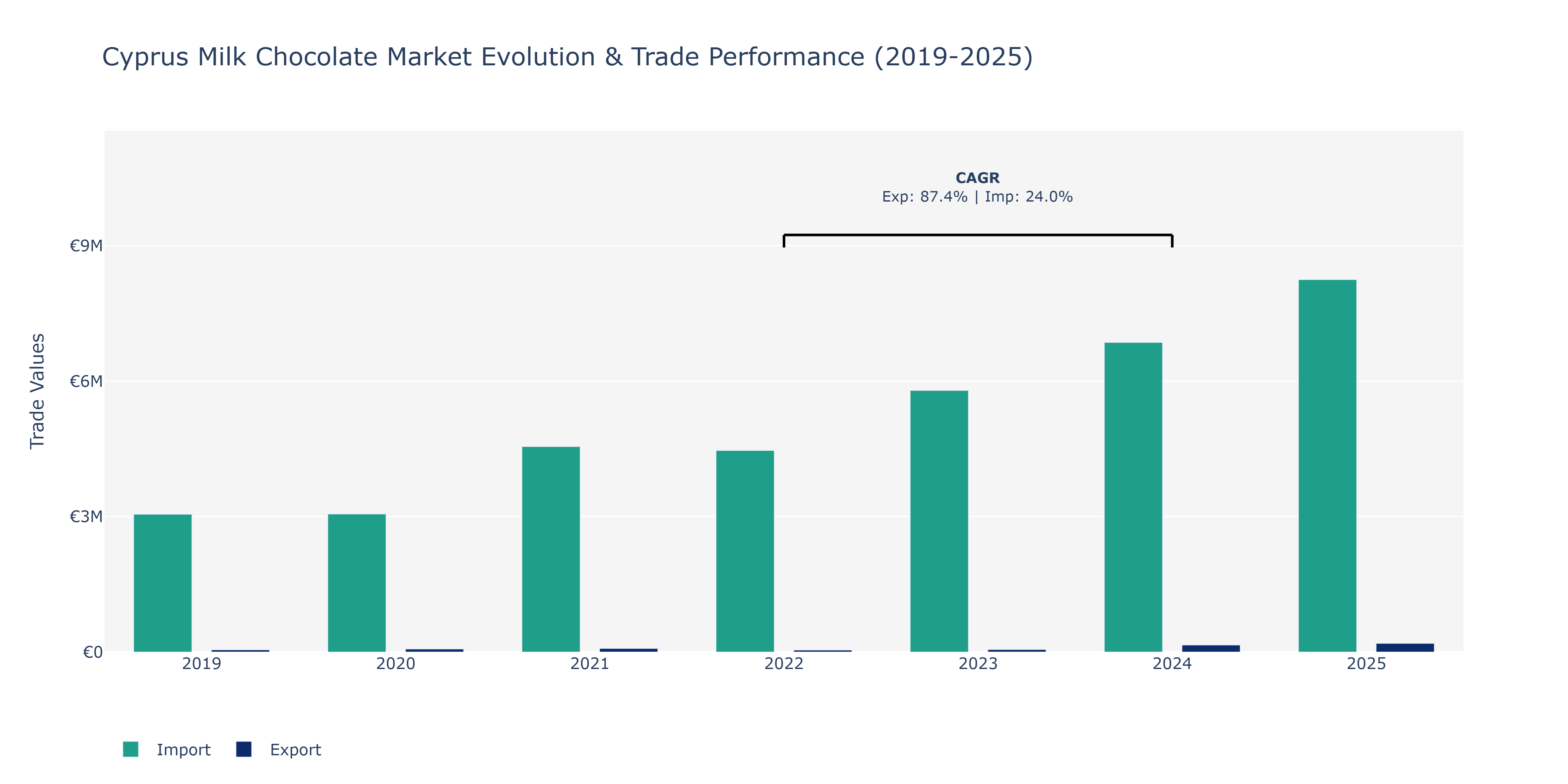
Between 2019 and 2025, Cyprus Milk Chocolate Market showcased varying trends in exports and imports. Exports started at €48.01 thousand in 2019, experienced a decline in 2022 to €44.21 thousand, then surged significantly to €191.60 thousand in 2025, indicating a noteworthy peak in this period. Conversely, imports consistently increased from €3.05 million in 2019 to €8.25 million in 2025, with steady growth year over year. The growth in exports from 2022 to 2025 could be attributed to increased demand for Cyprus milk chocolate products internationally, possibly due to strategic marketing efforts, product quality enhancements, and a rise in global consumer preference for premium chocolates. On the other hand, the consistent rise in imports points towards a growing consumption trend domestically, potentially influenced by changing consumer preferences, lifestyle shifts, and the availability of a wider variety of milk chocolate products in the market.
Cyprus Milk Chocolate Market Overview
The Milk Chocolate Market in Cyprus is influenced by consumer preferences for confectionery products. This market caters to local and international brands, driven by demand for high-quality and diverse chocolate offerings.
Drivers of the market
The milk chocolate market in Cyprus benefits from growing consumer demand for indulgent treats. With its popularity as a confectionery item, milk chocolate remains a staple in the food and beverage industry, supported by strong consumer preferences.
Challenges of the market
The Cyprus milk chocolate market faces stiff competition from imported products, which often benefit from established brand recognition and consumer loyalty. Local producers struggle to compete on price and scale, making it difficult to capture market share. Additionally, fluctuating cocoa prices and supply chain disruptions can impact production costs, forcing manufacturers to either absorb the costs or pass them on to consumers. Consumer preferences are also shifting towards healthier options, creating a need for manufacturers to innovate while maintaining the quality that chocolate lovers expect.
Government Policy of the market
The Cypriot government promotes the milk chocolate market through initiatives aimed at enhancing local production and quality. Policies include support for agricultural practices that ensure high-quality cocoa and dairy sourcing, alongside incentives for manufacturers to innovate in product development.
Key Highlights of the Report:
- Cyprus Milk Chocolate Market Outlook
- Market Size of Cyprus Milk Chocolate Market, 2024
- Forecast of Cyprus Milk Chocolate Market, 2031
- Historical Data and Forecast of Cyprus Milk Chocolate Revenues & Volume for the Period 2021-2031
- Cyprus Milk Chocolate Market Trend Evolution
- Cyprus Milk Chocolate Market Drivers and Challenges
- Cyprus Milk Chocolate Price Trends
- Cyprus Milk Chocolate Porter`s Five Forces
- Cyprus Milk Chocolate Industry Life Cycle
- Historical Data and Forecast of Cyprus Milk Chocolate Market Revenues & Volume By Type for the Period 2021-2031
- Historical Data and Forecast of Cyprus Milk Chocolate Market Revenues & Volume By Nuts Milk Chocolate for the Period 2021-2031
- Historical Data and Forecast of Cyprus Milk Chocolate Market Revenues & Volume By Liqueur Milk Chocolate for the Period 2021-2031
- Historical Data and Forecast of Cyprus Milk Chocolate Market Revenues & Volume By Other for the Period 2021-2031
- Historical Data and Forecast of Cyprus Milk Chocolate Market Revenues & Volume By Distribution Channel for the Period 2021-2031
- Historical Data and Forecast of Cyprus Milk Chocolate Market Revenues & Volume By Supermarkets/Hypermarkets for the Period 2021-2031
- Historical Data and Forecast of Cyprus Milk Chocolate Market Revenues & Volume By Specialty Stores for the Period 2021-2031
- Historical Data and Forecast of Cyprus Milk Chocolate Market Revenues & Volume By Convenience Stores for the Period 2021-2031
- Historical Data and Forecast of Cyprus Milk Chocolate Market Revenues & Volume By Online Stores for the Period 2021-2031
- Historical Data and Forecast of Cyprus Milk Chocolate Market Revenues & Volume By Others for the Period 2021-2031
- Historical Data and Forecast of Cyprus Milk Chocolate Market Revenues & Volume By Application for the Period 2021-2031
- Historical Data and Forecast of Cyprus Milk Chocolate Market Revenues & Volume By Residential for the Period 2021-2031
- Historical Data and Forecast of Cyprus Milk Chocolate Market Revenues & Volume By Commercial for the Period 2021-2031
- Cyprus Milk Chocolate Import Export Trade Statistics
- Market Opportunity Assessment By Type
- Market Opportunity Assessment By Distribution Channel
- Market Opportunity Assessment By Application
- Cyprus Milk Chocolate Top Companies Market Share
- Cyprus Milk Chocolate Competitive Benchmarking By Technical and Operational Parameters
- Cyprus Milk Chocolate Company Profiles
- Cyprus Milk Chocolate Key Strategic Recommendations






































