Czech Republic Endpoint Security Market Size & Growth Rate (2026-2032)
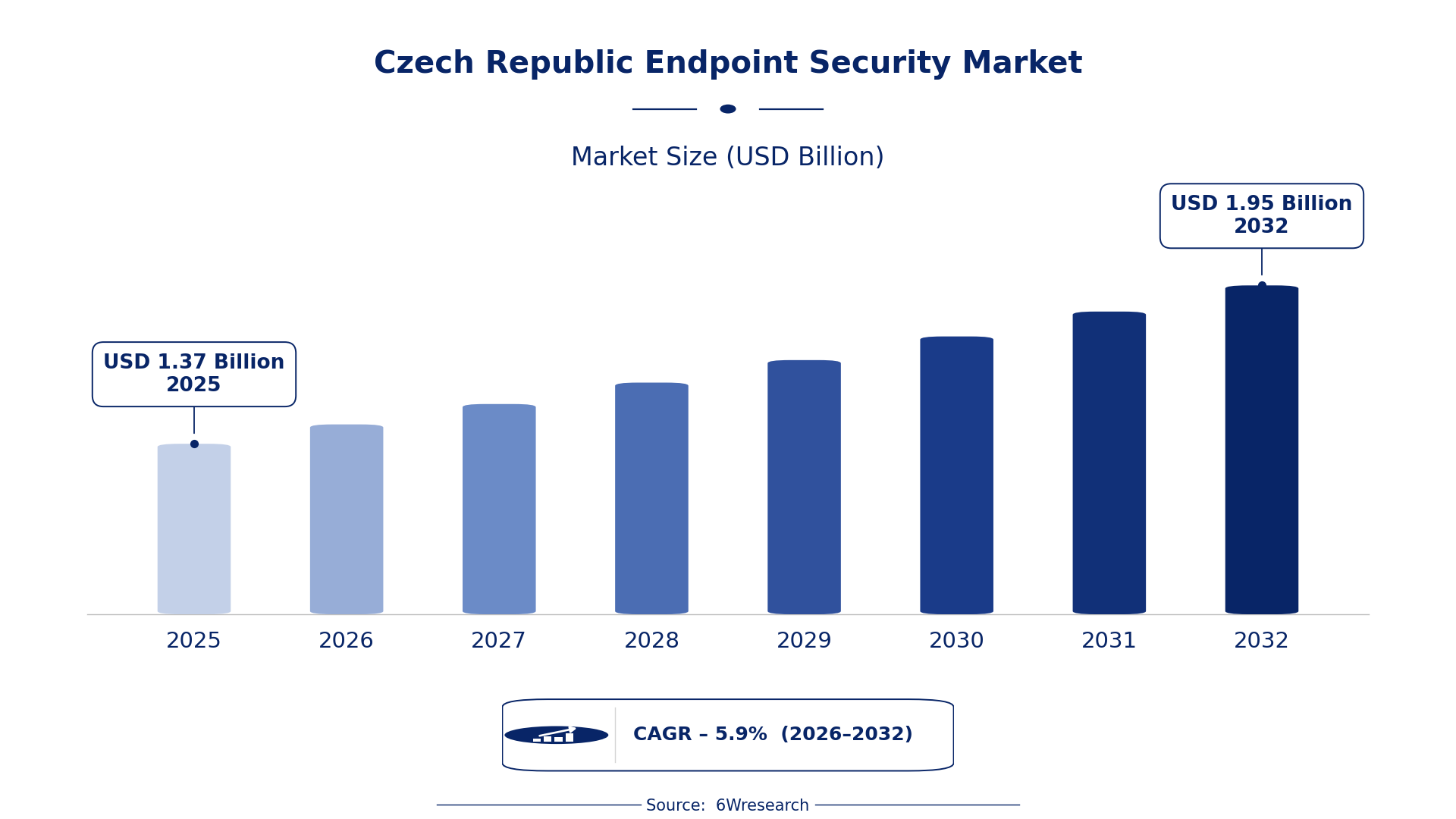
The Czech Republic Endpoint Security Market was estimated at USD 1373 Million in 2025 and is projected to reach USD 1947 Million by 2032, growing at a CAGR of 5.9% from 2026 to 2032.
Czech Republic Endpoint Security Market Synopsis
Recent momentum in the Czech Republic Endpoint Security Market reflects a growing recognition of the need for robust cybersecurity measures among organizations. As digital technology adoption accelerates, the demand for effective endpoint security solutions is becoming critical, especially in light of increasingly sophisticated cyber threats.
Looking forward, the market is on a trajectory of steady expansion driven by factors such as stringent data protection regulations and a rising prevalence of remote work. This shift necessitates advanced solutions that not only secure endpoints but also integrate seamlessly into existing IT infrastructures, ensuring businesses can manage risks without compromising efficiency.
Czech Republic Endpoint Security Market Year-wise Growth Rate and Key Drivers
This graph illustrates the annual growth rates of the Czech Republic Endpoint Security Market from 2021 to 2032, highlighting a steady upward trajectory and projected expansion over the forecast period.
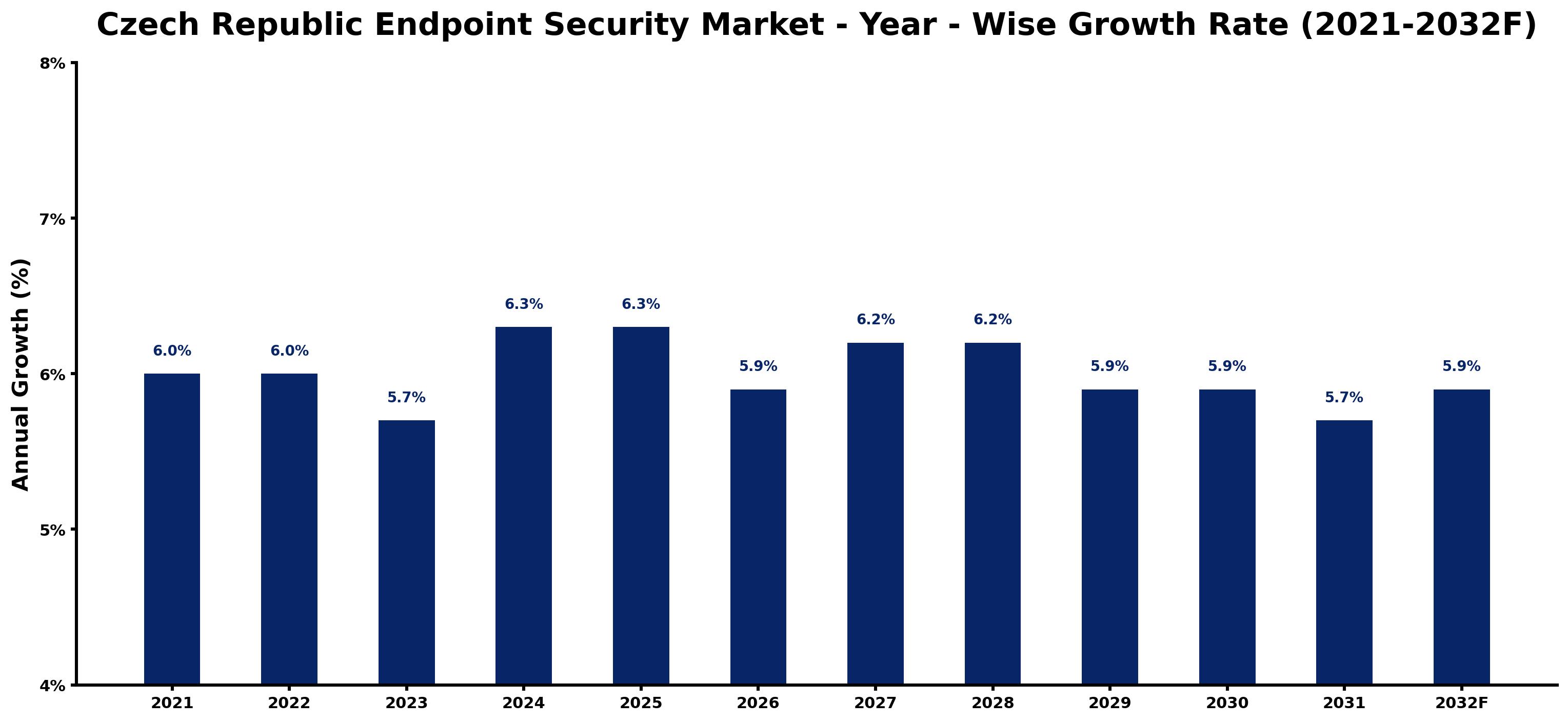
The table below presents the year‑wise growth rates along with the key drivers influencing the market
| Year | Growth Rate | Major Drivers |
| 2021 | 6.0% | Increase in cybersecurity regulations from NÚKIB. |
| 2022 | 6.0% | Growing adoption of remote work enhancing security needs. |
| 2023 | 5.7% | Czech Cybersecurity Strategy promoting endpoint protection solutions. |
| 2024 | 6.3% | Rise in digital transformation investments across SMEs. |
| 2025 | 6.3% | Increased threat landscape prompting stronger security measures. |
| 2026 | 5.9% | Government initiatives fostering innovation in cybersecurity. |
| 2027 | 6.2% | Growing awareness of personal data protection incidents. |
| 2028 | 6.2% | Introduction of stricter GDPR enforcement driving compliance solutions. |
| 2029 | 5.9% | Higher demand for managed security services among enterprises. |
| 2030 | 5.9% | Surge in IoT devices necessitating endpoint security enhancements. |
| 2031 | 5.7% | Local cybersecurity startups driving technology advancements. |
| 2032 | 5.9% | Continued investment in IT infrastructure by public sector. |
Note: Market size estimations and growth projections presented in this report are based on 6Wresearch's proprietary forecasting methodology, utilizing the latest available industry data, government publications, and primary research inputs.
Czech Republic Endpoint Security Market Key Takeaways
Below are some of the specific key takeaways from the market, including:
- The growing sophistication of cyber threats is forcing organizations to prioritize endpoint security.
- Cloud-based endpoint security solutions are gaining traction among businesses of all sizes.
- Demand for protection solutions tailored for remote and mobile workers is on the rise.
- Ongoing investments in employee training and advanced security solutions are crucial to combat evolving threats.
- Regulatory frameworks, especially GDPR compliance, are shaping the direction of security investment in the region.
Evaluation of Restraints in Czech Republic Endpoint Security Market
The Czech Republic Endpoint Security Market faces several restraints that could impede growth. Notably, the increasing sophistication of cyber threats complicates the protective measures that organizations can deploy. Many businesses still lack adequate awareness of the importance of comprehensive endpoint security, leading to underinvestment in necessary solutions.
Additionally, the region experiences a skills shortage in cybersecurity professionals, which hampers efforts to implement and manage security strategies effectively. Compliance with stringent regulations like GDPR further complicates security efforts, as businesses must continuously update and adapt to ensure protection against evolving threats.
Czech Republic Endpoint Security Market Trends
Recent trends in the Czech Republic's endpoint security space highlight a decisive shift toward cloud-based solutions. Businesses are increasingly opting for security measures that offer real-time monitoring and automated incident response capabilities. The rise in remote work has also intensified the focus on endpoint detection and response (EDR) technologies, as organizations seek to protect mobile devices and remote access points from cyber attacks.
Investment in user-friendly interfaces and improved integration with existing IT setups is becoming essential, ensuring that endpoint security solutions cater to the specific needs of various organizations while enhancing overall efficiency.
Czech Republic Endpoint Security Market Opportunities
With increasing digitalization and a rising threat landscape, the Czech Republic presents substantial investment opportunities within the endpoint security sector. Businesses are keen to enhance their cybersecurity posture, recognizing that robust endpoint security solutions are vital to protecting sensitive data.
Key areas for investment include advanced endpoint protection, data encryption technologies, and threat intelligence services. As regulatory pressures mount, organizations will continue to prioritize investments in solutions that not only comply with existing laws but also enhance their cybersecurity frameworks.
Government Initiatives in the Czech Republic Endpoint Security Market
The Czech government is actively shaping the endpoint security landscape through various initiatives aimed at bolstering cybersecurity across sectors. These initiatives reflect a commitment to data protection and the establishment of a resilient cybersecurity framework critical for both public and private entities. The involvement of the National Cyber and Information Security Agency (NCISA) highlights the regulatory focus on compliance and proactive measures against cyber threats.
- A national cybersecurity strategy was recently launched, emphasizing the importance of securing critical infrastructure.
- Current efforts involve enhancing public-private partnerships to improve cybersecurity resilience across industries.
- A regulatory framework mandating compliance with the EU's GDPR and the NIS Directive has been reinforced.
- Upcoming initiatives include investment in nationwide cybersecurity awareness campaigns targeting small and medium-sized enterprises.
- Plans for a comprehensive digital infrastructure upgrade program are in the works, aiming to bolster cybersecurity capabilities throughout the country.
Future Insights of the Czech Republic Endpoint Security Market
Looking ahead to 2026-2032, the Czech Republic Endpoint Security Market is set for continuous growth. The ongoing increase in digital technologies and the rise in cyber threats will drive businesses to adopt stronger endpoint security measures. As organizations become more aware of their cybersecurity responsibilities, demand for advanced protection technologies will continue to escalate.
Government initiatives and the economic environment in the Czech Republic will provide further impetus for growth. The shift to remote work and cloud computing will necessitate innovative solutions tailored to new operating environments, ensuring the market remains dynamic and responsive to emerging challenges.
Czech Republic Endpoint Security Market Latest Developments
Recent developments within the Czech Republic Endpoint Security Market indicate a vigorous pace of innovation and adaptation in response to evolving cybersecurity threats. Companies are increasingly prioritizing investments in next-generation security technologies, reflecting a proactive approach to safeguarding their digital assets.
- A major technology vendor announced the rollout of a new endpoint detection and response solution, currently undergoing beta testing since early 2025.
- A partnership between leading local security firms has been formed to develop integrated cybersecurity solutions, launched in late 2025.
- An initiative aimed at enhancing cybersecurity training for professionals has begun implementation, focusing on current and emerging threats.
- Plans for a cloud-based endpoint security solution tailored to remote workforces are expected to be introduced by mid-2026.
Czech Republic Endpoint Security Market - Key Attractiveness of the Report
- 10 Years of Market Numbers
- Historical Data Starting from 2022 to 2025
- Base Year: 2025
- Forecast Data until 2032
- Key Performance Indicators Impacting the Market
- Major Upcoming Developments and Projects
Key Highlights of the Report:
- Czech Republic Endpoint Security Market Outlook
- Market Size of Czech Republic Endpoint Security Market, 2025
- Forecast of Czech Republic Endpoint Security Market, 2032
- Historical Data and Forecast of Czech Republic Endpoint Security Revenues & Volume for the Period 2022-2032F
- Czech Republic Endpoint Security Market Trend Evolution
- Czech Republic Endpoint Security Market Drivers and Challenges
- Czech Republic Endpoint Security Price Trends
- Czech Republic Endpoint Security Porter's Five Forces
- Czech Republic Endpoint Security Industry Life Cycle
- Historical Data and Forecast of Czech Republic Endpoint Security Market Revenues & Volume By Solution for the Period 2022-2032F
- Historical Data and Forecast of Czech Republic Endpoint Security Market Revenues & Volume By Endpoint Protection Platform for the Period 2022-2032F
- Historical Data and Forecast of Czech Republic Endpoint Security Market Revenues & Volume By Endpoint Detection for the Period 2022-2032F
- Historical Data and Forecast of Czech Republic Endpoint Security Market Revenues & Volume By Response for the Period 2022-2032F
- Historical Data and Forecast of Czech Republic Endpoint Security Market Revenues & Volume By Vertical for the Period 2022-2032F
- Historical Data and Forecast of Czech Republic Endpoint Security Market Revenues & Volume By Healthcare for the Period 2022-2032F
- Historical Data and Forecast of Czech Republic Endpoint Security Market Revenues & Volume By Retail for the Period 2022-2032F
- Historical Data and Forecast of Czech Republic Endpoint Security Market Revenues & Volume By eCommerce for the Period 2022-2032F
- Historical Data and Forecast of Czech Republic Endpoint Security Market Revenues & Volume By Government for the Period 2022-2032F
- Historical Data and Forecast of Czech Republic Endpoint Security Market Revenues & Volume By Organization Size for the Period 2022-2032F
- Historical Data and Forecast of Czech Republic Endpoint Security Market Revenues & Volume By Small and Medium-Sized Enterprises (SMEs) for the Period 2022-2032F
- Historical Data and Forecast of Czech Republic Endpoint Security Market Revenues & Volume By Large Enterprises for the Period 2022-2032F
- Historical Data and Forecast of Czech Republic Endpoint Security Market Revenues & Volume By Deployment Mode for the Period 2022-2032F
- Historical Data and Forecast of Czech Republic Endpoint Security Market Revenues & Volume By On-premises for the Period 2022-2032F
- Historical Data and Forecast of Czech Republic Endpoint Security Market Revenues & Volume By Cloud for the Period 2022-2032F
- Historical Data and Forecast of Czech Republic Endpoint Security Market Revenues & Volume By Service for the Period 2022-2032F
- Historical Data and Forecast of Czech Republic Endpoint Security Market Revenues & Volume By Professional Services for the Period 2022-2032F
- Historical Data and Forecast of Czech Republic Endpoint Security Market Revenues & Volume By Managed Services for the Period 2022-2032F
- Czech Republic Endpoint Security Import Export Trade Statistics
- Market Opportunity Assessment By Solution
- Market Opportunity Assessment By Vertical
- Market Opportunity Assessment By Organization Size
- Market Opportunity Assessment By Deployment Mode
- Market Opportunity Assessment By Service
- Czech Republic Endpoint Security Top Companies Market Share
- Czech Republic Endpoint Security Competitive Benchmarking By Technical and Operational Parameters
- Czech Republic Endpoint Security Company Profiles
- Czech Republic Endpoint Security Key Strategic Recommendations






































