Denmark Dimethylformamide Market Size (2020-2030)
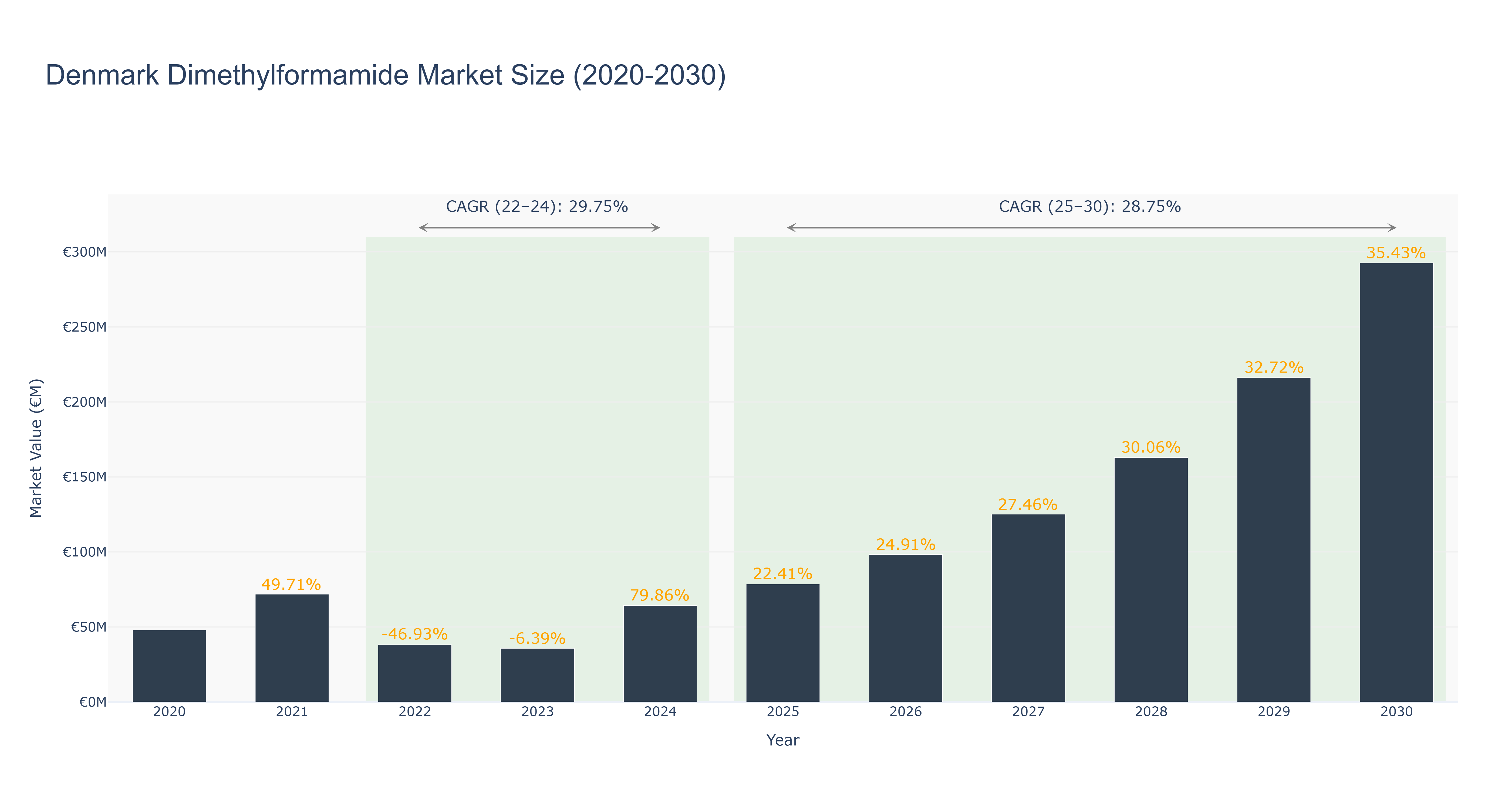
Denmark's Dimethylformamide Market experienced significant fluctuations in market size over the past decade. The market peaked at €292.73 million in 2030, showcasing a robust growth trend. From 2020 to 2024, the market size fluctuated, with a notable decline in 2022 followed by a substantial increase in 2024. The forecasted market size from 2025 to 2030 indicates continued growth, with a Compound Annual Growth Rate (CAGR) of 28.75% post-2025. The market's resilience can be attributed to factors such as increasing demand for industrial solvents and chemicals in various sectors. Looking ahead to 2026, Denmark's Dimethylformamide Market is poised for further expansion, with upcoming projects focusing on sustainable production practices and technological advancements to meet evolving industry standards.
Denmark Dimethylformamide Market: Production & Trade Performance (2019-2025)
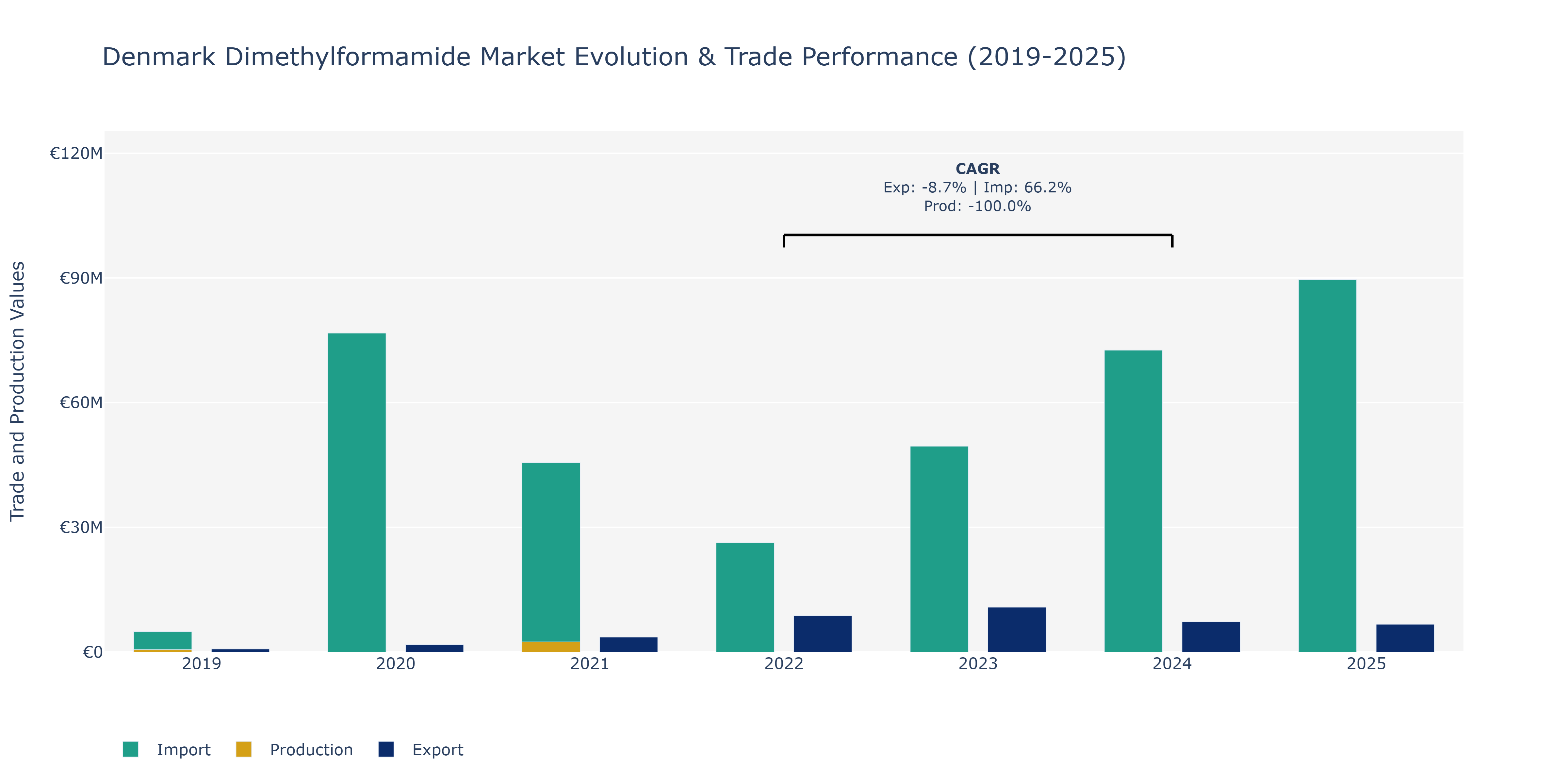
In the Denmark Dimethylformamide Market, from 2019 to 2025, exports experienced fluctuations. In 2019, exports stood at €747.61 thousand, seeing a substantial increase to €1.78 million in 2020. The trend continued upward, reaching a peak of €10.81 million in 2023 before slightly declining to €6.71 million in 2025. Imports, on the other hand, displayed significant growth, growing from €4.96 million in 2019 to €89.6 million in 2025. Production in 2021 was at €3.6 million, showing a sharp decline to €6.32 million in 2022, reflecting potential market shifts or production challenges. The fluctuations in exports could be attributed to shifts in global demand, changes in production capacities, or varying trade policies. The notable increase in imports could indicate increasing domestic demand, potential supply chain optimizations, or changes in sourcing strategies. The drastic decline in production in 2022 might be due to specific market-related factors impacting local manufacturing capabilities or disruptions in the supply chain. These trends suggest a dynamic market environment influenced by both domestic and international factors, highlighting the need for strategic planning and adaptability within the industry.
Key Highlights of the Report:
- Denmark Dimethylformamide Market Outlook
- Market Size of Denmark Dimethylformamide Market, 2025
- Forecast of Denmark Dimethylformamide Market, 2032
- Historical Data and Forecast of Denmark Dimethylformamide Revenues & Volume for the Period 2022 - 2032
- Denmark Dimethylformamide Market Trend Evolution
- Denmark Dimethylformamide Market Drivers and Challenges
- Denmark Dimethylformamide Price Trends
- Denmark Dimethylformamide Porter's Five Forces
- Denmark Dimethylformamide Industry Life Cycle
- Historical Data and Forecast of Denmark Dimethylformamide Market Revenues & Volume By Application for the Period 2022 - 2032
- Historical Data and Forecast of Denmark Dimethylformamide Market Revenues & Volume By Chemical Processing and Solvents for the Period 2022 - 2032
- Historical Data and Forecast of Denmark Dimethylformamide Market Revenues & Volume By Pharmaceuticals for the Period 2022 - 2032
- Historical Data and Forecast of Denmark Dimethylformamide Market Revenues & Volume By Textiles for the Period 2022 - 2032
- Historical Data and Forecast of Denmark Dimethylformamide Market Revenues & Volume By Other Applications for the Period 2022 - 2032
- Denmark Dimethylformamide Import Export Trade Statistics
- Market Opportunity Assessment By Application
- Denmark Dimethylformamide Top Companies Market Share
- Denmark Dimethylformamide Competitive Benchmarking By Technical and Operational Parameters
- Denmark Dimethylformamide Company Profiles
- Denmark Dimethylformamide Key Strategic Recommendations






































