Denmark Pickled Cucumber Market Size (2020-2030)
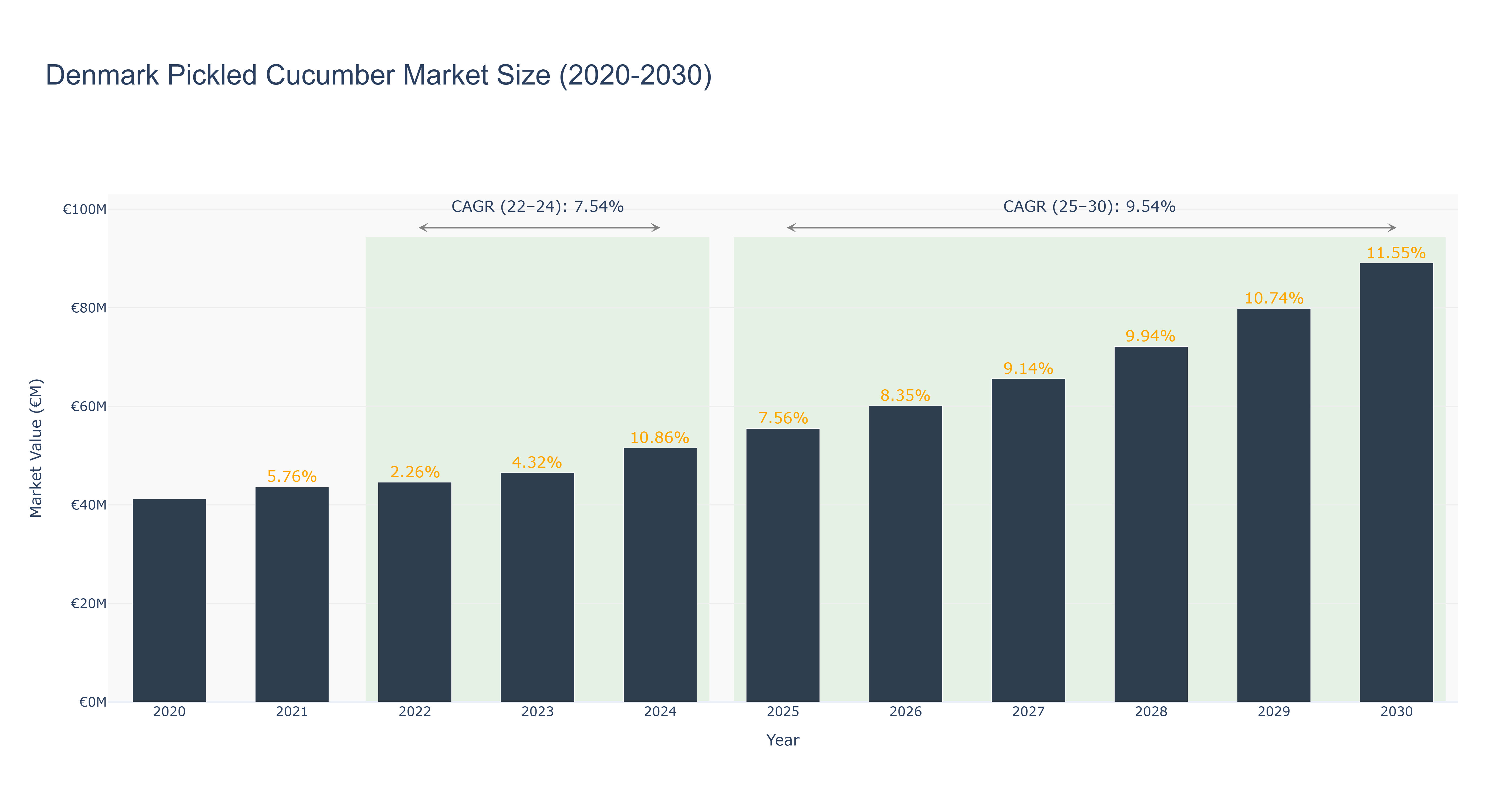
The Denmark Pickled Cucumber Market has exhibited a steady upward trajectory, reaching a peak market size of €51.59 million in 2024, with an actual CAGR of 7.54% from 2022 to 2024. This period saw moderate growth, driven by increased consumer interest in pickled products and the rising demand for convenient food options. Transitioning to the forecasted period from 2025 to 2030, the market is expected to continue its robust expansion, projected to grow at a CAGR of 9.54%, ultimately reaching €89.12 million by 2030. This growth will likely be fueled by trends such as health-conscious eating, the popularity of artisanal and gourmet foods, and the expansion of retail distribution channels. Additionally, innovations in packaging and preservation techniques may enhance product appeal. As the market matures, ongoing investments in sustainability and organic offerings could further drive demand and shape the competitive landscape.
Denmark Pickled Cucumber Market: Production & Trade Performance (2019-2025)
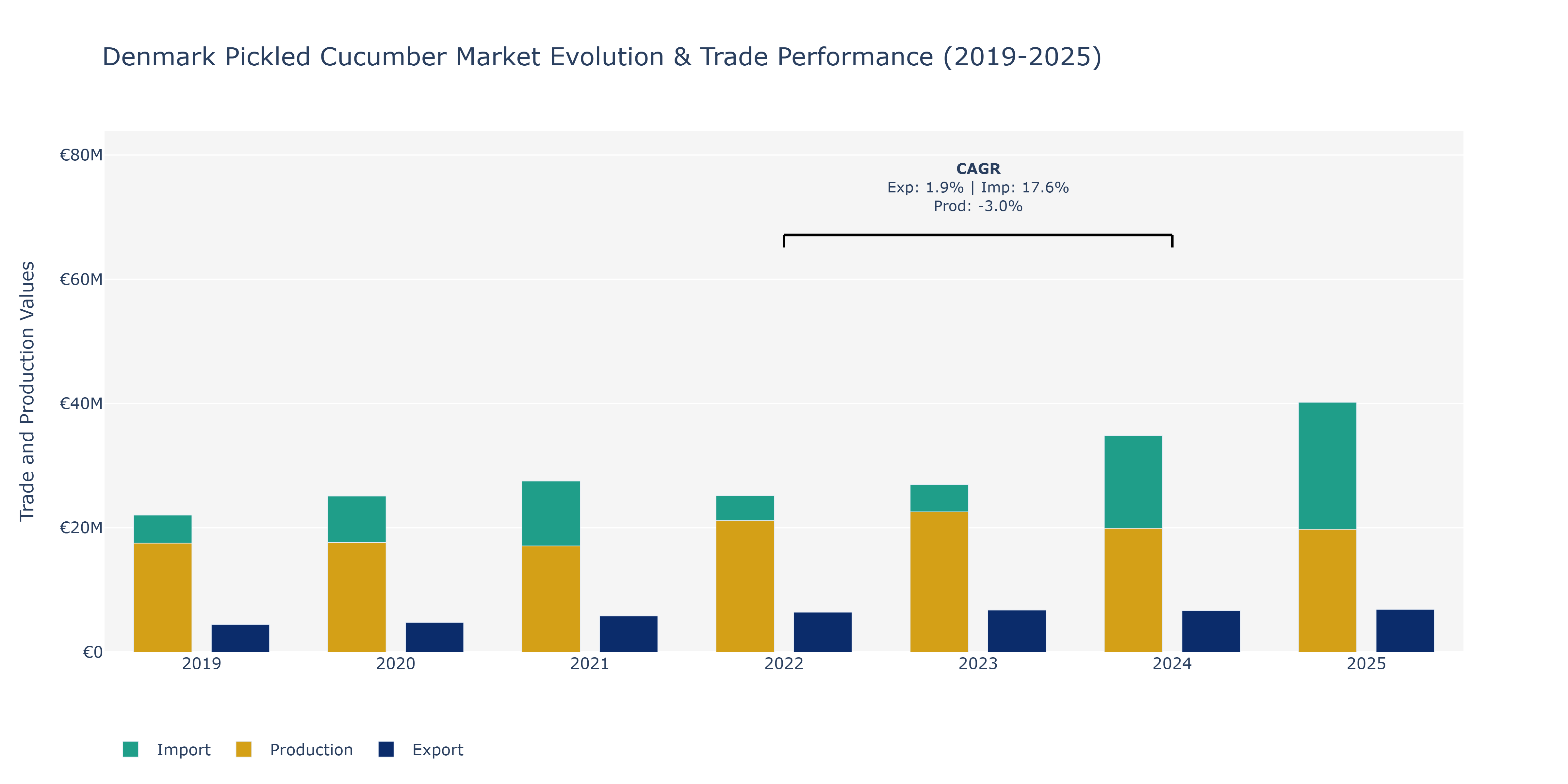
In the Denmark Pickled Cucumber Market, from 2019 to 2025, a noticeable fluctuation in key metrics was observed. Exports exhibited a steady growth trajectory, increasing from €4.43 million in 2019 to approximately €6.87 million in 2025. Conversely, imports showed a more erratic pattern, with a peak of around €40.19 million in 2025 after experiencing fluctuations in previous years. Production, on the other hand, experienced a slight decline from €17.52 billion in 2019 to around €19.75 billion in 2025. The surge in exports can be attributed to increasing global demand for specialty food products like pickled cucumbers, coupled with effective marketing strategies by Danish producers. The fluctuating imports may be influenced by factors such as varying consumer preferences, trade agreements, and economic conditions impacting the supply chain. The decline in production could stem from challenges in sourcing quality ingredients, production costs, or changes in consumer tastes towards alternative products. To sustain growth, stakeholders could focus on enhancing production efficiency, exploring new markets, and innovating product offerings in line with evolving consumer preferences.
Key Highlights of the Report:
- Denmark Pickled Cucumber Market Outlook
- Market Size of Denmark Pickled Cucumber Market, 2025
- Forecast of Denmark Pickled Cucumber Market, 2032
- Historical Data and Forecast of Denmark Pickled Cucumber Revenues & Volume for the Period 2022 - 2032F
- Denmark Pickled Cucumber Market Trend Evolution
- Denmark Pickled Cucumber Market Drivers and Challenges
- Denmark Pickled Cucumber Price Trends
- Denmark Pickled Cucumber Porter`s Five Forces
- Denmark Pickled Cucumber Industry Life Cycle
- Historical Data and Forecast of Denmark Pickled Cucumber Market Revenues & Volume By Type for the Period 2022 - 2032F
- Historical Data and Forecast of Denmark Pickled Cucumber Market Revenues & Volume By Whole Pickled Cucumber for the Period 2022 - 2032F
- Historical Data and Forecast of Denmark Pickled Cucumber Market Revenues & Volume By Pickled Cucumber Slice for the Period 2022 - 2032F
- Historical Data and Forecast of Denmark Pickled Cucumber Market Revenues & Volume By Application for the Period 2022 - 2032F
- Historical Data and Forecast of Denmark Pickled Cucumber Market Revenues & Volume By Households for the Period 2022 - 2032F
- Historical Data and Forecast of Denmark Pickled Cucumber Market Revenues & Volume By Restaurant for the Period 2022 - 2032F
- Historical Data and Forecast of Denmark Pickled Cucumber Market Revenues & Volume By Others for the Period 2022 - 2032F
- Denmark Pickled Cucumber Import Export Trade Statistics
- Market Opportunity Assessment By Type
- Market Opportunity Assessment By Application
- Denmark Pickled Cucumber Top Companies Market Share
- Denmark Pickled Cucumber Competitive Benchmarking By Technical and Operational Parameters
- Denmark Pickled Cucumber Company Profiles
- Denmark Pickled Cucumber Key Strategic Recommendations






































