Denmark Shaving Foam Market Top 5 Importing Countries and Market Competition (HHI) Analysis
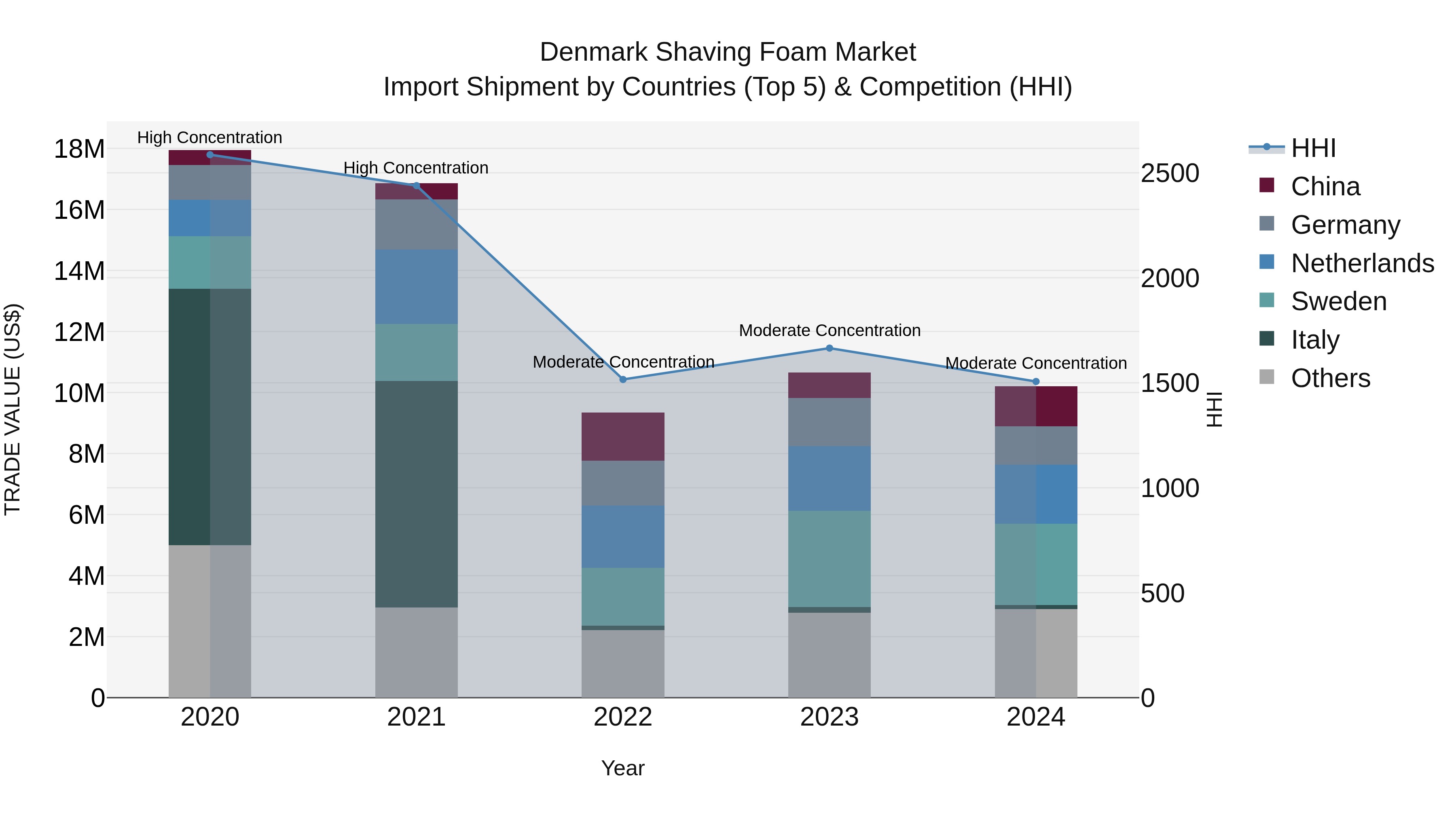
Denmark shaving foam import market in 2024 saw significant contributions from key exporters like Sweden, Netherlands, China, Germany, and the UK. Despite a declining compound annual growth rate (CAGR) of -13.15% from 2020 to 2024, the Herfindahl-Hirschman Index (HHI) indicated a moderate level of market concentration. The negative growth rate of -4.24% in 2024 suggests a challenging year for the industry, potentially impacted by various factors such as changing consumer preferences and market dynamics. Continuous monitoring and adaptation to market trends will be crucial for stakeholders in this competitive landscape.
Denmark Shaving Foam Market Synopsis
The Denmark shaving foam market is experiencing steady growth fueled by a rising trend of male grooming, increased disposable income, and a growing focus on personal care among consumers. Key players in the market are leveraging innovative marketing strategies and product offerings to cater to the varying needs and preferences of consumers. Natural and organic ingredients are gaining popularity due to a growing awareness of sustainability and health consciousness. The market is characterized by a competitive landscape with both international and domestic brands vying for market share. E-commerce platforms are playing a significant role in expanding the reach of shaving foam products, offering convenience and accessibility to consumers. Overall, the Denmark shaving foam market is poised for further expansion driven by evolving consumer preferences and a growing emphasis on grooming and personal care.
Denmark Shaving Foam Market Trends
The Denmark Shaving Foam Market is witnessing a growing trend towards natural and organic products as consumers are increasingly becoming aware of the benefits of using products with fewer chemicals. This has led to a surge in demand for eco-friendly and sustainable shaving foams made from natural ingredients such as aloe vera, shea butter, and essential oils. Another notable trend is the rise of gender-neutral and unisex shaving foam products, catering to a more diverse range of consumers. Opportunities in the market include the potential for innovative packaging designs, personalized and customizable products, and strategic partnerships with retailers or e-commerce platforms to reach a wider audience. Brands that can capitalize on these trends and opportunities are likely to succeed in the competitive Denmark Shaving Foam Market.
Denmark Shaving Foam Market Challenges
In the Denmark Shaving Foam Market, some challenges faced include increasing competition from international brands, growing consumer demand for natural and organic products, and the rise of alternative shaving methods such as electric razors and subscription-based services. Local brands may struggle to differentiate themselves and maintain market share amidst these trends. Additionally, sustainability concerns and eco-friendly packaging preferences among Danish consumers are becoming more prominent, requiring companies to adapt their product offerings and practices to align with these preferences. Pricing pressures and fluctuating raw material costs also pose challenges for companies operating in the Denmark Shaving Foam Market, impacting profit margins and overall competitiveness in the market. To succeed, companies need to innovate, focus on sustainability, and effectively communicate their value proposition to consumers.
Denmark Shaving Foam Market Investment Opportunities
The Denmark Shaving Foam Market is primarily driven by factors such as the increasing emphasis on personal grooming and hygiene among both men and women, the growing trend of clean-shaven looks among the younger demographic, and the availability of a wide range of shaving foam products catering to different skin types and preferences. Additionally, the rising disposable income levels and changing lifestyles in Denmark have led to a higher demand for convenience products like shaving foam. Furthermore, the influence of social media and celebrity endorsements promoting grooming products has also contributed to the growth of the shaving foam market in Denmark. Overall, these drivers are expected to continue fueling the demand for shaving foam products in the Danish market.
Denmark Shaving Foam Market Government Polices
In Denmark, the shaving foam market is regulated by the Danish Environmental Protection Agency, which sets guidelines and restrictions on the ingredients used in personal care products to ensure consumer safety and environmental protection. Additionally, the Danish Competition and Consumer Authority monitors the market to prevent anti-competitive practices and protect consumer rights. The Danish government also promotes sustainability and eco-friendly practices in industries, including personal care products, encouraging companies to use recyclable packaging and reduce their carbon footprint. Overall, the government policies in Denmark aim to maintain a competitive and sustainable shaving foam market while prioritizing consumer safety and environmental concerns.
Denmark Shaving Foam Market Future Outlook
The future outlook for the Denmark Shaving Foam Market appears positive, driven by factors such as increasing grooming awareness among men, the rising popularity of grooming products, and the growing trend of personal care and grooming routines. Consumers are increasingly seeking high-quality shaving foam products that offer a smooth and comfortable shaving experience. Innovation in product formulations, such as organic and natural ingredients, and convenient packaging designs are likely to further fuel market growth. Additionally, the expanding e-commerce sector and the availability of a wide range of grooming products online are expected to boost market penetration and accessibility. Overall, the Denmark Shaving Foam Market is poised for steady growth in the coming years, presenting opportunities for market players to capitalize on the evolving consumer preferences and trends.
Key Highlights of the Report:
- Denmark Shaving Foam Market Outlook
- Market Size of Denmark Shaving Foam Market, 2024
- Forecast of Denmark Shaving Foam Market, 2031
- Historical Data and Forecast of Denmark Shaving Foam Revenues & Volume for the Period 2021- 2031
- Denmark Shaving Foam Market Trend Evolution
- Denmark Shaving Foam Market Drivers and Challenges
- Denmark Shaving Foam Price Trends
- Denmark Shaving Foam Porter's Five Forces
- Denmark Shaving Foam Industry Life Cycle
- Historical Data and Forecast of Denmark Shaving Foam Market Revenues & Volume By Product for the Period 2021- 2031
- Historical Data and Forecast of Denmark Shaving Foam Market Revenues & Volume By Organic for the Period 2021- 2031
- Historical Data and Forecast of Denmark Shaving Foam Market Revenues & Volume By Conventional for the Period 2021- 2031
- Historical Data and Forecast of Denmark Shaving Foam Market Revenues & Volume By Distribution Channel for the Period 2021- 2031
- Historical Data and Forecast of Denmark Shaving Foam Market Revenues & Volume By Hypermarkets/Supermarkets for the Period 2021- 2031
- Historical Data and Forecast of Denmark Shaving Foam Market Revenues & Volume By Departmental Stores for the Period 2021- 2031
- Historical Data and Forecast of Denmark Shaving Foam Market Revenues & Volume By Speciality Stores for the Period 2021- 2031
- Historical Data and Forecast of Denmark Shaving Foam Market Revenues & Volume By Online for the Period 2021- 2031
- Denmark Shaving Foam Import Export Trade Statistics
- Market Opportunity Assessment By Product
- Market Opportunity Assessment By Distribution Channel
- Denmark Shaving Foam Top Companies Market Share
- Denmark Shaving Foam Competitive Benchmarking By Technical and Operational Parameters
- Denmark Shaving Foam Company Profiles
- Denmark Shaving Foam Key Strategic Recommendations






































