Ecuador Flour Market Growth Rate Analysis (2025 - 2031)
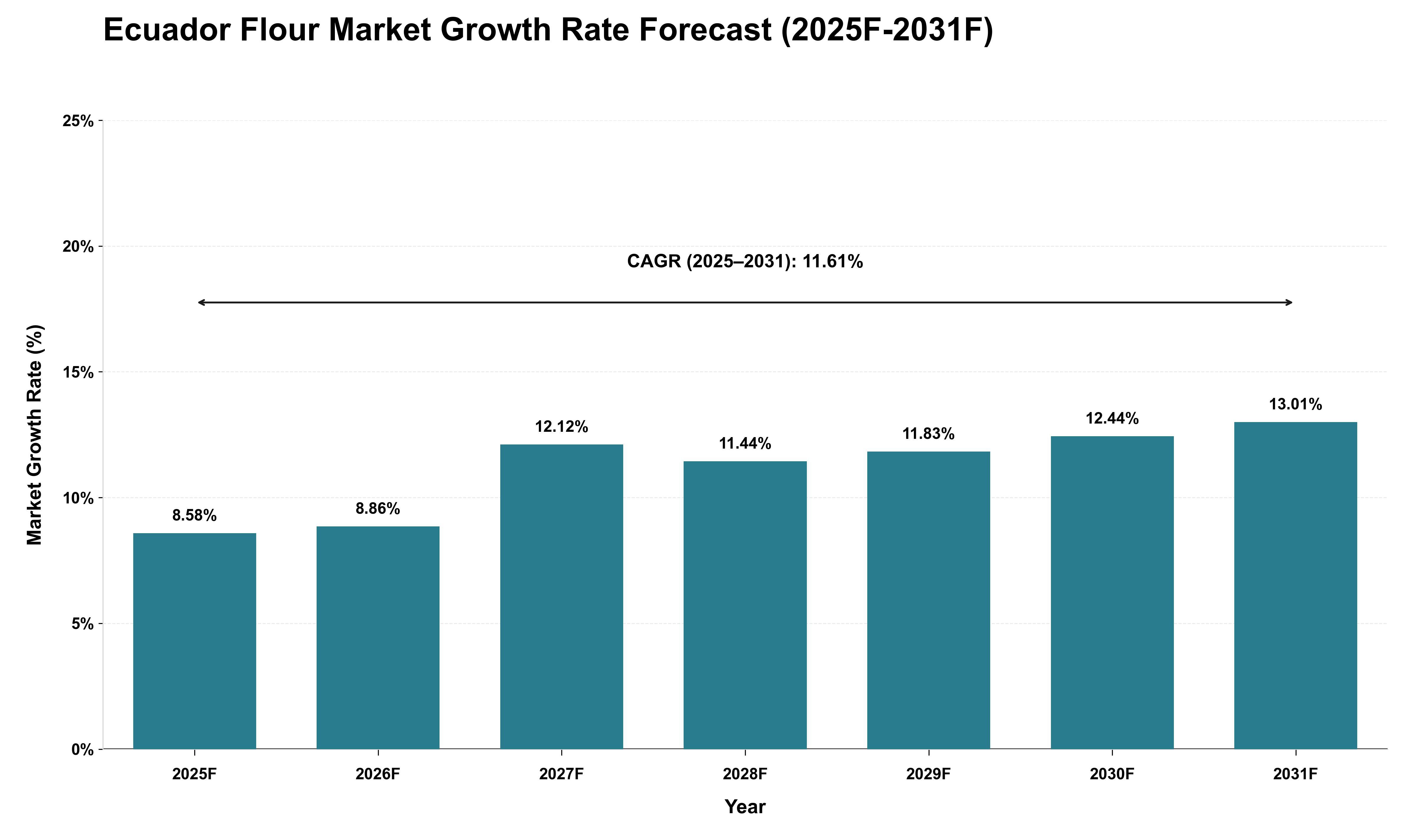
The Ecuador flour market is projected to experience a compound annual growth rate of 11.61% from 2025 to 2031, reflecting a robust demand trajectory influenced by regulatory and trade policy dynamics. The anticipated annual growth rates, peaking at 13.01% in 2031, suggest that import dependencies will play a critical role in shaping market conditions. As Ecuador continues to navigate trade agreements and tariffs, the regulatory environment will likely facilitate increased imports of raw materials necessary for flour production, thereby enhancing supply chain efficiencies. Additionally, cyclical trends in agricultural output and consumer preferences for diverse flour products will drive innovation and competition among local producers. This combination of favorable trade policies and evolving consumer demands will create an environment conducive to sustained growth in the flour sector throughout the forecast period.
Key Highlights of the Report:
- Ecuador Flour Market Outlook
- Market Size of Ecuador Flour Market, 2024
- Forecast of Ecuador Flour Market, 2031
- Historical Data and Forecast of Ecuador Flour Revenues & Volume for the Period 2021-2031
- Ecuador Flour Market Trend Evolution
- Ecuador Flour Market Drivers and Challenges
- Ecuador Flour Price Trends
- Ecuador Flour Porter`s Five Forces
- Ecuador Flour Industry Life Cycle
- Historical Data and Forecast of Ecuador Flour Market Revenues & Volume By Raw Material for the Period 2021-2031
- Historical Data and Forecast of Ecuador Flour Market Revenues & Volume By Wheat for the Period 2021-2031
- Historical Data and Forecast of Ecuador Flour Market Revenues & Volume By Rice for the Period 2021-2031
- Historical Data and Forecast of Ecuador Flour Market Revenues & Volume By Maize for the Period 2021-2031
- Historical Data and Forecast of Ecuador Flour Market Revenues & Volume By Others for the Period 2021-2031
- Historical Data and Forecast of Ecuador Flour Market Revenues & Volume By Applications for the Period 2021-2031
- Historical Data and Forecast of Ecuador Flour Market Revenues & Volume By Bread & Bakery Products for the Period 2021-2031
- Historical Data and Forecast of Ecuador Flour Market Revenues & Volume By Noodles & Pasta for the Period 2021-2031
- Historical Data and Forecast of Ecuador Flour Market Revenues & Volume By Animal Feed for the Period 2021-2031
- Historical Data and Forecast of Ecuador Flour Market Revenues & Volume By Wafers, Crackers, & Biscuits for the Period 2021-2031
- Historical Data and Forecast of Ecuador Flour Market Revenues & Volume By Non-Food Application for the Period 2021-2031
- Historical Data and Forecast of Ecuador Flour Market Revenues & Volume By Others for the Period 2021-2031
- Historical Data and Forecast of Ecuador Flour Market Revenues & Volume By Technology for the Period 2021-2031
- Historical Data and Forecast of Ecuador Flour Market Revenues & Volume By Dry Technology for the Period 2021-2031
- Historical Data and Forecast of Ecuador Flour Market Revenues & Volume By Wet Technology for the Period 2021-2031
- Ecuador Flour Import Export Trade Statistics
- Market Opportunity Assessment By Raw Material
- Market Opportunity Assessment By Applications
- Market Opportunity Assessment By Technology
- Ecuador Flour Top Companies Market Share
- Ecuador Flour Competitive Benchmarking By Technical and Operational Parameters
- Ecuador Flour Company Profiles
- Ecuador Flour Key Strategic Recommendations






































