Ecuador Seaweed Market Growth Rate Analysis (2025 - 2031)
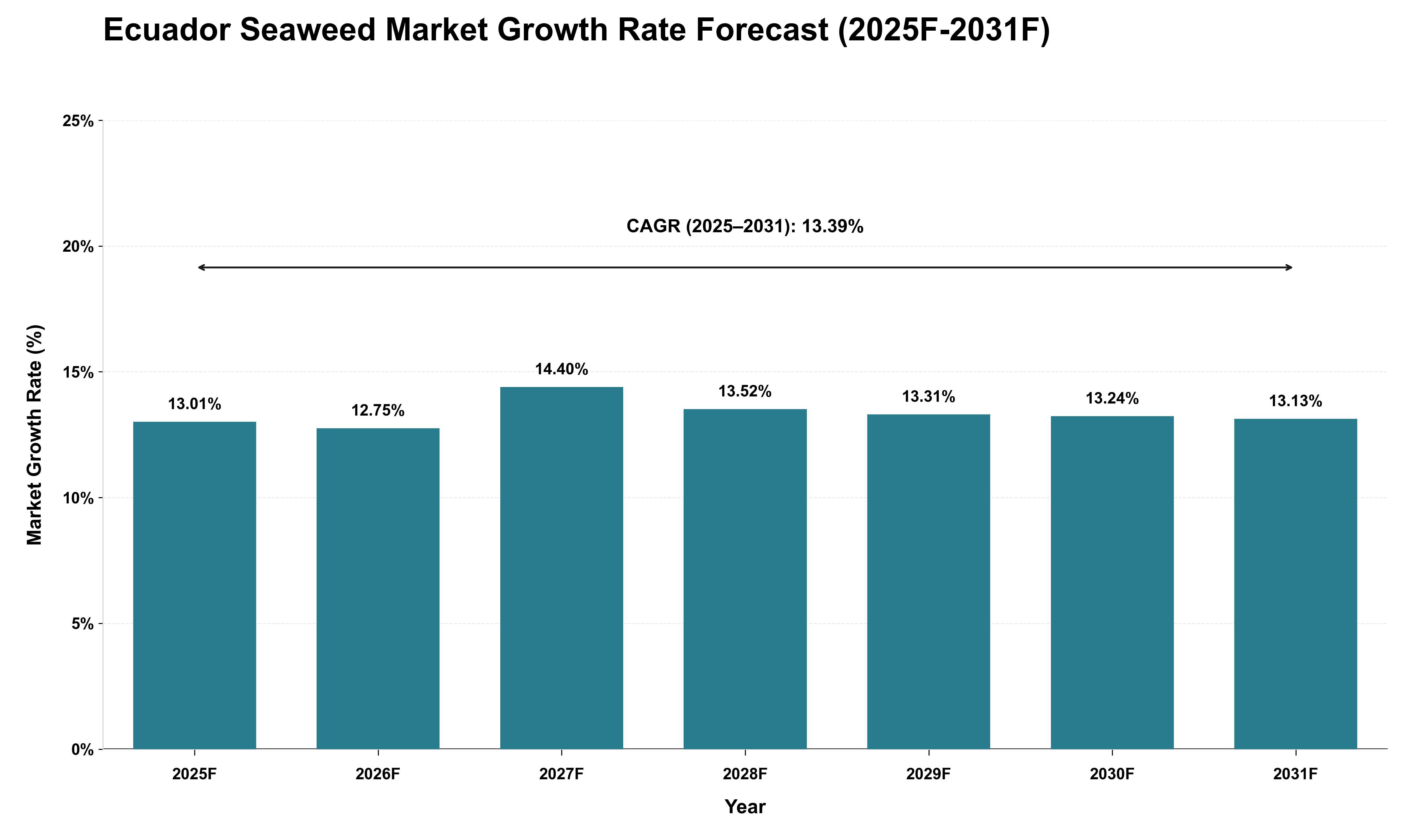
The Ecuador seaweed market is projected to experience a robust compound annual growth rate of 13.39% from 2025 to 2031, driven primarily by increasing end-use demand across various sectors, including food, cosmetics, and pharmaceuticals. This growth trajectory will reflect heightened consumer awareness regarding health benefits and sustainability, prompting a shift towards natural ingredients. The annual growth rates indicate fluctuations that suggest cyclical trends influenced by global supply chain dynamics and import dependencies; for instance, the peak in 2027 at 14.40% may correlate with anticipated increases in export opportunities as international markets expand their acceptance of seaweed products. Additionally, evolving regulatory frameworks favoring eco-friendly alternatives will likely bolster domestic production capabilities while enhancing Ecuador's competitive edge in the global market. Overall, these macroeconomic factors will underpin a sustained upward trend in demand for Ecuadorian seaweed throughout the forecast period.
Key Highlights of the Report:
- Ecuador Seaweed Market Outlook
- Market Size of Ecuador Seaweed Market, 2024
- Forecast of Ecuador Seaweed Market, 2031
- Historical Data and Forecast of Ecuador Seaweed Revenues & Volume for the Period 2021-2031
- Ecuador Seaweed Market Trend Evolution
- Ecuador Seaweed Market Drivers and Challenges
- Ecuador Seaweed Price Trends
- Ecuador Seaweed Porter`s Five Forces
- Ecuador Seaweed Industry Life Cycle
- Historical Data and Forecast of Ecuador Seaweed Market Revenues & Volume By Product for the Period 2021-2031
- Historical Data and Forecast of Ecuador Seaweed Market Revenues & Volume By Red for the Period 2021-2031
- Historical Data and Forecast of Ecuador Seaweed Market Revenues & Volume By Brown for the Period 2021-2031
- Historical Data and Forecast of Ecuador Seaweed Market Revenues & Volume By Green for the Period 2021-2031
- Historical Data and Forecast of Ecuador Seaweed Market Revenues & Volume By Application for the Period 2021-2031
- Historical Data and Forecast of Ecuador Seaweed Market Revenues & Volume By Human Food for the Period 2021-2031
- Historical Data and Forecast of Ecuador Seaweed Market Revenues & Volume By Hydrocolloids for the Period 2021-2031
- Historical Data and Forecast of Ecuador Seaweed Market Revenues & Volume By Fertilizers for the Period 2021-2031
- Historical Data and Forecast of Ecuador Seaweed Market Revenues & Volume By Animal Feed Additives for the Period 2021-2031
- Historical Data and Forecast of Ecuador Seaweed Market Revenues & Volume By Others for the Period 2021-2031
- Ecuador Seaweed Import Export Trade Statistics
- Market Opportunity Assessment By Product
- Market Opportunity Assessment By Application
- Ecuador Seaweed Top Companies Market Share
- Ecuador Seaweed Competitive Benchmarking By Technical and Operational Parameters
- Ecuador Seaweed Company Profiles
- Ecuador Seaweed Key Strategic Recommendations






































