Ecuador Tannin Market Growth Rate Analysis (2025 - 2031)
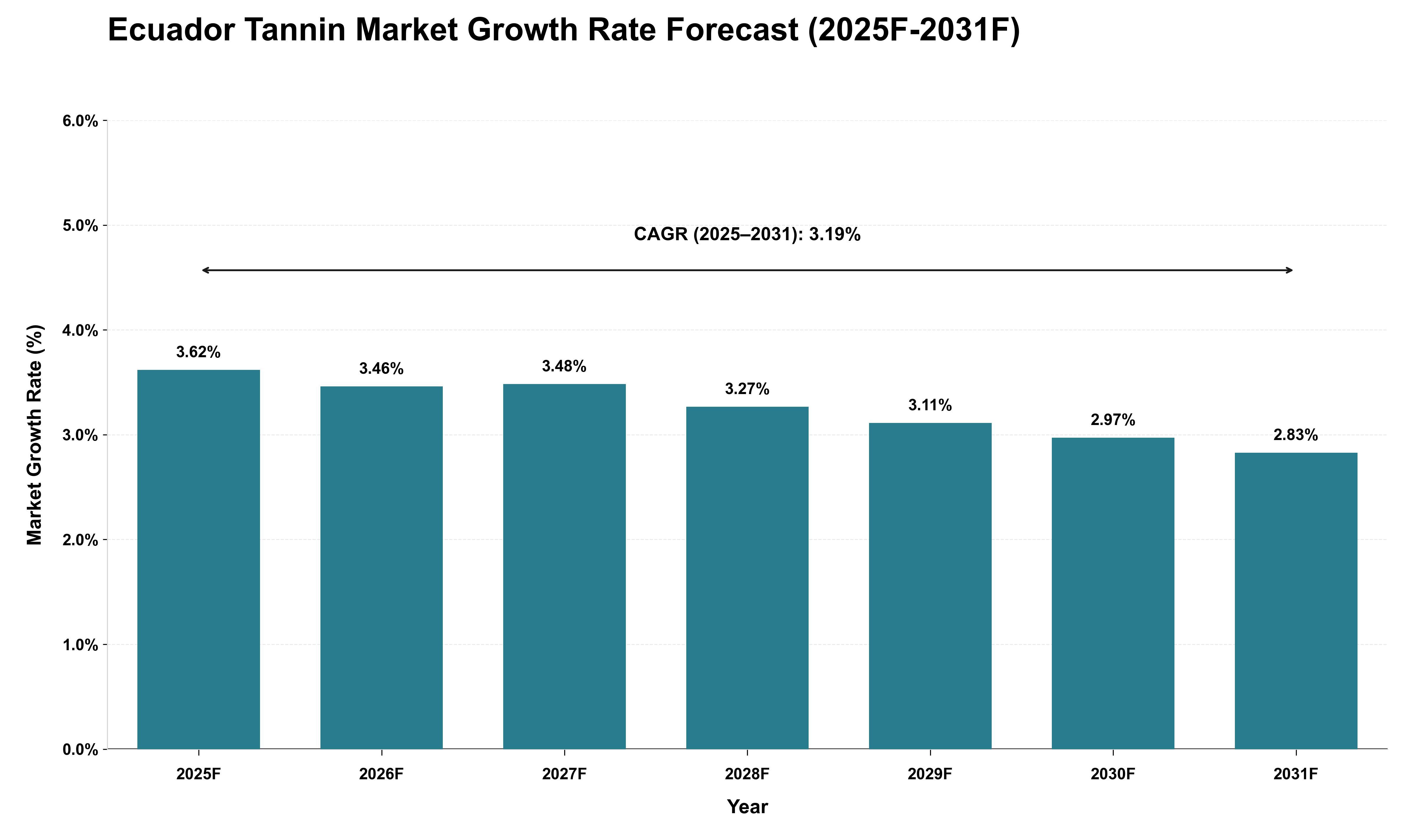
The Ecuador tannin market will experience a gradual deceleration in growth rates, reflecting broader macroeconomic cycles and evolving demand dynamics. With a projected CAGR of 3.19% from 2025 to 2031, the annual growth rates will begin at 3.62% in 2025 and decline to 2.83% by 2031, indicating a shift in consumption patterns and potential import dependencies as global supply chains adapt. Factors such as fluctuating commodity prices, environmental regulations, and shifts in consumer preferences towards sustainable products will influence this trajectory. Additionally, the anticipated economic conditions in key importing regions may impact Ecuador's export competitiveness, further shaping market dynamics. As the global economy navigates through various phases of recovery and adjustment post-pandemic, the tannin sector will likely reflect these cyclical trends while responding to both domestic production capabilities and international market demands.
Key Highlights of the Report:
- Ecuador Tannin Market Outlook
- Market Size of Ecuador Tannin Market, 2024
- Forecast of Ecuador Tannin Market, 2031
- Historical Data and Forecast of Ecuador Tannin Revenues & Volume for the Period 2021-2031
- Ecuador Tannin Market Trend Evolution
- Ecuador Tannin Market Drivers and Challenges
- Ecuador Tannin Price Trends
- Ecuador Tannin Porter`s Five Forces
- Ecuador Tannin Industry Life Cycle
- Historical Data and Forecast of Ecuador Tannin Market Revenues & Volume By Source for the Period 2021-2031
- Historical Data and Forecast of Ecuador Tannin Market Revenues & Volume By Plants for the Period 2021-2031
- Historical Data and Forecast of Ecuador Tannin Market Revenues & Volume By Brown Algae for the Period 2021-2031
- Historical Data and Forecast of Ecuador Tannin Market Revenues & Volume By Product for the Period 2021-2031
- Historical Data and Forecast of Ecuador Tannin Market Revenues & Volume By Hydrolysable for the Period 2021-2031
- Historical Data and Forecast of Ecuador Tannin Market Revenues & Volume By Non-hydrolysable for the Period 2021-2031
- Historical Data and Forecast of Ecuador Tannin Market Revenues & Volume By Phlorotannins for the Period 2021-2031
- Ecuador Tannin Import Export Trade Statistics
- Market Opportunity Assessment By Source
- Market Opportunity Assessment By Product
- Ecuador Tannin Top Companies Market Share
- Ecuador Tannin Competitive Benchmarking By Technical and Operational Parameters
- Ecuador Tannin Company Profiles
- Ecuador Tannin Key Strategic Recommendations






































