Estonia Bedding Market Size (2020-2030)
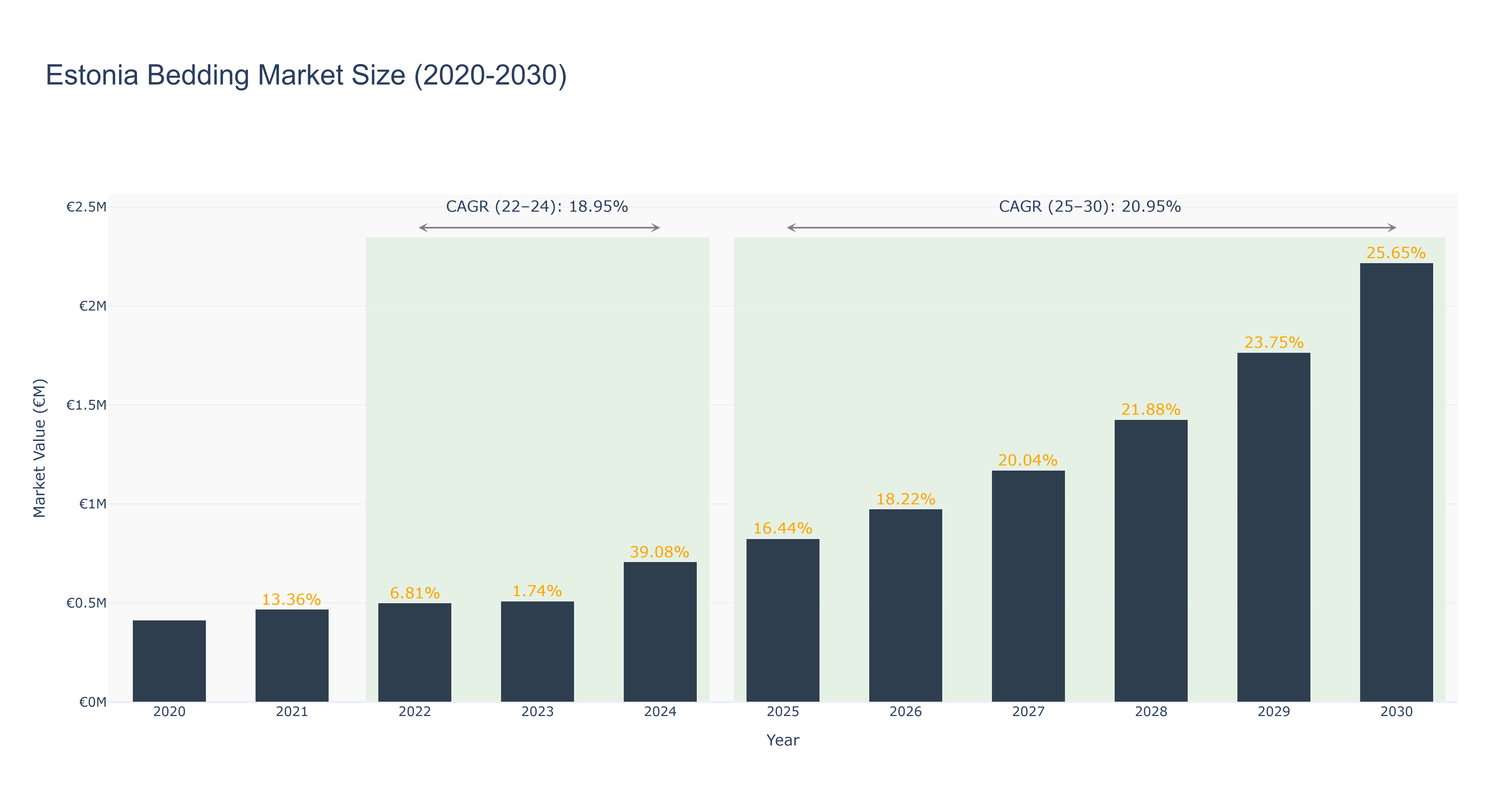
The Estonia Bedding Market demonstrated a steady growth trajectory from 2020 to 2024, with the market size peaking at €708.26 thousand in 2024, reflecting a significant growth of 39.08% from the previous year. The actual data reveals a CAGR of 18.95% between 2022 and 2024, driven by increased consumer spending on home comfort and a rising trend towards personalized bedding solutions. Transitioning to the forecasted period from 2025 to 2030, the market is projected to reach €2.22 million by 2030, with an impressive CAGR of 20.95%. This growth is expected to be fueled by innovations in sustainable materials and the expansion of e-commerce platforms, which enhance accessibility for consumers. As the market evolves, factors such as urbanization and a heightened focus on wellness and sleep quality will likely continue to propel demand for premium bedding products in Estonia.
Estonia Bedding Market: Production & Trade Performance (2019-2025)
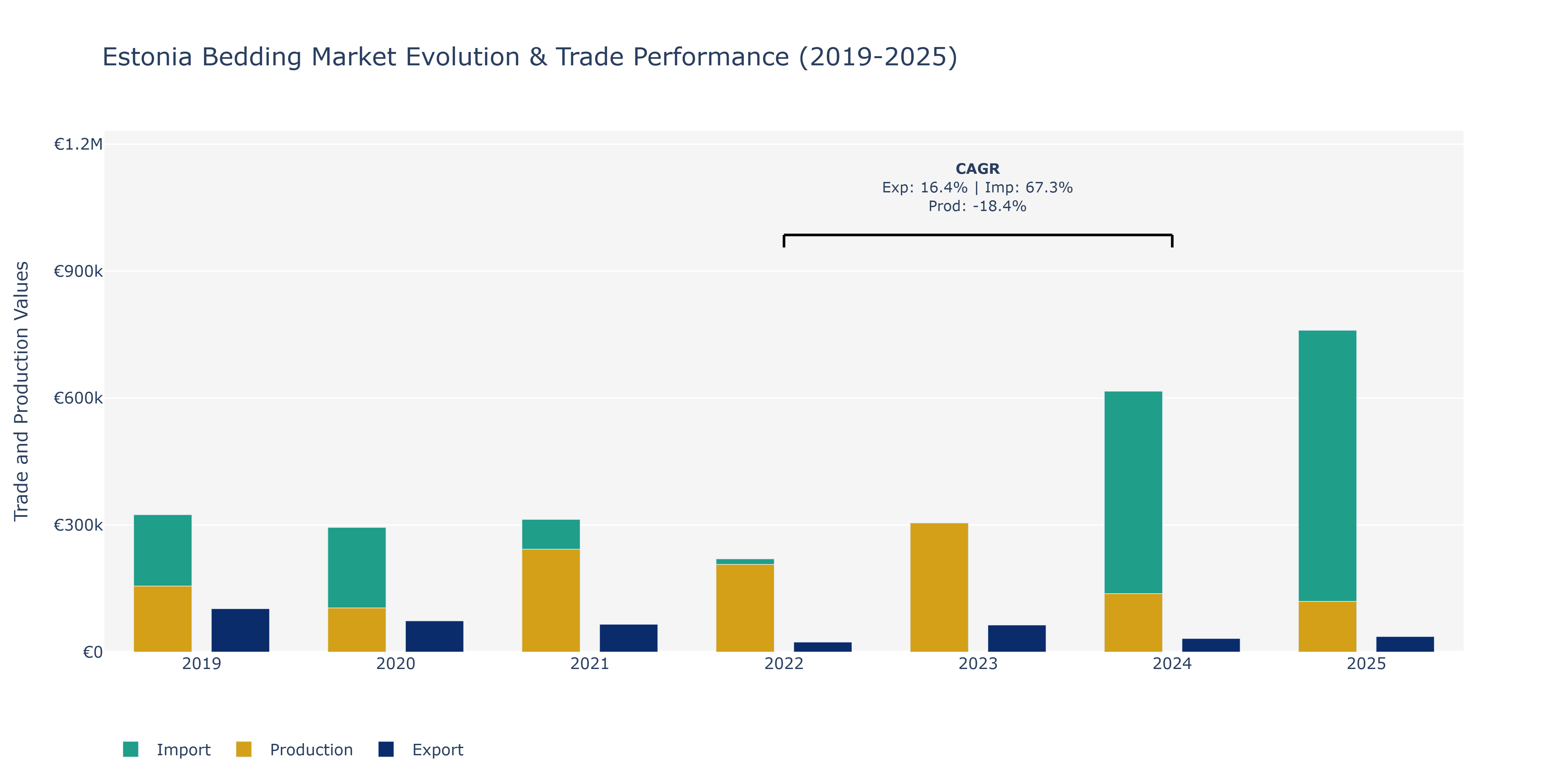
In the Estonia Bedding Market, a clear decline in exports was observed over the years, dropping from €102.42 thousand in 2019 to €23.63 thousand in 2022 before showing a slight recovery in 2023. Imports, on the other hand, displayed a fluctuating pattern, peaking at €760.31 thousand in 2025 from €220.23 thousand in 2022. Production witnessed a notable decrease from €155.87 thousand in 2019 to €104.25 thousand in 2020, followed by a sharp increase to €305 thousand in 2023. The significant rise in Import value could be attributed to the growing demand for bedding products in Estonia, possibly due to an increase in consumer spending on home goods. The fluctuating production values may reflect changes in manufacturing capabilities or shifts in consumer preferences towards different types of bedding products. This market trend could signify evolving consumer preferences towards higher-quality bedding products, prompting manufacturers to adjust production levels accordingly to meet changing demand patterns.
Key Highlights of the Report:
- Estonia Bedding Market Outlook
- Market Size of Estonia Bedding Market, 2025
- Forecast of Estonia Bedding Market, 2032
- Historical Data and Forecast of Estonia Bedding Revenues & Volume for the Period 2022 - 2032
- Estonia Bedding Market Trend Evolution
- Estonia Bedding Market Drivers and Challenges
- Estonia Bedding Price Trends
- Estonia Bedding Porter's Five Forces
- Estonia Bedding Industry Life Cycle
- Historical Data and Forecast of Estonia Bedding Market Revenues & Volume By Type for the Period 2022 - 2032
- Historical Data and Forecast of Estonia Bedding Market Revenues & Volume By home Bedding for the Period 2022 - 2032
- Historical Data and Forecast of Estonia Bedding Market Revenues & Volume By Hotel Bedding for the Period 2022 - 2032
- Historical Data and Forecast of Estonia Bedding Market Revenues & Volume By Distribution Channel for the Period 2022 - 2032
- Historical Data and Forecast of Estonia Bedding Market Revenues & Volume By supermarkets/Hypermarkets for the Period 2022 - 2032
- Historical Data and Forecast of Estonia Bedding Market Revenues & Volume By Specialty Stores for the Period 2022 - 2032
- Historical Data and Forecast of Estonia Bedding Market Revenues & Volume By Online for the Period 2022 - 2032
- Historical Data and Forecast of Estonia Bedding Market Revenues & Volume By Other Distribution Channels for the Period 2022 - 2032
- Estonia Bedding Import Export Trade Statistics
- Market Opportunity Assessment By Type
- Market Opportunity Assessment By Distribution Channel
- Estonia Bedding Top Companies Market Share
- Estonia Bedding Competitive Benchmarking By Technical and Operational Parameters
- Estonia Bedding Company Profiles
- Estonia Bedding Key Strategic Recommendations






































