Estonia Digital Camera Market Size Growth Rate
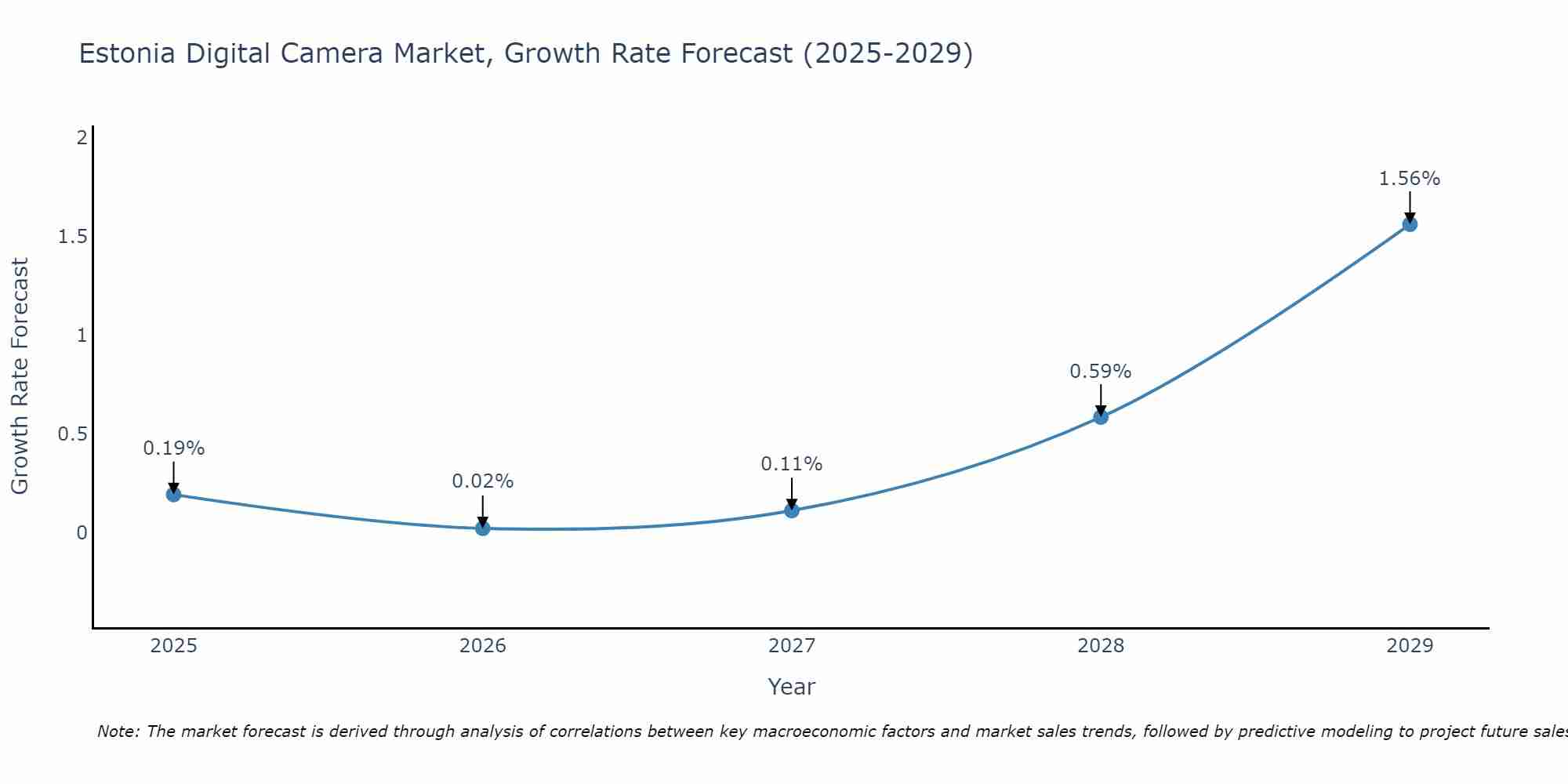
The Estonia Digital Camera Market is projected to witness mixed growth rate patterns during 2025 to 2029. Commencing at 0.19% in 2025, growth builds up to 1.56% by 2029.
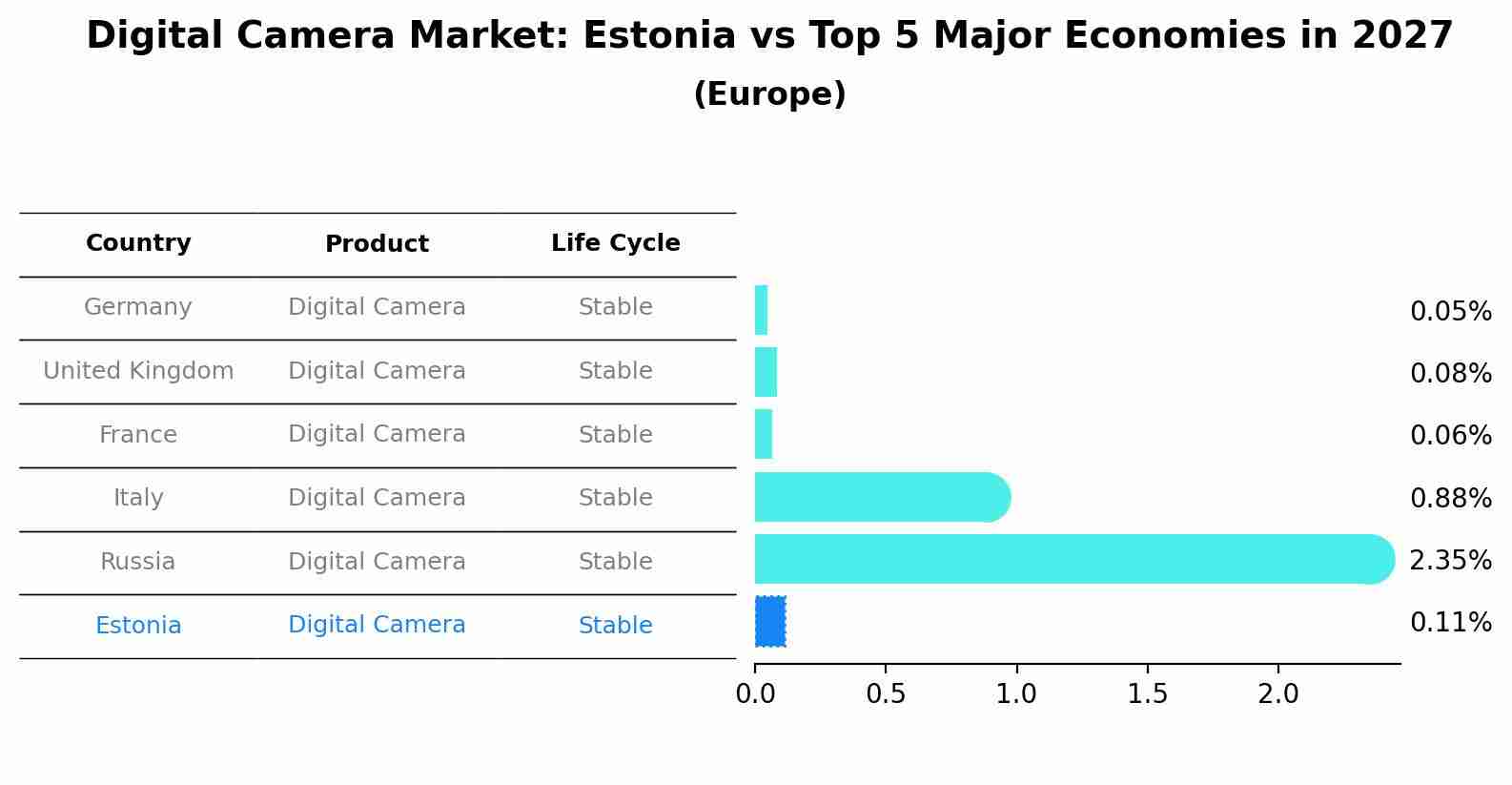
Digital Camera Market: Estonia vs Top 5 Major Economies in 2027 (Europe)
Estonia's Digital Camera market is anticipated to experience a stable growth rate of 0.11% by 2027, reflecting trends observed in the largest economy Germany, followed by United Kingdom, France, Italy and Russia.
Estonia Digital Camera Market Overview
The digital camera market provides solutions for photography enthusiasts and professionals, catering to a wide range of applications.
Drivers of the market
The digital camera market in Estonia is being driven by the growing demand for high-quality imaging solutions across consumer, professional, and commercial sectors. With the increasing popularity of photography as a hobby and the rise in content creation for social media and digital platforms, the demand for digital cameras has surged. Additionally, technological advancements in camera sensors, image stabilization, and connectivity features are contributing to market growth. The rise of professional photography, vlogging, and live streaming, as well as the integration of digital cameras in various industries, further boosts the demand for these devices.
Challenges of the market
The digital camera market in Estonia struggles with declining demand due to the increasing capabilities of smartphone cameras. High costs of advanced cameras and accessories make them less appealing to amateur users. Furthermore, limited local manufacturing capabilities lead to dependency on imports, inflating prices.
Government Policy of the market
Estonian government policies support the digital camera market through incentives for technological innovation and the adoption of energy-efficient devices. Policies promote the use of digital cameras in industries such as security, media, and healthcare, while ensuring that products meet EU standards for safety and environmental sustainability.
Key Highlights of the Report:
- Estonia Digital Camera Market Outlook
- Market Size of Estonia Digital Camera Market, 2024
- Forecast of Estonia Digital Camera Market, 2031
- Historical Data and Forecast of Estonia Digital Camera Revenues & Volume for the Period 2021-2031
- Estonia Digital Camera Market Trend Evolution
- Estonia Digital Camera Market Drivers and Challenges
- Estonia Digital Camera Price Trends
- Estonia Digital Camera Porter`s Five Forces
- Estonia Digital Camera Industry Life Cycle
- Historical Data and Forecast of Estonia Digital Camera Market Revenues & Volume By Product for the Period 2021-2031
- Historical Data and Forecast of Estonia Digital Camera Market Revenues & Volume By Built-in Lens Camera for the Period 2021-2031
- Historical Data and Forecast of Estonia Digital Camera Market Revenues & Volume By Interchangeable Lens Camera for the Period 2021-2031
- Historical Data and Forecast of Estonia Digital Camera Market Revenues & Volume By DSLR for the Period 2021-2031
- Historical Data and Forecast of Estonia Digital Camera Market Revenues & Volume By Non-reflex for the Period 2021-2031
- Estonia Digital Camera Import Export Trade Statistics
- Market Opportunity Assessment By Product
- Estonia Digital Camera Top Companies Market Share
- Estonia Digital Camera Competitive Benchmarking By Technical and Operational Parameters
- Estonia Digital Camera Company Profiles
- Estonia Digital Camera Key Strategic Recommendations






































