Estonia Laminated Glass Market Top 5 Importing Countries and Market Competition (HHI) Analysis
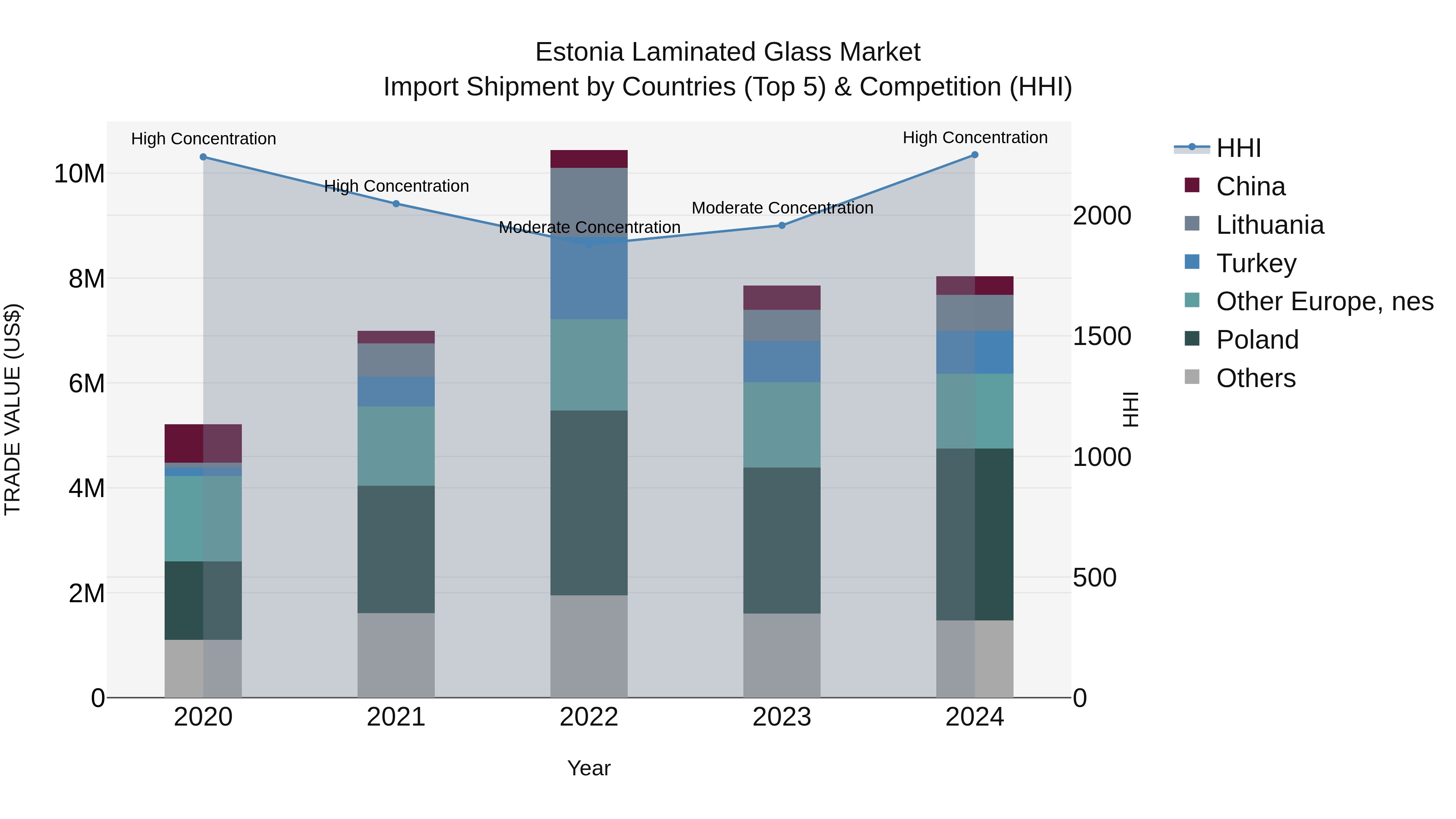
Estonia`s import shipments of laminated glass saw a notable increase in concentration levels in 2024, with Poland, Other European countries, Turkey, Lithuania, and Belgium emerging as the top exporters. The industry experienced a robust compound annual growth rate of 11.45% from 2020 to 2024, with a steady growth rate of 2.27% in 2024. This data suggests a growing demand for laminated glass in Estonia, indicating potential opportunities for market expansion and strategic partnerships within the region.
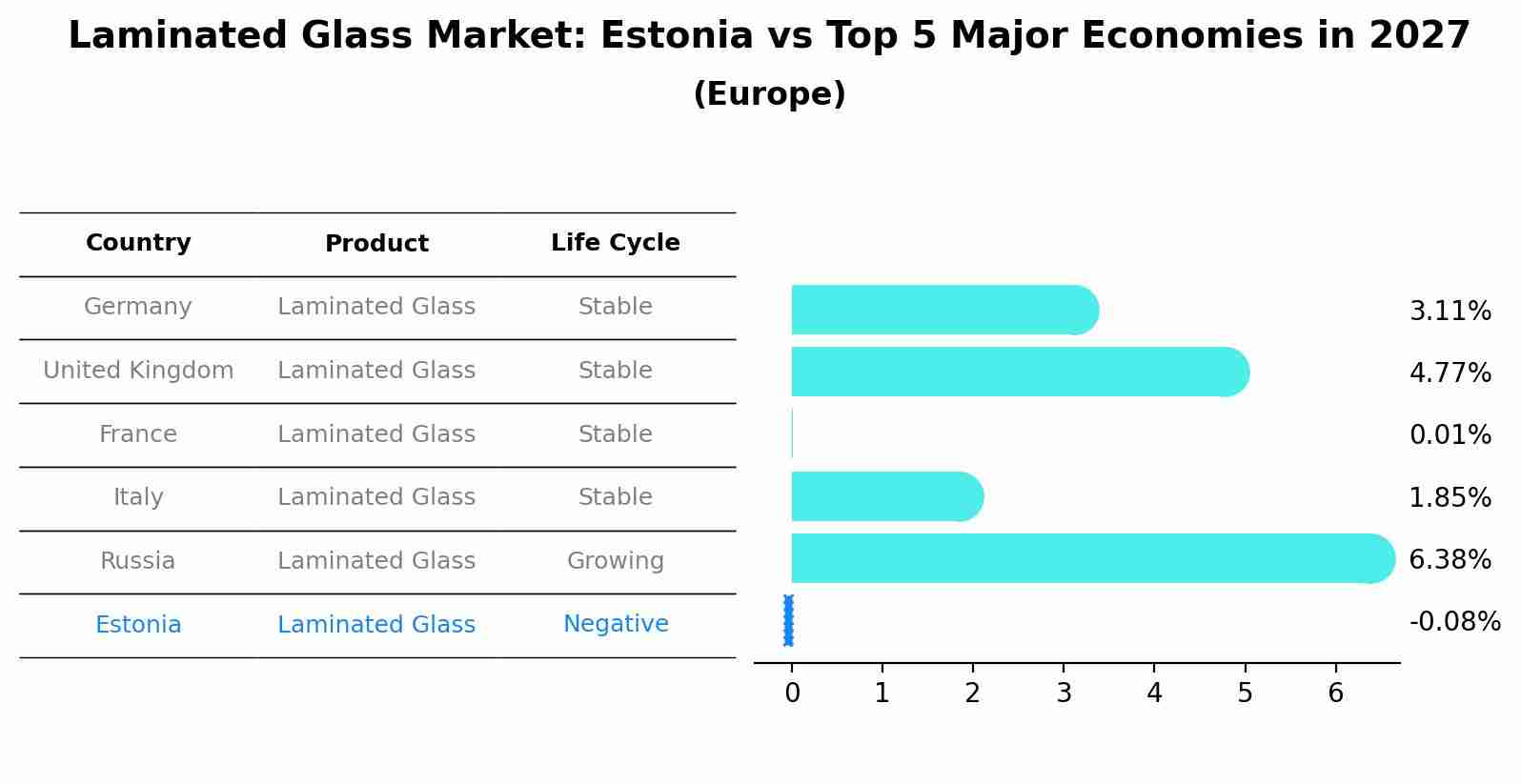
Laminated Glass Market: Estonia vs Top 5 Major Economies in 2027 (Europe)
The Laminated Glass market in Estonia is projected to grow at a negative growth rate of -0.08% by 2027, highlighting the country's increasing focus on advanced technologies within the Europe region, where Germany holds the dominant position, followed closely by United Kingdom, France, Italy and Russia, shaping overall regional demand.
Estonia Laminated Glass Market Overview
The laminated glass market in Estonia is seeing growth due to its application in construction, automotive, and security sectors. Laminated glass, which consists of multiple layers of glass bonded with an interlayer, provides enhanced safety, sound insulation, and UV protection. The increasing construction of commercial buildings, residential complexes, and transportation infrastructure in Estonia is driving the demand for laminated glass in windows, facades, and vehicle windshields. Additionally, as safety and energy efficiency continue to be priorities in the building sector, laminated glass is becoming a preferred choice for architects and engineers.
Drivers of the market
The laminated glass market in Estonia is driven by its use in safety applications within the construction and automotive industries. Increasing regulations for safety and energy efficiency further bolster market demand.
Challenges of the market
The laminated glass market in Estonia faces challenges primarily due to the high cost of production, as the process involves specialized equipment and materials such as PVB (polyvinyl butyral) films. Additionally, there is increasing pressure to develop energy-efficient and sustainable laminated glass solutions, which requires investment in research and technology. The market is also impacted by fluctuations in demand from industries such as construction and automotive, which are highly sensitive to economic cycles. Competition from alternative glass technologies, such as tempered or insulated glass, also affects market growth.
Government Policy of the market
Estonia supports the growth of the laminated glass market by encouraging the use of high-strength, energy-efficient glass solutions in construction, automotive, and architectural sectors. The government enforces EU safety and environmental standards, promoting the development of sustainable building materials and energy-efficient designs.
Key Highlights of the Report:
- Estonia Laminated Glass Market Outlook
- Market Size of Estonia Laminated Glass Market, 2024
- Forecast of Estonia Laminated Glass Market, 2031
- Historical Data and Forecast of Estonia Laminated Glass Revenues & Volume for the Period 2021-2031
- Estonia Laminated Glass Market Trend Evolution
- Estonia Laminated Glass Market Drivers and Challenges
- Estonia Laminated Glass Price Trends
- Estonia Laminated Glass Porter`s Five Forces
- Estonia Laminated Glass Industry Life Cycle
- Historical Data and Forecast of Estonia Laminated Glass Market Revenues & Volume By Type for the Period 2021-2031
- Historical Data and Forecast of Estonia Laminated Glass Market Revenues & Volume By Polyvinyl Butyral (PVB) for the Period 2021-2031
- Historical Data and Forecast of Estonia Laminated Glass Market Revenues & Volume By Sentryglas Plus (SGP) for the Period 2021-2031
- Historical Data and Forecast of Estonia Laminated Glass Market Revenues & Volume By Ethylene-vinyl Acetate (EVA) for the Period 2021-2031
- Historical Data and Forecast of Estonia Laminated Glass Market Revenues & Volume By Other Types for the Period 2021-2031
- Historical Data and Forecast of Estonia Laminated Glass Market Revenues & Volume By End-user Industry for the Period 2021-2031
- Historical Data and Forecast of Estonia Laminated Glass Market Revenues & Volume By Automotive for the Period 2021-2031
- Historical Data and Forecast of Estonia Laminated Glass Market Revenues & Volume By Building and Construction for the Period 2021-2031
- Historical Data and Forecast of Estonia Laminated Glass Market Revenues & Volume By Electronics for the Period 2021-2031
- Historical Data and Forecast of Estonia Laminated Glass Market Revenues & Volume By Other End-user Industries for the Period 2021-2031
- Estonia Laminated Glass Import Export Trade Statistics
- Market Opportunity Assessment By Type
- Market Opportunity Assessment By End-user Industry
- Estonia Laminated Glass Top Companies Market Share
- Estonia Laminated Glass Competitive Benchmarking By Technical and Operational Parameters
- Estonia Laminated Glass Company Profiles
- Estonia Laminated Glass Key Strategic Recommendations






































