Estonia Natural Vanillin Market Top 5 Importing Countries and Market Competition (HHI) Analysis
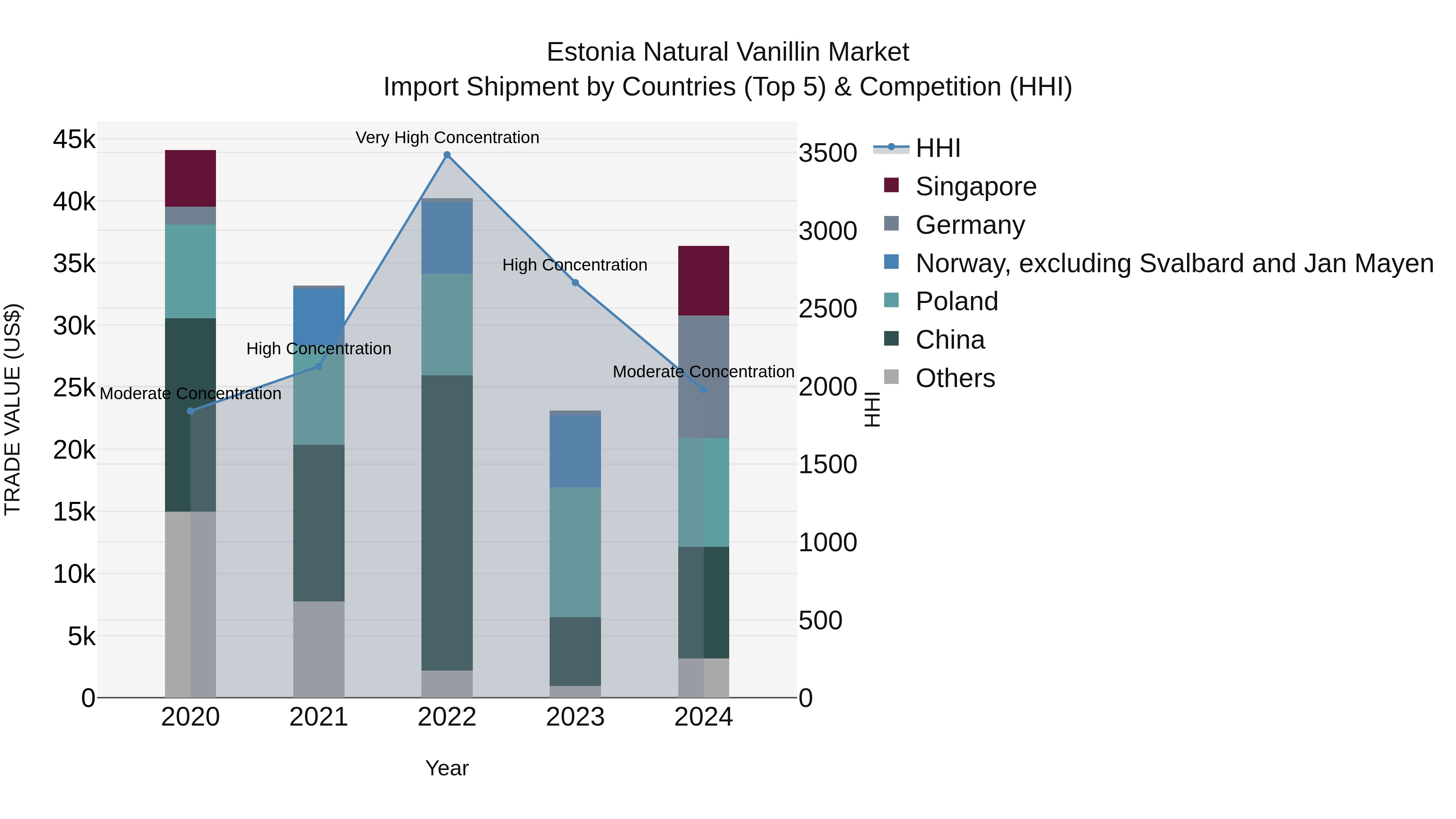
Estonia`s natural vanillin import market saw a significant increase in concentration in 2024, with top exporters being Germany, China, Poland, Singapore, and the Netherlands. Despite a negative CAGR from 2020 to 2024, the market experienced a remarkable growth rate of 57.43% from 2023 to 2024. This dynamic shift suggests evolving market trends and potential opportunities for stakeholders to capitalize on the growing demand for natural vanillin in Estonia.
Estonia Natural Vanillin Market Overview
The natural vanillin market in Estonia is expanding as demand for natural flavoring agents grows in the food and beverage industry. Natural vanillin, derived from vanilla beans, is a popular flavoring in sweets, beverages, and fragrances. As consumer preference shifts toward natural and organic ingredients, the market for natural vanillin is expected to grow, supported by Estonias focus on sustainable food production.
Drivers of the market
The natural vanillin market in Estonia is expanding as demand for natural flavoring agents grows in the food, beverage, and fragrance industries. Natural vanillin, derived from sources such as vanilla beans and lignin, is increasingly replacing synthetic vanillin due to its perceived superior quality and natural origin. With Estonia`s emphasis on sustainability and its growing demand for clean-label and organic products, the natural vanillin market is poised for continued growth. This trend is further supported by consumer preferences for natural flavors and ingredients in food products.
Challenges of the market
The natural vanillin market in Estonia faces challenges due to the high cost of production, as natural vanillin is derived from vanilla beans, which are expensive and subject to supply chain disruptions. Synthetic vanillin, which is cheaper and more widely available, remains a strong competitor. Additionally, there are concerns about the environmental impact of vanilla cultivation, as well as the limited availability of natural vanillin sources. Companies in the market must navigate these challenges while meeting growing consumer demand for natural and sustainably sourced ingredients.
Government Policy of the market
Estonia`s policies on the natural vanillin market are focused on sustainability and health-conscious consumer choices. The government promotes the use of natural vanillin derived from renewable resources such as vanilla beans or lignin, as opposed to synthetic vanillin made from petrochemical sources. Regulatory frameworks are in place to ensure that natural vanillin production processes are safe and environmentally responsible, while also encouraging local agricultural practices that support the vanilla farming industry.
Key Highlights of the Report:
- Estonia Natural Vanillin Market Outlook
- Market Size of Estonia Natural Vanillin Market, 2024
- Forecast of Estonia Natural Vanillin Market, 2031
- Historical Data and Forecast of Estonia Natural Vanillin Revenues & Volume for the Period 2021-2031
- Estonia Natural Vanillin Market Trend Evolution
- Estonia Natural Vanillin Market Drivers and Challenges
- Estonia Natural Vanillin Price Trends
- Estonia Natural Vanillin Porter`s Five Forces
- Estonia Natural Vanillin Industry Life Cycle
- Historical Data and Forecast of Estonia Natural Vanillin Market Revenues & Volume By Source for the Period 2021-2031
- Historical Data and Forecast of Estonia Natural Vanillin Market Revenues & Volume By Vanilla Bean Extract for the Period 2021-2031
- Historical Data and Forecast of Estonia Natural Vanillin Market Revenues & Volume By Ferulic Acid Synthesis for the Period 2021-2031
- Historical Data and Forecast of Estonia Natural Vanillin Market Revenues & Volume By Eugenol Synthesis for the Period 2021-2031
- Historical Data and Forecast of Estonia Natural Vanillin Market Revenues & Volume By Application for the Period 2021-2031
- Historical Data and Forecast of Estonia Natural Vanillin Market Revenues & Volume By Food & Beverages for the Period 2021-2031
- Historical Data and Forecast of Estonia Natural Vanillin Market Revenues & Volume By Pharmaceuticals for the Period 2021-2031
- Historical Data and Forecast of Estonia Natural Vanillin Market Revenues & Volume By Cosmetics & Personal Care for the Period 2021-2031
- Estonia Natural Vanillin Import Export Trade Statistics
- Market Opportunity Assessment By Source
- Market Opportunity Assessment By Application
- Estonia Natural Vanillin Top Companies Market Share
- Estonia Natural Vanillin Competitive Benchmarking By Technical and Operational Parameters
- Estonia Natural Vanillin Company Profiles
- Estonia Natural Vanillin Key Strategic Recommendations






































